Is Daily Walking Enough Exercise to Stay Fit After 50?
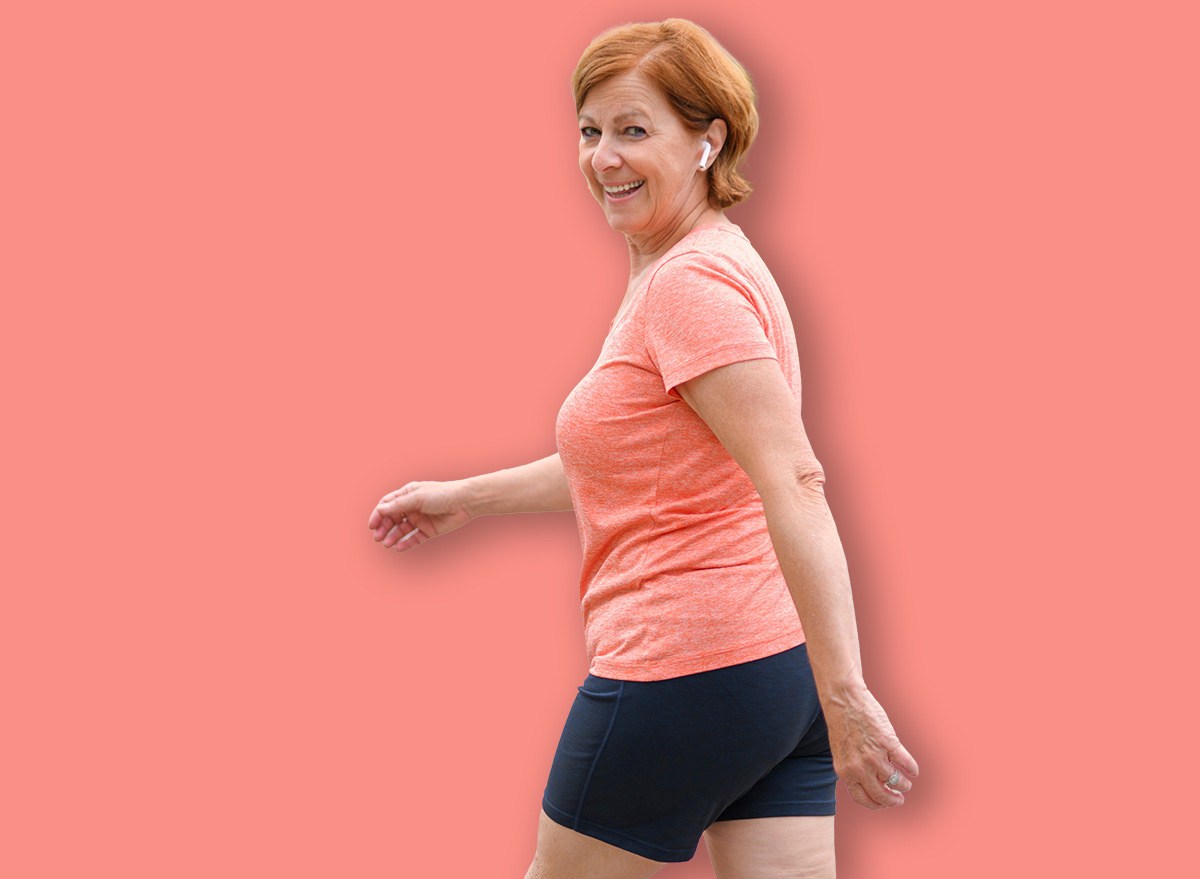

Taking a walk every day provides so many benefits to your body and overall well-being. It’s an extraordinary routine to burn calories, build strong bones and muscles, keep your heart healthy, improve your mood, and decrease your chances of developing a chronic health issue. It’s also a fun way to stay social. Walking with friends or joining a walking club is quite motivating, and there are many ways to switch up your routine with a new route and terrain.
You may look great and feel fabulous with getting your steps in each day, and that’s excellent news. But is daily walking enough exercise to consider yourself fit after 50? To learn the answer, we spoke with Domenic Angelino, CPT with International Personal Trainer Academy, which offers NCCA-accredited Personal Trainer (CPT) and Certified Nutrition Specialist (CNS) programs.
“Walking is great at improving your general health, in terms of reducing your risk of disease and mortality risk. It’s also great at improving your aerobic capacity, by improving cardiorespiratory health,” Angelino tells us.
Now, let’s see whether walking is enough on its own to maintain your fitness.
Is Daily Walking Enough Exercise to Stay Fit After 50?

The answer isn’t as clear-cut as you might expect. According to Angelino, it greatly depends on what your fitness standards are. That said, he encourages you to consider it “a spectrum,” meaning exercising more—and performing a variety of workouts—generally makes someone more fit, while exercising less—and not including variety in your routine—typically makes someone less fit.
“Everything counts. If you’re an adult over 50 and you can walk for an extra five minutes a day in the middle of your work day, five days per week, then you’ll be more fit compared to if you’d done nothing at all,” Angelino explains. “We generally find that a good benchmark is to aim for at least 150 minutes of moderate intensity exercise per week, 75 minutes of vigorous exercise (like the type that gets you out of breath), or some combination of the two. But don’t sweat it if you aren’t able to get anywhere near those numbers. If you work out a few minutes at a time, it legitimately makes a difference.”
How To Improve Your Walks for Max Benefits

You can make your walks even more productive at burning calories by incorporating weights, tackling inclines, waking up steps, or switching up your pace.
“If you decide to add weight, try to do it through a weight vest as opposed to something else. Weight vests evenly distribute the extra weight throughout your body, and aren’t so taxing to use that they prevent you from going on long walks,” Angelino points out. “Hills and stairs help you involve more muscle with each step, increasing strength gains and the total amount of calories burned with each step. You can also adjust your walking speed. Most people transition to running in the 3.5 to 5.0 mile per hour range. It depends on their leg length, among other factors.”
Don’t feel the need to commit to one thing only. Angelino encourages you to mix up your cardio day depending on how you feel.
“Having a flexible approach will make exercise way easier to stick with, and lead to you experiencing much greater results long-term,” he shares.
Looking for more easy ways to lose fat? Here’s How Long Your Walking Workout Should Be To Shrink Belly Fat.