4 Standing Exercises That Strengthen Knees After 65, According to a Coach

Knee pain and stiffness become more common after 65, and for good reason. Muscle loss, reduced balance, and less daily movement all change how the knee joint handles stress. Physical therapy plays an important role when pain or injury shows up, and it’s often essential during recovery. These exercises aren’t meant to replace visits with a physical therapist.
What they do instead is build resilience before problems spiral out of control. Strong muscles around the knees help absorb force, guide joint alignment, and reduce unnecessary strain. When your legs and hips do their job, your knees don’t have to work overtime just to get you through the day.
Standing exercises are especially effective because they train strength in the same positions you use for real life. Getting up from a chair, walking, climbing stairs, and staying balanced all depend on coordinated lower-body strength. Training those patterns directly helps keep knees feeling capable and confident.
Below are four standing exercises that support knee strength, stability, and long-term function. When performed consistently, they help you move better, stay independent, and reduce the chances of knee issues down the road.
Sit-to-Stand
Sit-to-stand exercises are among the most important knee-strengthening exercises you can do after 65. This movement trains the muscles that protect the knee during everyday tasks like standing up from a chair or getting out of a car. It reinforces proper joint mechanics while building strength through a safe and controlled range of motion. Over time, this exercise improves confidence and reduces reliance on the knees alone to generate force.
Muscles Trained: Quadriceps, glutes, hamstrings, and calves.
How to Do It:
- Sit tall on a chair with your feet flat on the floor.
- Scoot slightly forward so your shins are mostly vertical.
- Brace your core and lean forward just enough to shift your weight into your feet.
- Press through your heels and stand up tall.
- Pause briefly at the top while squeezing your glutes.
- Lower yourself back down with control and repeat.
Recommended Sets and Reps: Knock out 3 sets of 8 to 12 reps. Rest for 60 seconds between each set.
Best Variations: Tempo sit to stands, weighted sit to stands, single arm assisted sit to stands.
Form Tip: Keep your knees tracking in line with your toes as you stand.
Goblet Box Squats
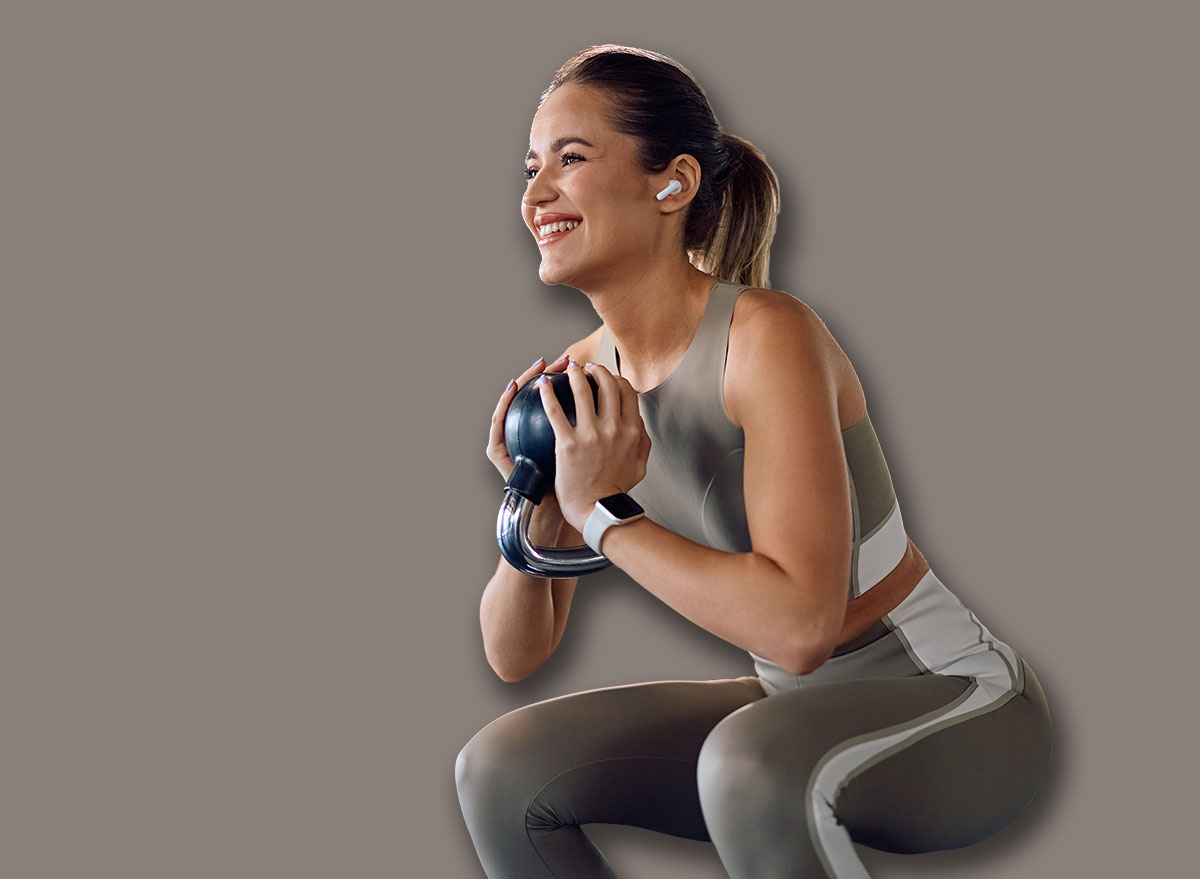
Goblet box squats add load and structure to a squat pattern without overwhelming the knees. Holding a weight in front of you helps you stay upright, reducing knee stress while improving hip engagement. The box sets a consistent depth, making each rep controlled and repeatable. This builds leg strength while reinforcing confidence in knee-bending movements.
Muscles Trained: Quadriceps, glutes, hamstrings, and core.
How to Do It:
- Hold a dumbbell or kettlebell close to your chest.
- Stand in front of a chair or box with your feet shoulder-width apart.
- Brace your core and sit your hips back toward the box.
- Lightly tap the box with your hips while keeping tension in your legs.
- Press through your feet and stand back up tall.
- Reset your posture and repeat.
Recommended Sets and Reps: Perform 3 sets of 6 to 10 reps. Rest for 75 seconds between each set.
Best Variations: Bodyweight box squats, tempo goblet squats, box squats with pause.
Form Tip: Think about spreading your feet on the floor as you stand.
Standing Leg Abduction
Standing leg abduction strengthens the muscles along the outside of the hips, which play a major role in knee alignment. When these muscles are weak, the knees often collapse inward during walking or standing up. This exercise improves lateral stability and helps keep the knee tracking properly. It’s a simple move with a big payoff for joint health.
Muscles Trained: Glute medius, glute minimus, and hip stabilizers.
How to Do It:
- Stand tall next to a chair or wall for balance.
- Shift your weight onto one leg while keeping your torso upright.
- Slowly lift the opposite leg out to the side.
- Pause briefly at the top without leaning.
- Lower the leg back to the starting position with control.
- Complete all reps before switching sides.
Recommended Sets and Reps: Knock out 3 sets of 10 to 15 reps per side. Rest for 45 seconds between each set.
Best Variations: Banded leg abductions, cable leg abductions, and isometric side holds.
Form Tip: Move slowly and avoid swinging the leg.
Standing Marching
Standing marching builds single-leg strength and balance, both of which protect the knees during walking. Each step challenges your body to stabilize as you shift weight, which improves coordination and joint control. This exercise also reinforces hip flexor strength, helping reduce compensations that often stress the knees. It’s functional, accessible, and easy to scale.
Muscles Trained: Hip flexors, quadriceps, glutes, and calves.
How to Do It:
- Stand tall with your feet hip-width apart.
- Brace your core and shift your weight onto one leg.
- Lift the opposite knee to a comfortable height.
- Pause briefly while maintaining balance.
- Lower the foot back to the floor with control.
- Alternate sides and continue marching.
Recommended Sets and Reps: Perform 3 sets of 20 to 30 total marches. Rest for 45 seconds between each set.
Best Variations: Marching with support, band-resisted marching, slow-tempo marching.
Form Tip: Stay tall and avoid leaning backward as you lift your knee.
Best Tips for Building Knee Strength After 65

Strong knees depend on more than one exercise. Consistent movement, smart loading, and supportive habits all work together to keep your joints healthy. These standing exercises form a foundation, but long-term success comes from how you apply them week after week.
- Train the full leg: Strong hips and glutes reduce stress on the knees during daily movement.
- Prioritize control over speed: Slow, steady reps improve joint awareness and reduce irritation.
- Stay consistent: Two to three short sessions each week outperform occasional long workouts.
- Support recovery: Adequate sleep and hydration help joints tolerate training better over time.
- Fuel your body well: Protein supports muscle maintenance, while adequate calories and micronutrients help preserve joint health and strength.
These exercises help keep your knees strong, capable, and ready for daily life after 65. They’re about staying proactive, not waiting for pain to force action.
References
- Peterson, Jessica A et al. “Epigenetic aging, knee pain and physical performance in community-dwelling middle-to-older age adults.” Experimental gerontology vol. 166 (2022): 111861. doi:10.1016/j.exger.2022.111861
- Mo, Ling et al. “Exercise Therapy for Knee Osteoarthritis: A Systematic Review and Network Meta-analysis.” Orthopaedic journal of sports medicine vol. 11,5 23259671231172773. 5 Jun. 2023, doi:10.1177/23259671231172773