4 Simple Exercises That Restore Leg Strength Faster Than Squats After 60
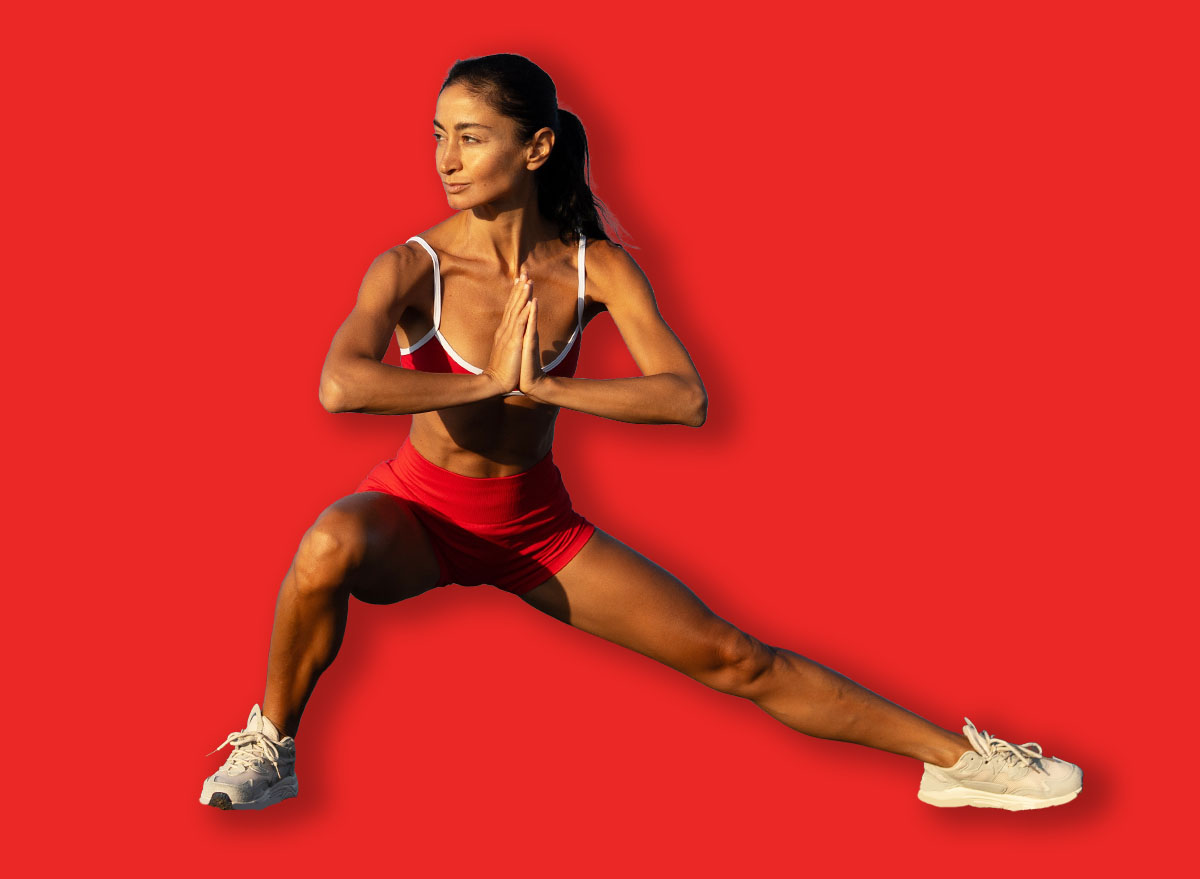
Lower body strength after 60 shapes how confidently you move through daily life. It affects how easily you rise from a chair, climb stairs, carry groceries, and remain steady on uneven ground. When your legs feel strong and responsive, everything else feels more manageable, from workouts to weekend activities to long days on your feet.
There are plenty of reasons squats may not be the best fit right now. Knee discomfort, hip stiffness, balance limitations, past injuries, or limited ankle mobility can all make traditional squats feel awkward or uncomfortable. That doesn’t mean your lower body can’t get stronger. It means your training needs smarter entry points that respect your current state.
Strength after 60 needs to reflect real-world movement across multiple planes. You step backward, reach sideways, stabilize on one leg, and absorb force from different angles. Training your legs this way builds resilience, improves coordination, and helps protect your joints during everyday movement.
The exercises below check all of those boxes. They build leg strength through controlled ranges of motion, challenge balance and coordination, and adapt easily to your current ability level. You can perform them with just bodyweight or add light equipment when you’re ready. Each one meets you where you’re at while helping you move forward with confidence.
Reverse Lunge
Reverse lunges build leg strength while reducing joint stress, making them an excellent option for people over 60. Stepping backward allows better control and keeps your front knee in a more comfortable position. This movement strengthens each leg independently, which helps correct side-to-side imbalances that often develop with age. It also challenges balance and coordination without forcing deep knee bend angles that can feel limiting.
Muscles Trained: Glutes, quadriceps, hamstrings, calves, and core stabilizers.
How to Do It:
- Stand tall with your feet hip-width apart and your hands on your hips or at your sides.
- Step your right foot backward and lower your body until both knees bend comfortably.
- Keep your chest tall and your front knee stacked over your toes.
- Press through your left heel to return to standing.
- Repeat on the opposite side.
Recommended Sets and Reps: Perform 3 sets of 8 to 10 reps per side. Rest for 60 seconds between each set.
Best Variations: Bodyweight reverse lunge, supported reverse lunge holding a chair, dumbbell reverse lunge.
Form Tip: Move slowly on the way down and push the floor away as you stand back up.
Glute Bridge
Glute bridges directly target the muscles that protect your hips and support your lower back. Strong glutes improve walking mechanics, posture, and overall leg drive during daily tasks. This exercise allows you to build strength without loading the knees, which is helpful if knee discomfort limits other movements. It also reinforces hip extension, a key movement pattern that often weakens with age.
Muscles Trained: Glutes, hamstrings, core stabilizers, and lower back.
How to Do It:
- Lie on your back with your knees bent and feet flat on the floor.
- Place your arms at your sides with palms down.
- Press through your heels and squeeze your glutes to lift your hips.
- Hold briefly at the top while keeping your ribs down.
- Lower your hips with control back to the floor.
Recommended Sets and Reps: Perform 3 sets of 10 to 12 reps. Rest for 45 to 60 seconds between each set.
Best Variations: Bodyweight glute bridge, single-leg glute bridge, glute bridge with a resistance band.
Form Tip: Think about driving your heels into the floor and tightening your glutes before lifting.
Step-ups
Step-ups mimic real-life movements like climbing stairs or stepping onto a curb. They build strength through a full range of motion while improving balance and coordination. This exercise strengthens each leg independently and reinforces controlled knee and hip movement. Step-ups also allow easy adjustments by changing step height or adding light resistance.
Muscles Trained: Quadriceps, glutes, hamstrings, calves, and core stabilizers.
How to Do It:
- Stand facing a sturdy step or low bench.
- Place your right foot fully on the step.
- Press through your right heel to stand up on the step.
- Bring your left foot up to meet your right.
- Step back down with control and switch sides.
Recommended Sets and Reps: Perform 3 sets of 8 to 10 reps per side. Rest for 60 seconds between each set.
Best Variations: Low step-ups, weighted step-ups, lateral step-ups.
Form Tip: Avoid pushing off the back foot and let the working leg do the work. Also, start with a lower height box. As you gain strength and confidence, that’s when you’ll want to up the ante.
Lateral Lunges
Lateral lunges strengthen muscles that often go undertrained but are critical for stability and joint health. Side-to-side movement improves hip mobility and strengthens the inner and outer thighs. This exercise helps prepare your body for uneven surfaces and quick direction changes. It also builds confidence moving in different planes of motion.
Muscles Trained: Glutes, inner thighs, outer hips, quadriceps, and hamstrings.
How to Do It:
- Stand with your feet hip-width apart and hands in front of your chest.
- Step your right foot out to the side and shift your hips back.
- Bend your right knee while keeping your left leg straight.
- Push through your right foot to return to standing.
- Repeat on the opposite side.
Recommended Sets and Reps: Perform 3 sets of 6 to 8 reps per side. Rest for 60 seconds between each set.
Best Variations: Bodyweight lateral lunge, supported lateral lunge, dumbbell lateral lunge.
Form Tip: Sit back into your hips as you step out to protect your knees.
The Best Tips for Restoring Leg Strength After 60
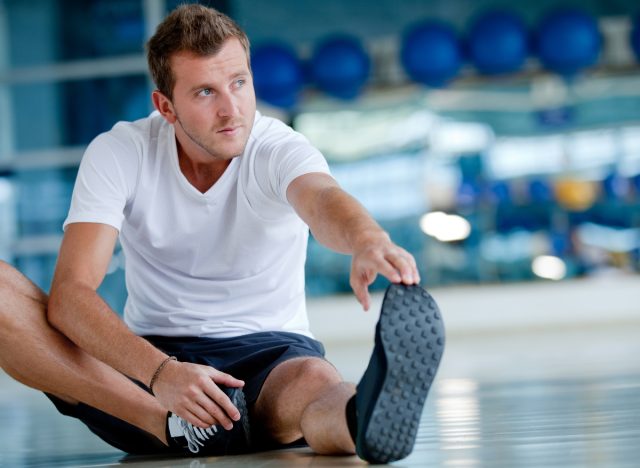
Building strong legs after 60 works best when consistency meets smart movement choices. Progress doesn’t come from pushing through discomfort or forcing depth. It comes from quality reps, steady progression, and movements that support how your body actually moves.
- Train through comfortable ranges of motion and increase depth gradually as strength improves.
- Focus on single-leg exercises to improve balance and reduce side-to-side strength gaps.
- Prioritize control over speed, especially during lowering phases.
- Use support when needed and reduce it over time as confidence builds.
- Stay consistent with two to three lower-body sessions per week for best results.
Strong legs support independence, confidence, and long-term movement quality. These exercises offer multiple paths forward, no matter where you start.
References
- García-Hermoso A, Cavero-Redondo I, Ramírez-Vélez R, Ruiz JR, Ortega FB, Lee DC, Martínez-Vizcaíno V. Muscular Strength as a Predictor of All-Cause Mortality in an Apparently Healthy Population: A Systematic Review and Meta-Analysis of Data From Approximately 2 Million Men and Women. Arch Phys Med Rehabil. 2018 Oct;99(10):2100-2113.e5. doi: 10.1016/j.apmr.2018.01.008. Epub 2018 Feb 7. PMID: 29425700.
- Ahmed U, Karimi H, Amir S, Ahmed A. Effects of intensive multiplanar trunk training coupled with dual-task exercises on balance, mobility, and fall risk in patients with stroke: a randomized controlled trial. J Int Med Res. 2021 Nov;49(11):3000605211059413. doi: 10.1177/03000605211059413. PMID: 34812070; PMCID: PMC8647262.