5 Morning Exercises That Restore Full-Body Mobility Faster Than Yoga After 60

Waking up stiff doesn’t have to become your new normal after 60. During sleep, your joints spend hours in relatively fixed positions, muscles tighten slightly, and circulation naturally slows. As a trainer, I’ve watched countless clients transform their mornings by spending just a few minutes moving before jumping into the day. The difference often shows up immediately, from easier walking and bending to simply feeling younger with every step.
Yoga offers tremendous benefits for flexibility and relaxation, but restoring mobility involves more than holding stretches. Healthy movement depends on joints traveling through their full range of motion while the surrounding muscles actively control every position. That’s why I often recommend dynamic mobility exercises first thing in the morning. They warm up the body, improve coordination, and prepare you for everything the day has in store.
I’ve spent years coaching adults over 60, and the clients who move the best rarely rely on complicated routines. Instead, they consistently perform a handful of movements that loosen the spine, hips, shoulders, and ankles before breakfast. These five morning exercises work together to restore full-body mobility while building the strength needed to maintain it. A few minutes each morning can completely change how your body feels for the rest of the day.
Cat-Cow
Whenever someone tells me they wake up feeling stiff from their neck to their lower back, cat-cow usually becomes the first movement I recommend. It gently guides the spine through flexion and extension while encouraging the muscles surrounding each vertebra to wake up gradually. Rather than forcing a stretch, the movement restores natural motion throughout the entire back, making it easier to stand upright and move comfortably. Many clients tell me their backs feel noticeably looser after just a handful of slow repetitions. It’s one of the simplest ways to prepare your body for the day ahead.
How to Do It
- Start on your hands and knees.
- Inhale while arching your back.
- Lift your chest and look forward.
- Exhale as you round your spine.
- Tuck your chin gently.
- Repeat for 8 to 10 slow repetitions.
World’s Greatest Stretch
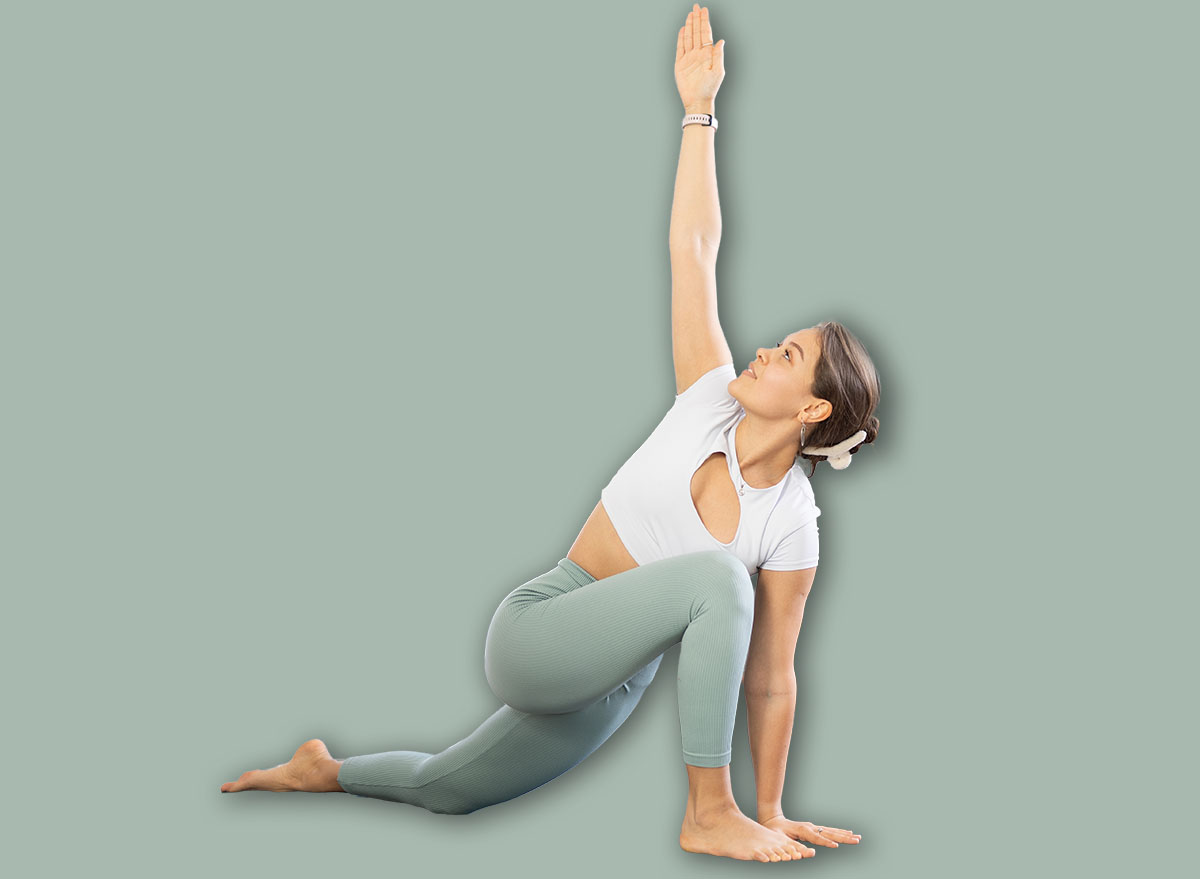
Despite its bold name, this movement earns its reputation by improving mobility in several areas at once. It opens the hips, stretches the hamstrings, mobilizes the thoracic spine, and encourages better shoulder movement during a single sequence. I frequently include it because clients receive so much benefit from one exercise without needing an extended stretching session. The combination of lunging, rotating, and reaching prepares the body for walking, bending, and lifting throughout the day. It quickly becomes a favorite once people experience how much looser they feel afterward.
How to Do It
- Step into a deep lunge.
- Place both hands inside your front foot.
- Rotate your upper body toward the front leg.
- Reach one arm toward the ceiling.
- Return to the starting position.
- Repeat 5 times per side.
Hip Circles
Healthy hips support nearly every movement you make, yet they often become stiff after years of sitting and reduced activity. Hip circles encourage the joint to move through multiple directions while activating the surrounding muscles that provide stability. I recommend performing them slowly because controlled movement helps restore mobility more effectively than rushing through repetitions. Clients frequently notice smoother walking and easier stair climbing after adding this exercise to their morning routine. Better hip mobility also reduces unnecessary stress on the knees and lower back.
How to Do It
- Stand with your hands on your hips.
- Lift one knee slightly.
- Make slow circles with your hip.
- Complete several circles in each direction.
- Lower your foot.
- Repeat on the opposite side.
Standing Arm Circles with Thoracic Rotation
Many people focus only on stretching the shoulders while overlooking the importance of upper-back mobility. This exercise combines both by encouraging the shoulders and thoracic spine to move together as they were designed to. I often prescribe it to clients who spend hours reading, driving, or working at a computer because it helps reverse the stiffness those activities create. As the upper body loosens, posture improves and overhead reaching becomes much more comfortable. It’s a simple movement that delivers benefits far beyond the shoulders.
How to Do It
- Stand tall with your feet shoulder-width apart.
- Extend your arms to your sides.
- Make several forward circles.
- Reverse the direction.
- Add gentle torso rotation as your arms move.
- Continue for 30 to 45 seconds.
Standing Ankle Rocks
The ankles often receive very little attention, but they influence balance, walking, and nearly every lower-body movement. Limited ankle mobility changes the way you squat, climb stairs, and even maintain your balance on uneven surfaces. I finish many mobility routines with ankle rocks because they improve movement where many adults experience hidden stiffness. Clients often report feeling lighter on their feet and more confident during walks after practicing them consistently. Healthy ankles create smoother movement throughout the entire body.
How to Do It
- Stand facing a wall.
- Place one foot several inches away.
- Keep your heel on the floor.
- Bend your front knee toward the wall.
- Return to the starting position.
- Perform 10 to 12 repetitions per side.