5 Wall Exercises That Build Knee Strength Faster Than Gym Workouts After 55
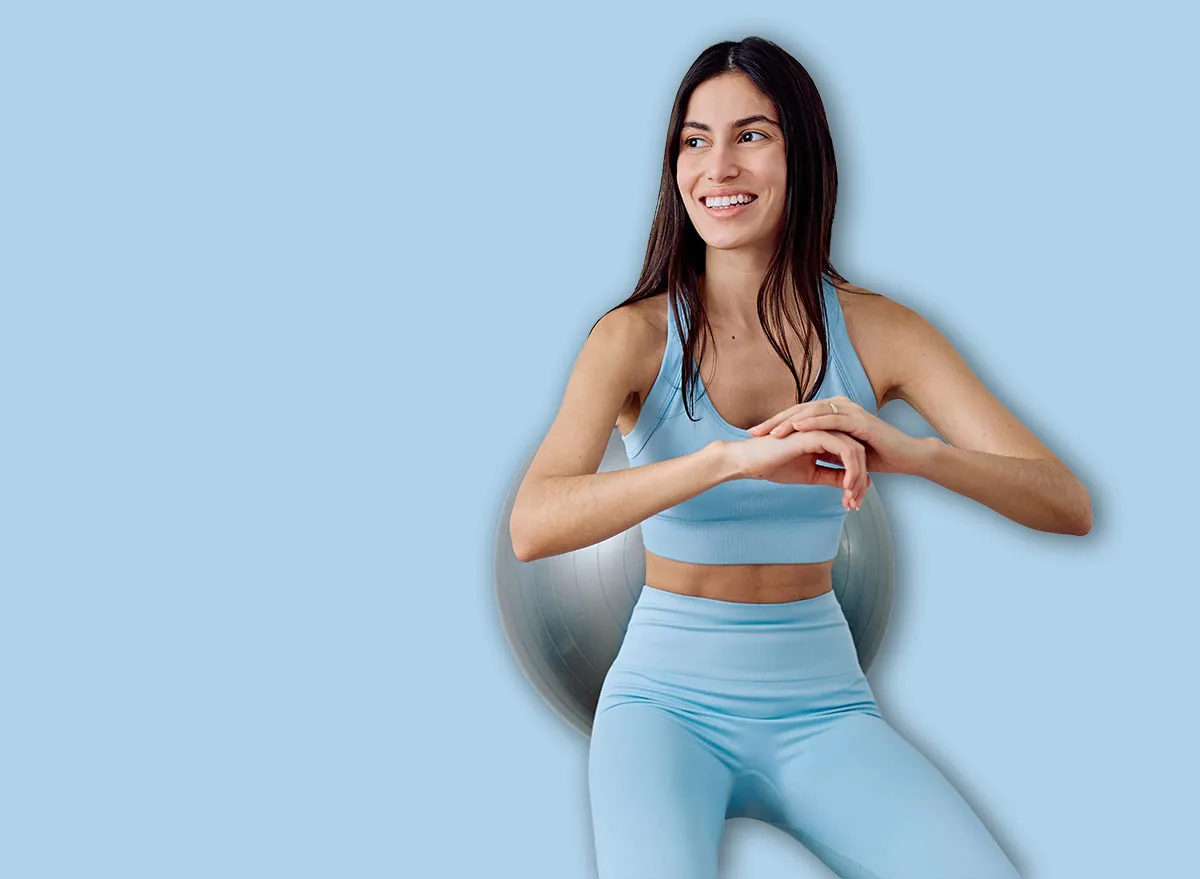

There are several telltale signs your knees may need to be strengthened, including stiffness, feelings of instability or wobbliness, and achiness. Any of these symptoms can make daily functions like walking, standing, or climbing stairs difficult and even painful. It’s always advisable to see an orthopedic doctor or your healthcare provider to assess the situation.
“Several factors contribute to declining knee strength after age 55. The biggest is age-related muscle loss (sarcopenia), which naturally reduces muscle mass and strength if we don’t actively perform resistance training. In women, hormonal changes during perimenopause and menopause can accelerate muscle and bone loss, making strength training especially important,” explains Dr. Gabriela Van Sickle, PT, DPT, CFMT, WCS, Co-Founder of Functional Physical Therapy. “Pain also plays a significant role. Whether someone has osteoarthritis, a previous injury, or chronic knee pain, the body often begins to inhibit activation of the quadriceps and other knee muscles. Even relatively mild knee pain can reduce how effectively the muscles contract, leading to weakness over time.”
If your knees are in decent condition but need to be stronger so you can depend on them, it’s important to learn the right workouts you can do to make it happen. We learned five wall exercises you can do that will build knee strength faster than gym workouts after 55.
“The wall provides an external source of stability, allowing people to focus on producing force rather than worrying about balance or getting up and down from the floor or machines. This is especially valuable for adults over 55 who may have reduced confidence, arthritis, or a history of falls,” explains Dr. Van Sickle. “When balance demands are reduced, people can often perform exercises with better technique, slower control, and greater consistency. That means the muscles receive an effective training stimulus without unnecessary compensation.”
Now, let’s get started.
Wall Sit
“This exercise builds endurance in the quadriceps, glutes, and hamstrings while creating very little movement at the knee, making it a great option for individuals with mild knee discomfort. The angle can be adjusted based on symptoms and strength,” Dr. Van Sickle tells us.
- Stand tall with your back pressed against a wall and arms extended ahead of you.
- Slide down until your knees are bent at a 90-degree angle as if you’re sitting in a chair.
- Engage your core.
- Hold the position with proper form.
Wall Sit With Stability Ball
“The ball guides your movement, helping maintain good alignment while strengthening the quadriceps, glutes, and hamstrings through a functional range of motion. It also encourages symmetrical weight-bearing and reduces the fear of falling backward,” Dr. Van Sickle points out.
- Begin by placing a stability ball between your back and the wall.
- Slowly slide down the wall until your knees are bent to 90 degrees.
- Hold the squat position for a moment before returning to the start position.
Wall Calf Raise
“Although this primarily strengthens the calf muscles, strong calves improve walking mechanics, absorb forces during movement, and reduce stress transmitted to the knee. The wall provides balance support so the exercise can be performed safely,” Dr. Van Sickle tells us.
- Begin standing tall, facing a wall with your hands lightly resting on the surface for support.
- Rise onto your toes.
- Hold briefly at the top.
- Slowly lower back down.
Wall-Supported Standing Hip Abduction
“This exercise strengthens the gluteus medius and other hip abductors, which are essential for keeping the pelvis level and maintaining proper knee alignment during walking, climbing stairs, and standing on one leg. Weak hip abductors often allow the knee to collapse inward, increasing stress on the knee joint. Using the wall provides just enough support to improve balance so you can focus on good form and controlled movement rather than trying to stay upright,” Dr. Van Sickle points out.
- Begin standing sideways next to a wall, placing one hand on the wall for balance.
- Keep your body tall and your toes pointed forward.
- Slowly lift the outside leg out to the side without leaning your trunk or rotating your hips.
- Hold for a moment.
- Slowly lower.
- Complete all reps on one side before switching over to the other.
Wall-Supported Standing Hip Extension
“This exercise strengthens the gluteus maximus and hamstrings, two muscle groups that play a critical role in supporting the knee during walking, stair climbing, and rising from a chair. Strong glutes help reduce excessive stress on the knee by improving lower-extremity alignment and distributing forces more efficiently throughout the hip and leg. The wall provides balance support, allowing you to focus on proper muscle activation and controlled movement,” Dr. Van Sickle explains.
- Begin standing tall, facing a wall with your hands lightly resting on the surface for support.
- Keeping your knees mostly straight and your trunk tall, gradually extend one leg back without arching your lower back.
- Hold briefly.
- Slowly return to the start position.
- Complete all reps on one side before switching over to the other.