4 Morning Exercises That Restore Leg Muscle Faster Than Lunges After 60
Restoring leg muscle after 60 starts with using the muscles that matter most for everyday movement. Your quads, glutes, hamstrings, and hips help you stand up, climb stairs, walk with more power, and stay steady when your weight shifts. When those muscles lose strength, daily tasks can start to feel slower or less controlled, even if you’re still active.
Lunges are a great exercise, but they’re not always the best starting point for everyone. They require balance, coordination, mobility, and enough single-leg strength to control the movement. If any of those pieces feel off, lunges can turn into more of a survival drill than a muscle-building exercise.
I’ve seen this plenty of times with clients. The better move is often to build the foundation first: strengthen the hips, teach the legs to produce force, and improve control through positions that feel more stable. Once those pieces improve, lunges usually feel smoother and more productive.
These four morning exercises give your legs the kind of focused work that helps rebuild muscle without requiring a long workout. You’ll hit your glutes, quads, hamstrings, and core while reinforcing movement patterns you use all day. Keep the reps controlled, own each position, and let the work build from there.
Glute Bridge
Glute bridges train your glutes and hamstrings while your core keeps your hips and pelvis steady. The movement helps wake up the backside of your body, which matters after 60 because the glutes often contribute less when sitting time increases or lower-body training becomes less consistent. Stronger glutes support walking, climbing stairs, and standing up, and take pressure off your lower back. Compared with lunges, glute bridges give you a stable way to build hip strength without balance, limiting how hard the muscles can work.
Muscles Trained: Glutes, hamstrings, core
How to Do It:
- Lie on your back with your knees bent and your feet flat on the floor.
- Place your arms at your sides.
- Press through your heels and lift your hips.
- Squeeze your glutes at the top.
- Lower your hips with control.
Recommended Sets and Reps: Perform 3 sets of 12 to 15 reps. Rest for 45 seconds between each set.
Best Variations: Paused glute bridges, single-leg glute bridges, feet-elevated glute bridges
Form Tip: Drive through your heels and finish each rep with your glutes.
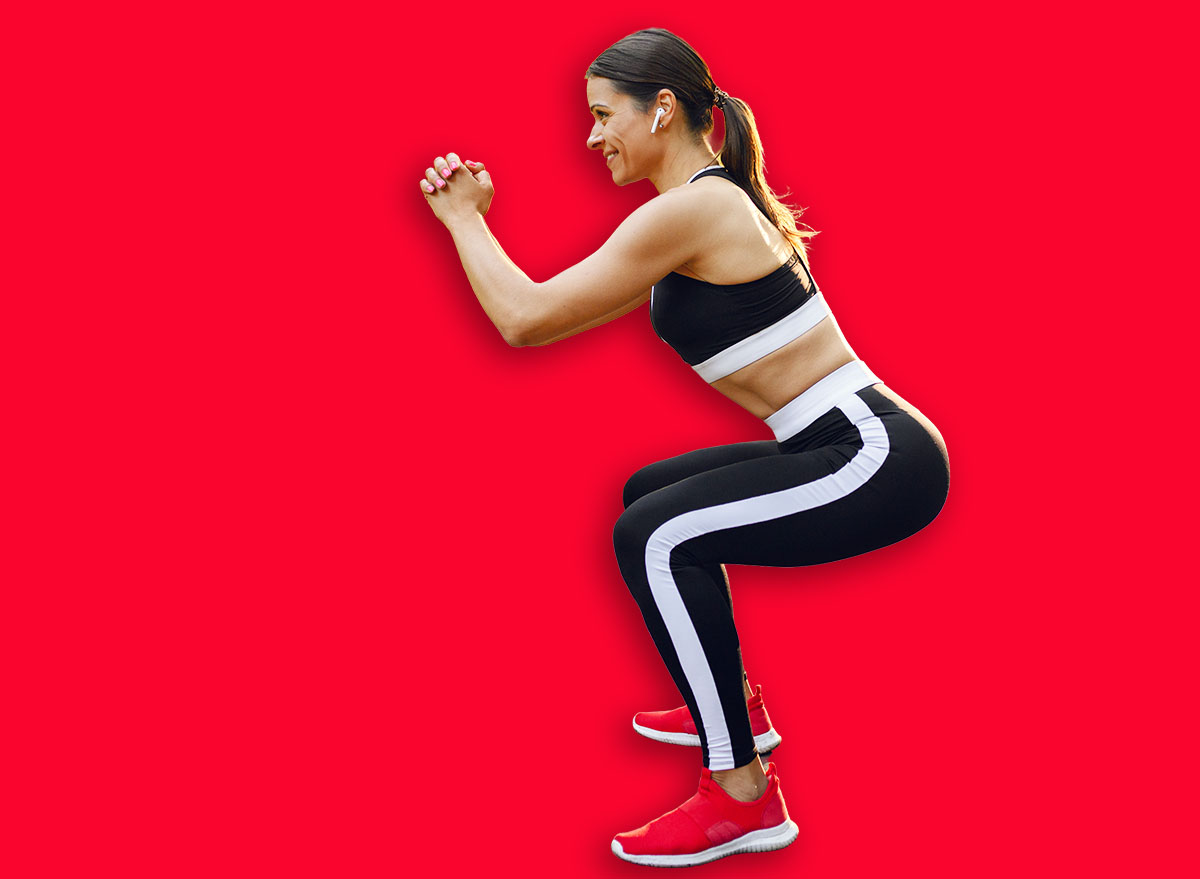
Air Squats
Air squats train your quads, glutes, hamstrings, and core while reinforcing one of the most important movements you use every day. Sitting down, standing up, getting out of a chair, and climbing stairs all depend on this pattern. Since both feet stay planted, you can focus more on building leg strength and less on fighting for balance. That makes air squats a strong option for restoring muscle because you can build volume, control depth, and create solid tension through the legs.
Muscles Trained: Quadriceps, glutes, hamstrings, core
How to Do It:
- Stand with your feet about shoulder-width apart.
- Brace your core and keep your chest lifted.
- Push your hips back and bend your knees.
- Lower until you reach a comfortable depth.
- Drive through your feet to stand tall.
Recommended Sets and Reps: Perform 3 sets of 10 to 15 reps. Rest for 45 seconds between each set.
Best Variations: Box squats, tempo squats, pause squats
Form Tip: Keep your knees tracking in line with your toes.
Bodyweight Good Mornings
Bodyweight good mornings train your hamstrings, glutes, and lower back while your core keeps your spine in a strong position. The hinge pattern teaches your hips to move properly, which helps your backside do more of the work when you bend, lift, or stand back up. This exercise gives your hamstrings and glutes direct attention without the balance demand of a lunge. Move slowly, feel the stretch through the back of your legs, and drive your hips forward to finish the rep.
Muscles Trained: Hamstrings, glutes, lower back, core
How to Do It:
- Stand with your feet hip-width apart.
- Place your hands on your hips or behind your head.
- Brace your core and soften your knees.
- Push your hips back as your torso leans forward.
- Drive your hips forward to return to standing.
Recommended Sets and Reps: Perform 3 sets of 10 to 12 reps. Rest for 45 seconds between each set.
Best Variations: Banded good mornings, staggered-stance good mornings, slow tempo good mornings
Form Tip: Keep your back flat and move through your hips.
Split Squat Holds
Split squat holds train your quads, glutes, and core while building strength in a position that sets you up for better lunges later. Holding the bottom position keeps your legs under tension and forces your body to stay steady without rushing through reps. Your front leg has to support most of the work while your hips and core keep you aligned. This helps restore leg muscle and control at the same time, which carries over to stairs, walking, and getting up from lower positions.
Muscles Trained: Quadriceps, glutes, hamstrings, core
How to Do It:
- Stand in a split stance with one foot forward and one foot back.
- Brace your core and keep your torso tall.
- Lower your back knee toward the floor.
- Hold the bottom position with control.
- Press through your front foot to return to standing.
- Complete all reps or holds, then switch sides.
Recommended Sets and Reps: Perform 3 sets of 20 to 30 second holds per side. Rest for 45 seconds between each set.
Best Variations: Assisted split squat holds, shorter stance holds, split squat pulses
Form Tip: Keep your weight centered through your front foot and avoid leaning forward.
How to Make Your Morning Leg Work Count
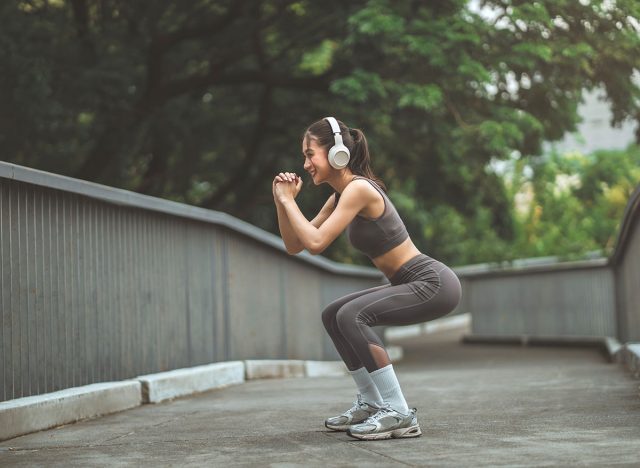
Morning leg training works best when you keep it simple enough to repeat and focused enough to challenge your muscles. These exercises build the lower-body foundation that lunges depend on: stronger hips, better knee control, more stable positions, and cleaner movement. You don’t need to crush your legs before breakfast. You need quality reps that wake up the right muscles and give your body a steady reason to rebuild strength.
- Start with control: Move slowly enough to feel the muscles working. Clean reps create more useful tension than fast reps that rely on momentum.
- Use pauses to build strength: Hold the top of your glute bridges, the bottom of your squats, or the split squat position. Pauses make lighter exercises feel more demanding.
- Train your hips and hamstrings directly: Glute bridges and good mornings help restore strength through the backside of your legs, which supports better walking, climbing, and lifting.
- Keep a comfortable range at first: Use the depth you can control, then build from there. Better range usually comes as strength and confidence improve.
- Progress in small steps: add reps, hold longer, slow the tempo, or use a light band when the exercises start to feel easy. Small changes keep progress moving without beating up your joints.
Stick with these movements a few mornings each week and let the consistency do its job. Your legs will start to feel stronger, steadier, and more prepared for the bigger movements that follow.
References
- Frith, Emily, and Paul D Loprinzi. “The Association between Lower Extremity Muscular Strength and Cognitive Function in a National Sample of Older Adults.” Journal of lifestyle medicine vol. 8,2 (2018): 99-104. doi:10.15280/jlm.2018.8.2.99
- Schumacher, Leah M et al. “Consistent Morning Exercise May Be Beneficial for Individuals With Obesity.” Exercise and sport sciences reviews vol. 48,4 (2020): 201-208. doi:10.1249/JES.0000000000000226