5 Morning Exercises That Build Total-Body Strength Faster Than CrossFit After 50

Building strength after 50 requires a different approach than it did decades earlier. Recovery takes longer, joints often become less forgiving, and the body responds better to consistency than all-out intensity. Many adults assume high-intensity programs provide the fastest route to strength gains, but workouts that leave you overly fatigued or sore can make it harder to train regularly. Long-term progress comes from movements that strengthen multiple muscle groups while supporting mobility, balance, and joint health.
Morning exercise offers a powerful opportunity to build strength before the demands of the day begin. A well-designed morning routine wakes up dormant muscles, improves circulation, and reinforces healthy movement patterns that carry into daily activities. Full-body exercises work especially well because they strengthen several muscle groups at once while improving coordination and stability. That combination often delivers more practical strength benefits than isolated machine exercises or overly complex workout programs.
The five exercises below strengthen the legs, hips, core, chest, shoulders, and back while improving balance and movement quality. Each movement challenges multiple muscle groups simultaneously, helping you build real-world strength that supports everyday life. Perform them consistently and you’ll develop a stronger, more capable body from head to toe.
Sit-to-Stand Squats
Few exercises build practical strength more effectively than sit-to-stand squats. This movement strengthens the quads, glutes, hips, and core while training one of the most important actions performed every day. Many adults over 50 gradually rely more on their arms when standing, which reduces lower-body strength and independence over time. Sit-to-stands restore leg power while improving balance and coordination. The movement also teaches the body to generate force safely and efficiently through the hips and legs. Consistent practice often leads to noticeable improvements in walking, stair climbing, and overall lower-body endurance.
How to Do It
- Sit near the front of a sturdy chair
- Place your feet shoulder-width apart
- Lean slightly forward
- Press through your heels
- Stand up smoothly
- Fully straighten your hips
- Lower slowly back into the chair
- Perform 10 to 15 repetitions.
Wall Push-Ups
Wall push-ups strengthen the chest, shoulders, triceps, and core while remaining accessible for most fitness levels. Many adults avoid push-up movements because traditional floor versions feel too demanding on the wrists, shoulders, or lower back. The wall variation provides an excellent alternative while still delivering meaningful upper-body strength benefits. The exercise also improves posture by encouraging proper shoulder positioning and core engagement. Strong pushing muscles help support countless daily activities, from carrying objects to getting up from the floor.
How to Do It
- Stand facing a wall
- Place your hands against the wall at shoulder height
- Step your feet backward slightly
- Tighten your core gently
- Bend your elbows slowly
- Lower your chest toward the wall
- Press back to the starting position
- Perform 10 to 15 repetitions.
Standing Knee Drives
Standing knee drives strengthen the hips, thighs, core, and stabilizing muscles while improving balance and coordination. The movement teaches the body to generate force through one leg while maintaining posture and control. Many adults lose lower-body power because daily movement no longer challenges balance or hip strength effectively. This exercise restores both while elevating the heart rate and improving total-body coordination. Consistent practice often translates into stronger walking mechanics and greater movement confidence.
How to Do It
- Stand tall with feet shoulder-width apart
- Tighten your core
- Drive one knee upward
- Swing the opposite arm naturally
- Lower with control
- Alternate sides continuously
- Maintain tall posture
- Perform 20 total repetitions.
Glute Bridges
Strong glutes support nearly every lower-body movement while helping protect the knees, hips, and lower back. Many adults over 50 experience weakened glutes due to prolonged sitting and reduced activity. Glute bridges restore hip strength while improving core stability and pelvic control. The movement also strengthens the posterior chain, a group of muscles critical for posture, balance, and powerful movement. Better glute function often leads to noticeable improvements in walking, standing, and overall lower-body performance.
How to Do It
- Lie on your back with knees bent
- Place your feet flat on the floor
- Press through your heels
- Lift your hips upward
- Tighten your glutes at the top
- Hold briefly
- Lower slowly with control
- Perform 12 to 15 repetitions.
Bird Dogs
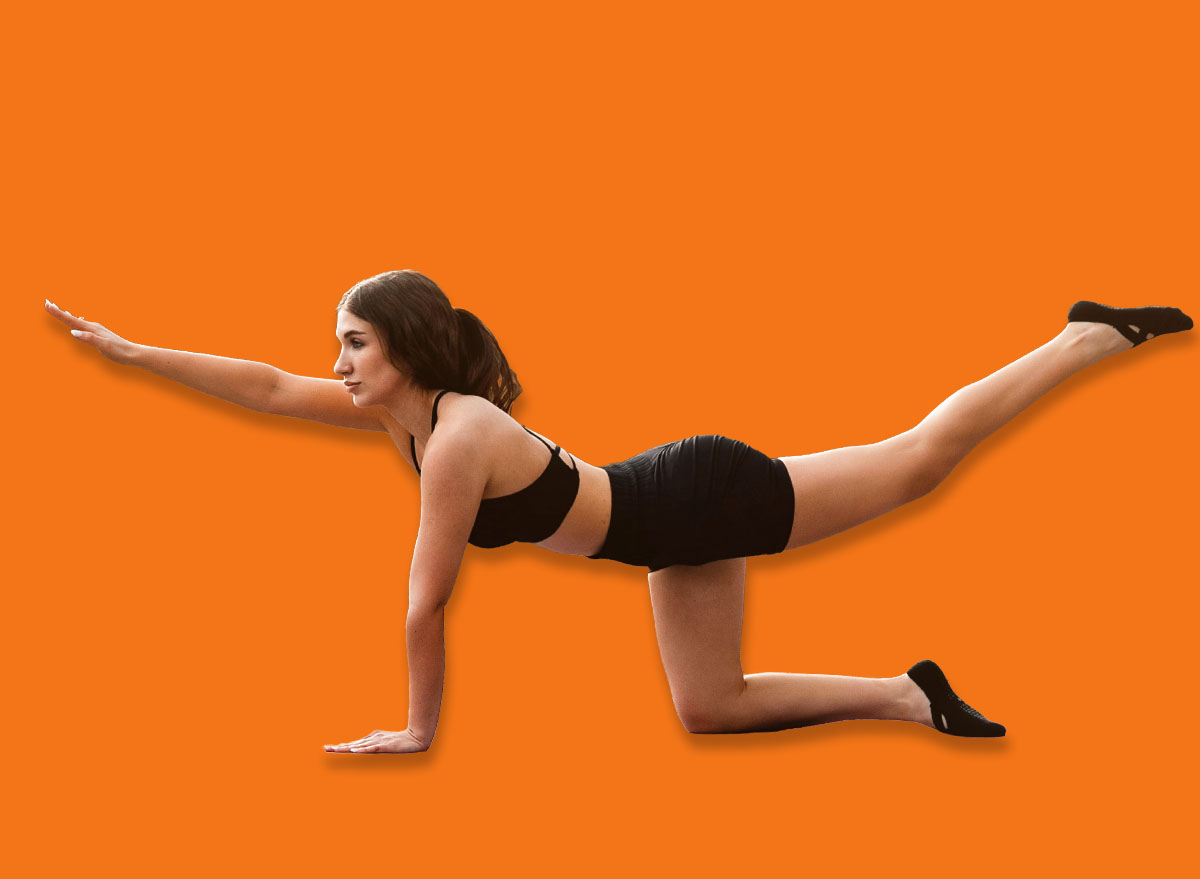
Bird dogs challenge the core, shoulders, glutes, and back simultaneously, making them one of the best total-body stability exercises available. Many adults focus only on strength while neglecting coordination and control, but those qualities become increasingly important after 50. This movement teaches the body to stabilize the spine while the limbs move independently, strengthening the muscles responsible for posture and balance. It also improves body awareness and coordination in ways that transfer directly into daily activities. Performed consistently, bird dogs help create a stronger, more resilient body from head to toe.
How to Do It
- Start on all fours
- Place your hands beneath your shoulders
- Position your knees beneath your hips
- Tighten your core gently
- Extend one arm and the opposite leg
- Hold briefly
- Return slowly
- Alternate sides for 10 repetitions per side.