If You Can Hold This Position for 30 Seconds After 65, Your Core Stability Is Top-Tier
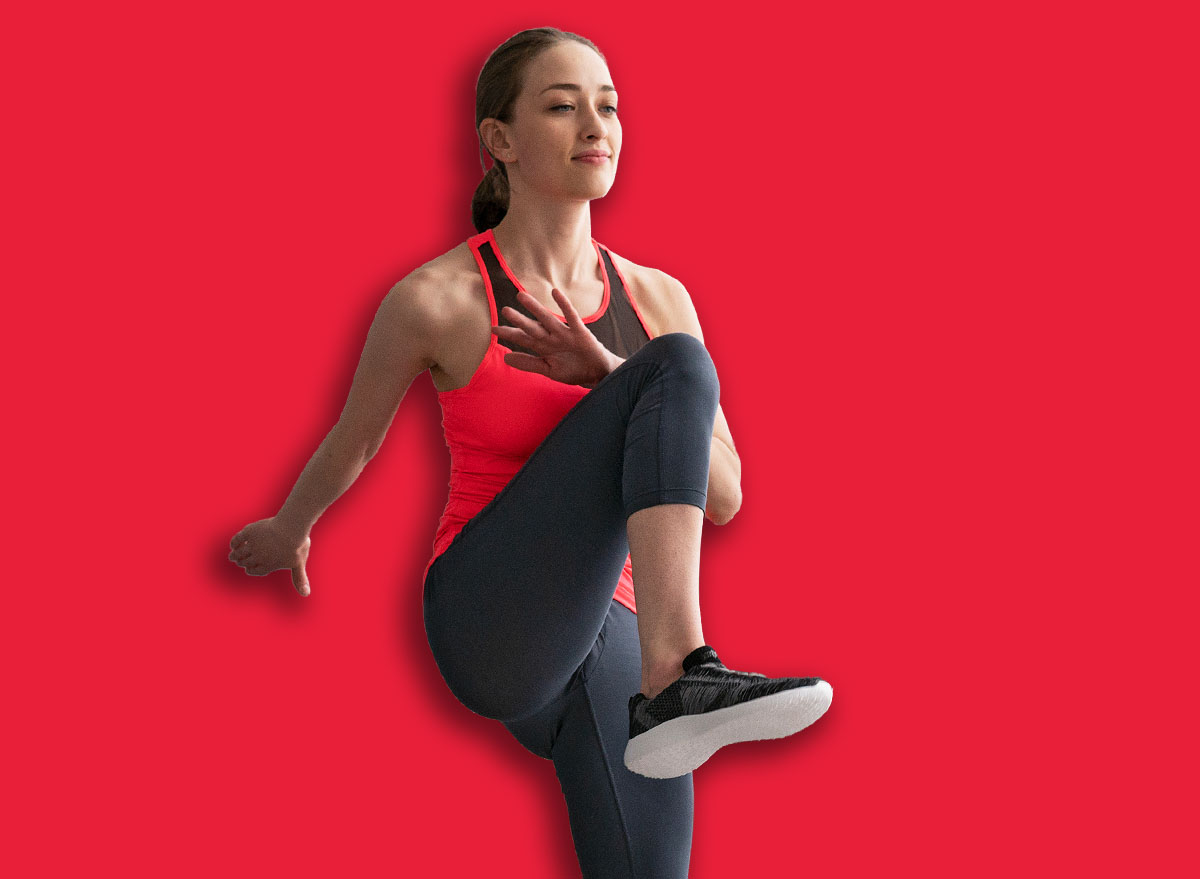

I’ve worked in the fitness industry for the majority of my life, as a personal trainer, and for the last 25 years, training the next generation of fitness professionals. One area I don’t think enough people focus on is core stability. As it doesn’t make a huge visual difference to someone’s physique, it often gets neglected, which is a big mistake.
Core strength is about a lot more than having visible abs and looking “beach ready.” It’s the foundation for almost every move we make. Whether it’s getting out of bed, standing up from a chair, picking things off the floor, reaching for high-up items, or even plain old walking, all of these require the core muscles to be working correctly.
Once we reach our mid-sixties, this stability becomes even more important, as it’s the first line of defense against falls. If we lose our balance or trip, our core muscles need to fire instantly to keep us upright. If they’re weak or slow to respond, then we’re much more likely to hit the ground.
If we have poor core stability, it also affects our posture. When you see people who are hunched forward, suffering with back pain, or moving stiffly, there’s a good chance it’s because their core can’t support their spine properly, affecting everything from breathing to digestion to how much energy they have throughout the day.
In my career, I’ve worked with thousands of older adults, and there’s no doubt in my mind that people who maintain a decent level of core strength move more confidently, have fewer falls, have less back pain, and tend to stay independent for a lot longer than those who’ve let their core get weak. Here’s how to test your core stability and improve it if you’re falling short.
The Gold Standard Test
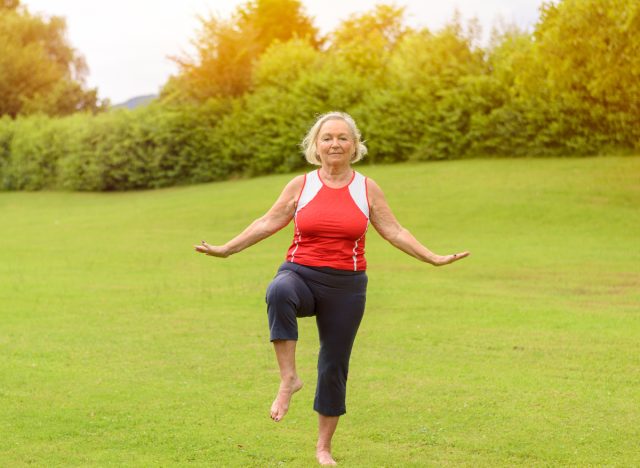
The standing single-leg balance test is simple, requires no equipment, and gives you immediate feedback about your core stability and overall balance. While there are other tests out there, this one translates directly to real-world movements and safety.
Research shows that if you can’t balance on one leg for at least 10 seconds after age 65, you’re at significantly higher risk of falls and early mortality. That might sound dramatic, but the data backs it up. Your ability to stand on one leg requires your core to stabilize your entire body while your hip, knee, and ankle work together—exactly what happens when you’re walking or navigating uneven ground.
Why This Test Works
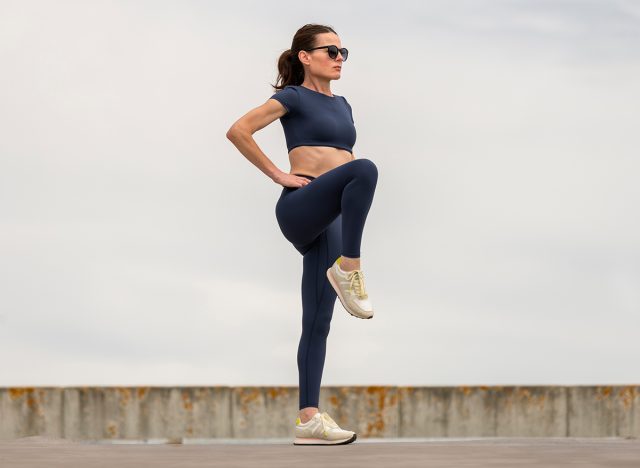
Standing on one leg forces your core muscles to fire constantly to keep you balanced. Your abdominals, obliques, and deep spinal stabilizers all have to work together to stop you from tipping over. At the same time, you’re testing your hip stability, coordination, and the integration between your visual system, inner ear, and proprioception—the three pillars of balance.
Unlike lying on the floor doing planks or crunches, this test shows whether your core can actually do its job in an upright, functional position. It’s a genuine measure of real-world stability.
How to Perform the Test
How to Do It:
- Stand next to a wall or sturdy chair for safety, but don’t touch it unless you need to
- Stand tall with your feet hip-width apart
- Fix your eyes on a point straight ahead at eye level
- Lift one foot off the ground by bending your knee to about 90 degrees
- Keep your lifted foot behind your standing leg, not out to the side
- Hold this position for as long as you can, aiming for at least 30 seconds
- Repeat on the other leg
Time yourself properly. Start the timer when your foot leaves the ground and stop it the moment your raised foot touches down, your standing foot moves, or you need to grab the wall for support.
Safety Precautions
Always stand within arm’s reach of a wall or sturdy furniture. This isn’t about being heroic—it’s about getting accurate information without risking injury. If you feel yourself starting to fall, touch the wall or grab the support. That’s the end of that attempt.
Don’t do this test on carpet or thick rugs. A firm, level surface gives you the most accurate results. Wear flat shoes or go barefoot—don’t attempt this in heels or thick-soled trainers.
If you have significant balance issues or a history of falls, have someone with you the first time you try this test. There’s no shame in asking for a spotter.
Avoid These Mistakes:
- Don’t hold your breath. People often do this without realizing, but it actually makes balance harder and gives you a false reading. Breathe normally throughout the test.
- Don’t look down at your feet. Your eyes should stay fixed on a point straight ahead. Looking down throws off your balance and makes the test easier than it should be, which defeats the purpose.
- Don’t lean your upper body to the side or stick your hip out. Your torso should stay centered over your standing leg. If you’re compensating by leaning, your core isn’t doing its job properly.
- Don’t swing your raised leg around or windmill your arms. Small adjustments are fine, but if you’re flailing about, that’s a sign your core control isn’t where it needs to be.
What Your Results Mean

If you can’t hold this position for 30 seconds, your core stability needs work. It’s that straightforward. The good news is this is completely fixable with consistent practice.
Scoring less than 10 seconds means you’re at higher risk of falls and should treat improving your balance as a priority. Between 10-20 seconds suggests your core stability is below where it should be for your age group. Between 20-30 seconds means you’re close but could still benefit from specific core work.
It’s also worth noting if there’s a big difference between your left and right leg. If you can hold 30 seconds on your right but only 15 on your left, that asymmetry needs addressing. These imbalances often lead to compensation patterns that cause pain or injury down the line.
Don’t panic if you can’t hit 30 seconds yet. I’ve seen people go from barely managing 5 seconds to easily holding 60+ seconds within a few months of consistent practice. Your nervous system adapts quickly to balance training.
If you didn’t pass, here are some exercises that can help you improve.
Supported Single-Leg Balance
Start with supported single-leg balance. Stand next to a wall and lightly touch it with one finger while balancing on one leg. Hold for 30 seconds. Once this feels comfortable, reduce the support—use just your fingertip, then hover your hand near the wall without touching it, then move further away. Progress at your own pace.
Dead Bug
Dead bugs are excellent for building core control while lying down, which is safer for beginners.
Muscles Trained: Abdominals, deep core stabilizers
How to Do It:
- Lie on your back with your arms straight up towards the ceiling and your knees bent at 90 degrees, shins parallel to the floor
- Slowly lower your right arm overhead while straightening your left leg, keeping your lower back pressed into the floor
- Return to the start and repeat on the other side
Recommended Sets and Reps: 3 sets of 10 each side
Form Tip: Keep your lower back pressed into the floor throughout the movement.
Bird Dog
Bird dogs strengthen your core while challenging your balance.
Muscles Trained: Core stabilizers, glutes, back extensors
How to Do It:
- Start on your hands and knees
- Extend your right arm forward and your left leg back, forming a straight line from your hand to your foot
- Hold for 5 seconds, then switch sides
Avoid These Mistakes:
- Don’t let your hips rotate or drop to one side
- Keep your hips level throughout the movement
Recommended Sets and Reps: 3 sets of 10 each side
Form Tip: The key is keeping your hips level—don’t let them rotate or drop to one side.
Tandem Walking
Tandem walking improves dynamic balance. Walk heel-to-toe in a straight line, as if you’re walking on a tightrope. Do this for 20 steps, turn around, and walk back. If this is too difficult at first, do it next to a wall so you can touch it if needed.
Standing Marches
Standing marches work your core in an upright position.
Muscles Trained: Core stabilizers, hip flexors
How to Do It:
- Stand tall and lift one knee to hip height
- Hold for 2 seconds
- Lower it, then lift the other knee
Recommended Sets and Reps: 3 sets of 10 each leg
Form Tip: As this gets easier, close your eyes or stand on a cushion to increase the difficulty.
Pallof Press
Pallof presses are brilliant for anti-rotation core strength. This directly trains the core stability you need for single-leg balance.
Muscles Trained: Obliques, deep core stabilizers, anti-rotation muscles
How to Do It:
- Stand sideways to a resistance band or cable machine anchored at chest height
- Hold the handle with both hands at your chest
- Press straight out in front of you, resisting the pull to rotate
- Bring it back to your chest
Recommended Sets and Reps: 3 sets of 10-12, then switch sides
How Often to Retest
Test yourself every two weeks. This gives your body enough time to adapt and improve, while keeping you motivated with visible progress. Testing more frequently than this often shows minimal change, which can be discouraging even though you’re actually improving.
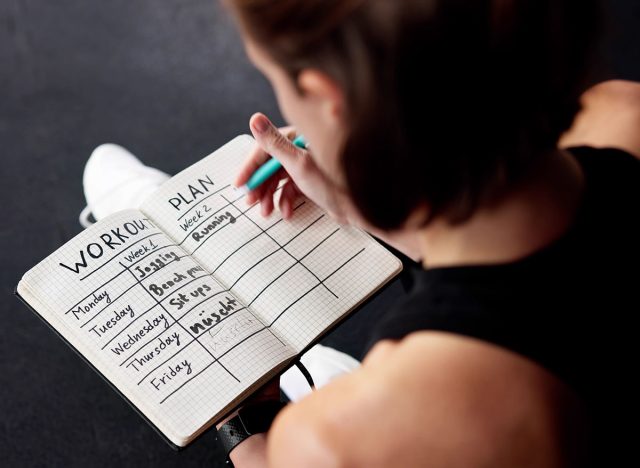
Keep a simple log. Write down the date, which leg you tested, and how many seconds you held the position. Track both legs every time you test—don’t just focus on your weaker side.
After you consistently hit 30 seconds on both legs, retest monthly to make sure you’re maintaining that level. Balance is a use-it-or-lose-it skill, so ongoing practice matters even after you’ve reached a good baseline.
Don’t get discouraged if your times vary slightly from test to test. Factors like fatigue, stress, time of day, and even what you ate can affect your balance on any given day. Look at the trend over several tests rather than obsessing over individual results.
- Source: https://health.clevelandclinic.org/10-second-balance-test
- Source: https://pubmed.ncbi.nlm.nih.gov/32334772/
- Source: https://pubmed.ncbi.nlm.nih.gov/18818444/
- Source: https://www.health.harvard.edu/exercise-and-fitness/the-many-benefits-of-the-dead-bug
- Source: https://www.mdpi.com/2076-3417/14/11/4889