If You Can Do This Many Squats After 60, Your Lower-Body Power Is Elite-Level
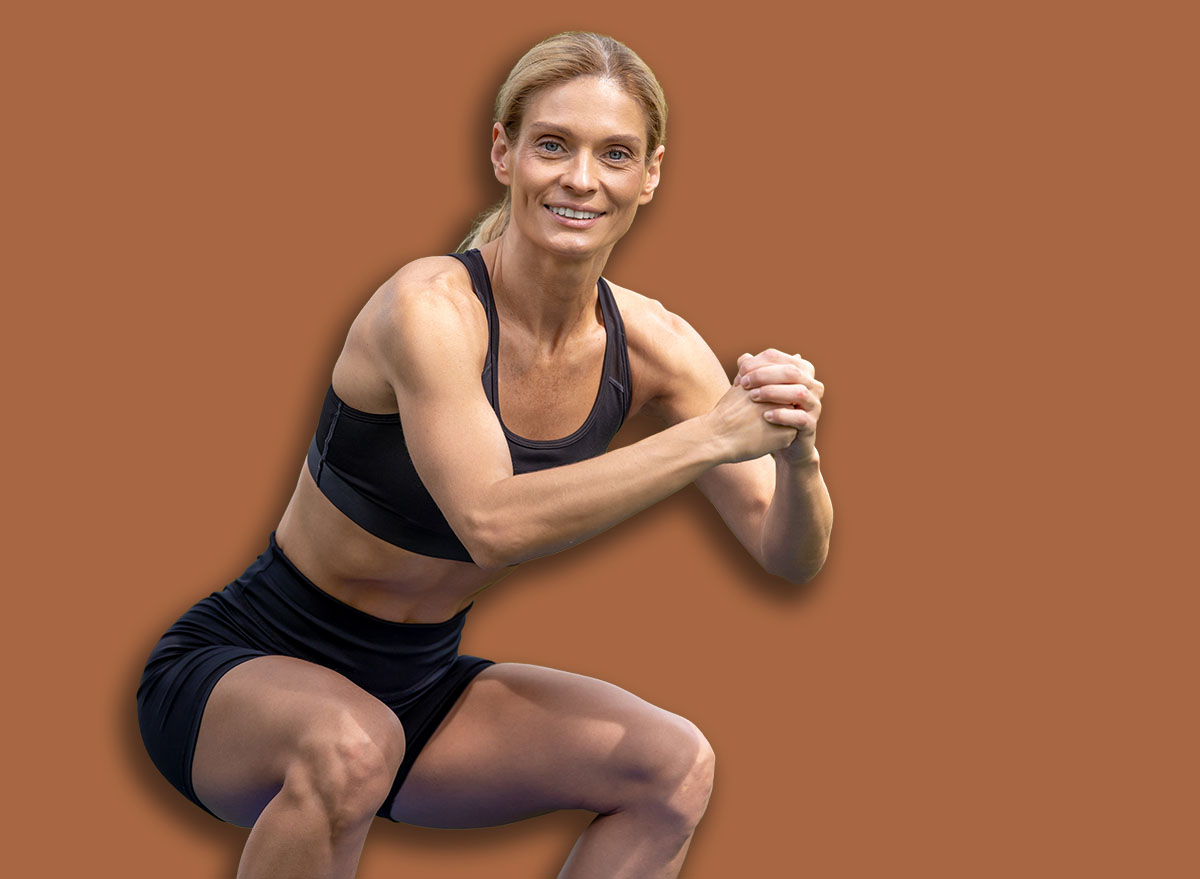

Squats are one of the most powerful exercises you can add to your routine after 60—and for good reason. They help rebuild muscle, improve balance, and provide the strength you need to live an independent lifestyle. There are many simple things you may take for granted—like getting out of bed or bending down to tie your shoes—that require a strong lower body. Performing squats regularly will strengthen these muscles, particularly your hamstrings, glutes, and hamstrings—all while boosting mobility in your hip and knees.
The result? Stronger legs, improved balance, and the ability and confidence to continue living an active life without assistance.
Needless to say, if you don’t already have squats in your workout routine, we’d suggest adding them pronto. In fact, we spoke with Felicia Hernandez, NASM-certified personal trainer and community engagement lead at Eden Health Club, who says if you can do this many squats after 60, your lower-body power is top-notch.
What Makes Squats a Great Indicator of Lower-Body Power
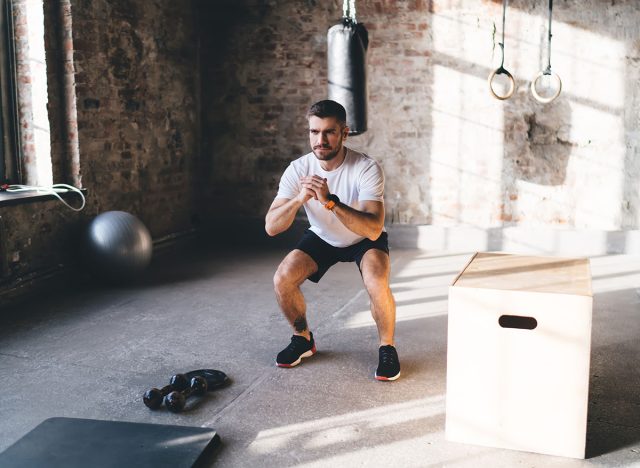
According to Hernandez, squats are a “real-life” movement test, not simply a move you do at the gym.
“Every time you sit down, stand up, climb stairs, or pick something off the ground, you’re asking your legs and hips to perform some version of a squat,” Hernandez tells us. “After 60, your ability to perform multiple reps of a bodyweight squat becomes a clear indicator of functional independence. It measures not only strength but muscular endurance, joint control, balance, and coordination. You can’t fake your way through good squats; every rep tells the truth about how your body moves.”
Having a strong lower body decreases your risk of falls and boosts longevity as you age. Therefore, keeping track of your squat count is a seamless yet powerful way to test long-term mobility and confidence.
Which Muscles Are Engaged the Most When Performing Squats?
Squats fire up every major lower-body muscle group—the quads, glutes, hamstrings, core muscles, and calves.
“Joints affected include the ankles, knees, hips, and lumbar spine. As we age, joint range of motion can shrink, and muscles can weaken, especially without resistance or movement training. Squats keep all of those systems online: they teach the body to absorb force safely and generate upward movement with control,” Hernandez points out. “When you practice squats regularly, you’re less likely to fall, more likely to recover quickly when you trip, and better able to move through your day with fluidity, without relying on support or avoidant behaviors.”
The Squat Benchmark To Aim For
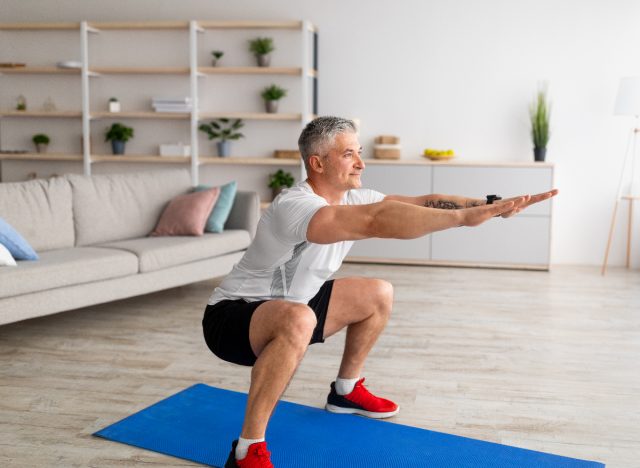
Aim to perform 25 to 40 bodyweight squats consecutively with proper form and without assistance. This benchmark places you “well above average” when it comes to lower-body coordination, endurance, and motor control. Completing more than 40 reps with solid form means “elite-level strength, mobility, and stamina for your age bracket.”
“The key is quality over quantity,” Hernandez points out. “Each rep should be stable and confident. If you’re hitting these numbers, you’re not just gym-fit, you’re life-ready. And every decade after 60, maintaining that ability becomes a bigger asset to your independence.”