6 Standing Exercises That Strengthen Your Midsection Faster Than Crunches After 60
Crunches have plenty of notoriety, and there’s a good chance they were the first ab exercise you were shown back in the day. They’re familiar, easy to picture, and they’ve been treated like the default core move for decades. But after 60, your midsection needs more than repeated floor reps to feel strong during the rest of your day.
Standing core work gives your abs a bigger role. Your midsection has to help you stay tall, carry weight, control rotation, and keep your posture steady while your arms and legs move. That’s closer to how your core works when you walk, lift groceries, reach across your body, or carry something heavy on one side.
In coaching, I’ve found that many older clients feel their core working better once we bring the training off the floor. Carries, marches, presses, and loaded squats make the session feel more practical because the abs aren’t isolated from the rest of the body. The work feels strong without turning into another long set of crunches.
The six exercises below train your midsection from standing positions using bands, dumbbells, and carries. You’ll work on resisting rotation, bracing under load, walking with control, and moving with better posture so your core strength feels useful outside the workout.
Pallof Press
The Pallof press is one of the cleanest ways to train your core while standing, and you can easily do it at home or in the gym. The band pulls you toward the anchor, and your abs have to keep your torso facing forward. That steady resistance builds the control your midsection uses when you carry groceries, reach across your body, or shift weight during the day. Keep the press slow and own the pause with your arms extended.
Muscles Trained: Abs, obliques, deep core, shoulders, glutes.
How to Do It
- Anchor a resistance band at chest height.
- Stand sideways to the anchor point and hold the band at your chest.
- Step away until the band has light tension.
- Stand tall with your feet about shoulder-width apart.
- Press your hands straight out in front of your chest.
- Bring your hands back in and repeat before switching sides.
Recommended Sets and Reps: Perform 2 to 3 sets of 8 to 12 reps per side.
Best Variations: Half-kneeling Pallof press, lighter-band Pallof press, Pallof press hold.
Form Tip: Keep your torso facing forward as the band pulls from the side.
Suitcase Carry
One dumbbell can reveal a lot about your core strength when used dynamically. Hold it on one side, and your body will want to lean, which gives the obliques a clear job. The suitcase carry helps you practice walking tall under an uneven load. Use a weight that challenges your posture without pulling you out of alignment.
Muscles Trained: Obliques, abs, grip, shoulders, glutes.
How to Do It
- Stand tall with one dumbbell or kettlebell at your side.
- Keep your shoulders level.
- Brace your core.
- Walk forward with slow, controlled steps.
- Keep the weight from pulling you to one side.
- Switch hands and repeat on the other side.
Recommended Sets and Reps: Perform 2 to 3 carries of 20 to 40 seconds per side.
Best Variations: Lighter suitcase carry, march-in-place suitcase carry, shorter-distance carry.
Form Tip: Walk tall and keep your ribs stacked over your hips.
Goblet Hold Marching
Goblet hold marching turns a simple march into a full-body core exercise. Holding the weight at your chest makes your abs brace, while each knee lift challenges your balance and hip control. I like this move for clients who need core work that also feels athletic and practical. Keep the weight close, move slowly, and pause at the top of each march.
Muscles Trained: Abs, hip flexors, glutes, quads, upper back.
How to Do It
- Stand tall and hold a dumbbell or kettlebell at chest height.
- Set your feet under your hips.
- Brace your core.
- Lift one knee toward hip height.
- Lower that foot with control.
- Switch sides and continue alternating.
Recommended Sets and Reps: Perform 2 to 3 sets of 20 to 40 seconds.
Best Variations: Bodyweight marching, lighter goblet hold march, supported goblet march.
Form Tip: Stay tall as the knee lifts instead of leaning back.
Farmer’s Carry
A farmer’s carry should feel simple, heavy, and honest. You pick up two weights and walk with clean posture. Your abs help hold the rib cage and pelvis in place while your grip, shoulders, and hips stay strong through each step. It’s a strong choice after 60 because it builds midsection strength you can feel in everyday carrying tasks.
Muscles Trained: Abs, upper back, shoulders, grip, glutes.
How to Do It
- Stand between two dumbbells or kettlebells.
- Hinge down and grip one weight in each hand.
- Stand tall with the weights at your sides.
- Brace your core.
- Walk forward with controlled steps.
- Set the weights down safely at the end of the carry.
Recommended Sets and Reps: Perform 2 to 3 carries of 20 to 45 seconds.
Best Variations: Lighter farmer’s carry, shorter carry, march-in-place farmer’s carry.
Form Tip: Keep the weights from swinging as you walk.
Goblet Squat
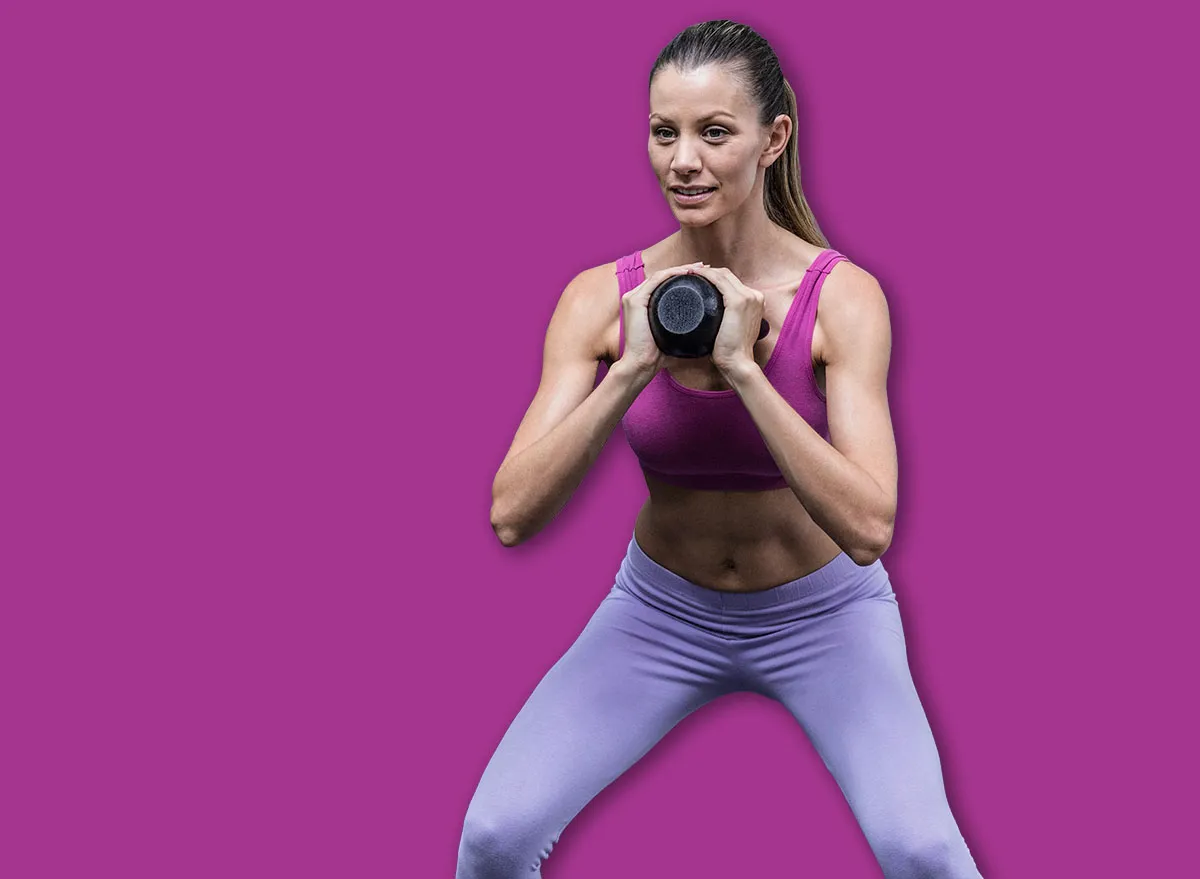
A goblet squat strengthens the midsection because the weight sits in front of your body. Your abs help keep your torso stable as your hips and knees bend. This is where lower-body strength and core control meet in one clean movement. Choose a weight that lets you squat smoothly and stand tall without folding forward.
Muscles Trained: Quads, glutes, hamstrings, abs, upper back.
How to Do It
- Stand with your feet about shoulder-width apart.
- Hold one dumbbell or kettlebell at chest height.
- Brace your core.
- Push your hips back and bend your knees.
- Lower to a comfortable depth.
- Press through your feet to stand tall.
Recommended Sets and Reps: Perform 2 to 3 sets of 8 to 12 reps.
Best Variations: Bodyweight squat, box squat, lighter goblet squat.
Form Tip: Keep the weight close to your chest through the full rep.
Dumbbell Wood Chop
Rotation belongs in a complete midsection plan. The dumbbell wood chop trains your abs and obliques as the weight moves across your body, and it helps you practice controlled rotation. Keep the dumbbell light enough to guide the movement instead of yanking it from side to side. Smooth reps will build your waist and trunk strength more than speed.
Muscles Trained: Obliques, abs, shoulders, hips, glutes.
How to Do It
- Stand with your feet about shoulder-width apart.
- Hold one dumbbell with both hands.
- Bring the dumbbell toward the outside of one hip.
- Rotate your torso as you lift the weight across your body.
- Finish with the dumbbell near the opposite shoulder.
- Return with control and repeat before switching sides.
Recommended Sets and Reps: Perform 2 to 3 sets of 8 to 12 reps per side.
Best Variations: Bodyweight wood chop, lighter dumbbell wood chop, slower wood chop.
Form Tip: Turn your hips and shoulders together to keep the movement smooth.
How to Build a Stronger Midsection After 60
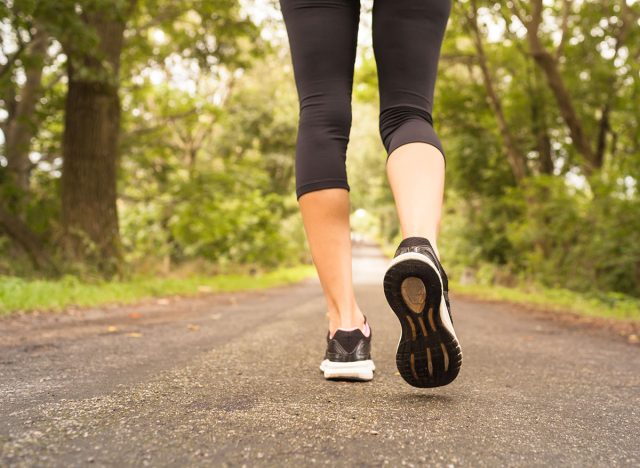
Standing core work becomes more effective when the reps stay clean, and the loads match your control. Use these exercises three to four days per week, either as a short core session or as part of a full-body workout. Start with lighter weights and shorter carries, then add time or load once your posture stays steady. A stronger midsection should help you feel more confident when you walk, carry, lift, and move through the day.
- Start with posture first: Stand tall before every set, so your core has a strong position to support.
- Use lighter weights early: Clean carries and presses build better strength than heavier loads that pull you out of position.
- Train both sides evenly: Suitcase carries, Pallof presses, and wood chops all need balanced work from side to side.
- Keep the carries controlled: Walk slowly enough that the weights stay quiet and your posture stays tall.
- Add walking to your week: Daily walks give your midsection more practice supporting movement.
- Progress one variable at a time: Add weight, time, or reps gradually so each exercise still feels sharp.
References
- Zhong, Yuanji et al. “Effects of core training on balance performance in older adults: a systematic review and meta-analysis.” Frontiers in public health vol. 13 1661460. 9 Oct. 2025, doi:10.3389/fpubh.2025.1661460
- Granacher, Urs et al. “The importance of trunk muscle strength for balance, functional performance, and fall prevention in seniors: a systematic review.” Sports medicine (Auckland, N.Z.) vol. 43,7 (2013): 627-41. doi:10.1007/s40279-013-0041-1