5 Standing Exercises That Rebuild Strength Faster Than Gym Workouts After 50

Rebuilding strength after 50 works best when training looks and feels like real movement. The body responds to exercises that ask multiple joints and muscle groups to work together, stay coordinated, and produce force while standing tall. That’s where progress accelerates, because strength stops living in isolated muscles and starts showing up in how you move.
Standing exercises place greater demands on posture, balance, and core control while allowing you to load the body in practical ways. Your legs create the foundation, your trunk transfers force, and your upper body finishes the job. Every rep becomes more meaningful because more muscles contribute. That efficiency matters when time, recovery, and joint health all factor into your training decisions.
The five exercises below focus on rebuilding usable strength that carries into daily life. They keep you upright, challenge large muscle groups, and encourage better movement patterns without relying on machines or excessive volume. If your goal is to feel stronger, more capable, and more athletic after 50, this is where to start.
Goblet Squats
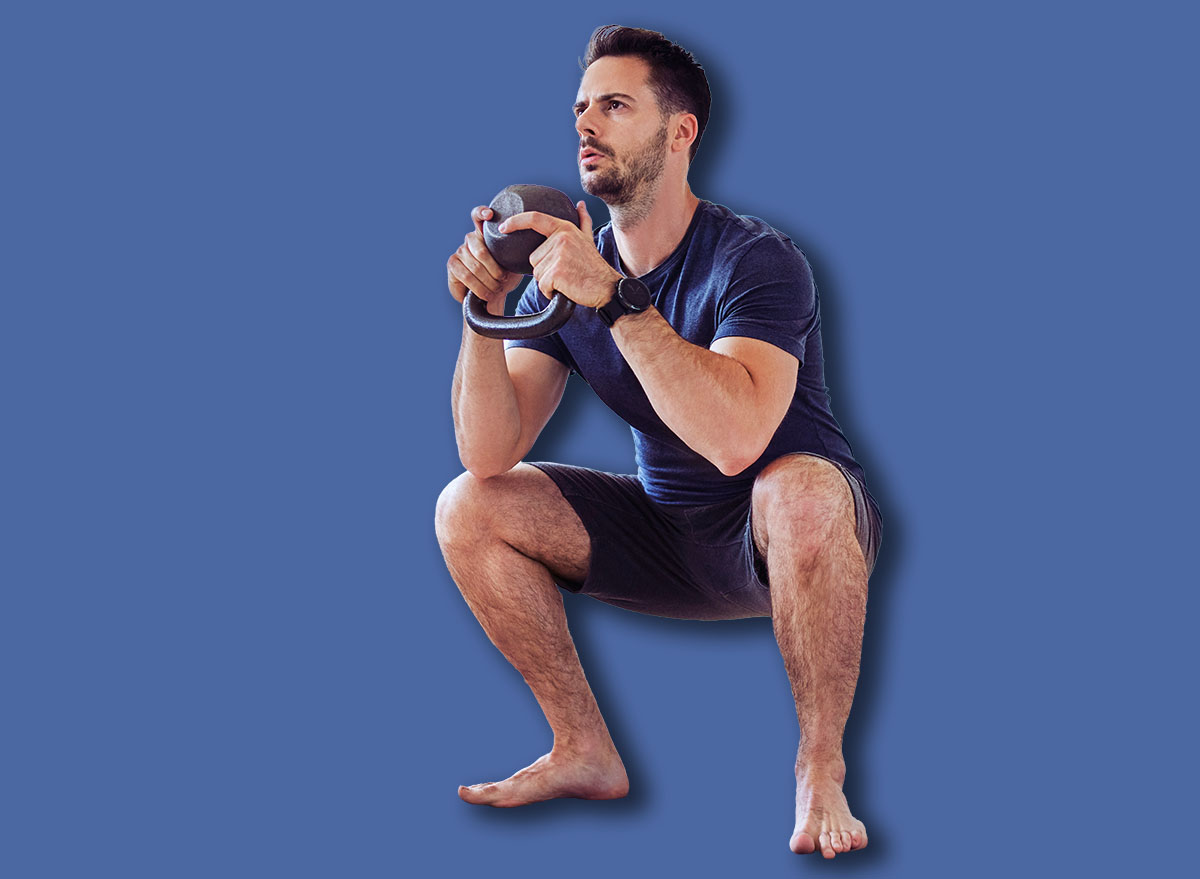
Goblet squats rebuild lower-body strength while reinforcing proper posture and core engagement. Holding the weight in front encourages an upright torso and controlled depth, which helps joints feel more comfortable. Your legs do the heavy lifting, while your core continuously stabilizes the load. This combination builds strength that transfers directly to standing, lifting, and everyday movement.
Muscles Trained: Quadriceps, glutes, hamstrings, core.
How to Do It:
- Hold a dumbbell or kettlebell close to your chest with both hands.
- Stand with your feet shoulder-width apart and toes slightly turned out.
- Brace your core and sit your hips back and down.
- Lower under control until your thighs reach parallel or your best depth.
- Drive through your heels to stand tall.
Recommended Sets and Reps: Perform 4 sets of 6 to 8 reps. Rest for 75 seconds between each set.
Best Variations: Goblet box squat, tempo goblet squat, heels-elevated goblet squat.
Form Tip: Keep your ribs stacked over your hips throughout the movement.
Dumbbell Romanian Deadlifts
This hinge pattern rebuilds strength through the hips and posterior chain, areas that naturally lose power with age. Romanian deadlifts teach your body to generate force from the hips while maintaining spinal control. The slow, controlled lowering phase reinforces strength and resilience. Over time, this improves lifting capacity and protects your lower back during daily tasks.
Muscles Trained: Glutes, hamstrings, lower back, core.
How to Do It:
- Hold dumbbells at your sides with a neutral grip.
- Stand tall with a slight bend in your knees.
- Push your hips back while keeping your spine neutral.
- Lower the weights until you feel tension in your hamstrings.
- Drive your hips forward to return to standing.
Recommended Sets and Reps: Perform 3 sets of 8 to 10 reps. Rest for 75 seconds between each set.
Best Variations: Single-leg Romanian deadlift, kettlebell Romanian deadlift, staggered-stance RDL.
Form Tip: Think hips back, chest long, and shins mostly vertical.
Reverse Lunges
Reverse lunges rebuild single-leg strength without excessive joint stress. Stepping back allows for smoother loading and better control through the hips and knees. Each rep challenges balance, coordination, and lower-body strength simultaneously. That combination builds stability and confidence with movement.
Muscles Trained: Glutes, quadriceps, hamstrings, core.
How to Do It:
- Stand tall with your feet hip-width apart.
- Step one foot back into a controlled lunge.
- Lower until both knees bend comfortably.
- Push through your front heel to stand.
- Switch sides after completing your reps.
Recommended Sets and Reps: Perform 3 sets of 6 to 8 reps per side. Rest for 60 seconds between each set.
Best Variations: Loaded reverse lunge, deficit reverse lunge, alternating reverse lunge.
Form Tip: Keep your front foot fully planted as you drive up.
Dumbbell Push Press
The push press builds upper-body strength while allowing heavier loads than strict pressing. Your legs initiate the movement, your core transfers force, and your shoulders and arms finish strong. This coordination improves total-body power and reinforces efficient movement patterns. It’s a strength builder that feels athletic and joint-friendly.
Muscles Trained: Shoulders, triceps, quadriceps, glutes, core.
How to Do It:
- Hold dumbbells at shoulder height with palms facing in.
- Stand with your feet shoulder-width apart.
- Dip slightly by bending your knees.
- Drive upward and press the weights overhead.
- Lower the dumbbells back to your shoulders with control.
Recommended Sets and Reps: Perform 4 sets of 5 to 6 reps. Rest for 90 seconds between each set.
Best Variations: Single-arm push press, kettlebell push press, alternating push press.
Form Tip: Let your legs start the movement before your arms take over.
Farmer Carries
Farmer carries rebuild strength through sustained tension rather than repeated reps. Holding heavy weights forces your core, grip, and posture muscles to work nonstop. Walking adds a balance and coordination component that machines can’t replicate. This exercise builds the kind of strength that supports daily life and long-term resilience.
Muscles Trained: Core, forearms, upper back, shoulders, glutes.
How to Do It:
- Hold heavy dumbbells or kettlebells at your sides.
- Stand tall with your chest up and core braced.
- Walk forward with short, controlled steps.
- Maintain steady breathing as you move.
- Set the weights down with control at the end.
Recommended Sets and Reps: Perform 4 carries of 30 to 45 seconds. Rest for 60 seconds between each carry.
Best Variations: Suitcase carry, front rack carry, uneven load carry.
Form Tip: Keep your shoulders level and avoid leaning to one side.
The Best Strength-Building Tips After 50
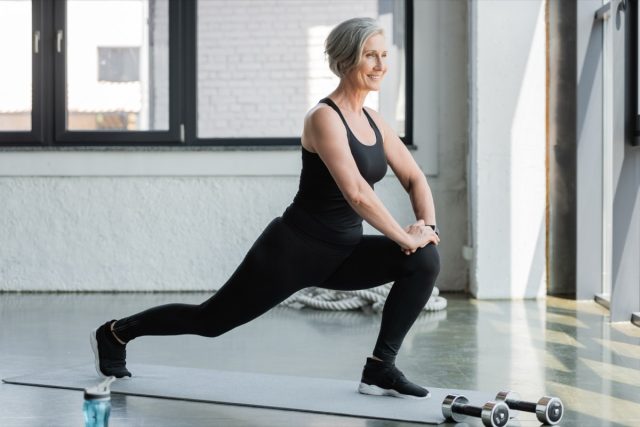
Rebuilding strength after 50 works best when training supports recovery, movement quality, and consistency. Standing exercises check all three boxes, but how you apply them determines how quickly results appear.
- Train with purpose, not fatigue: Choose loads that challenge you while allowing clean, repeatable reps. Strength builds when your nervous system feels in control, not when every set turns sloppy.
- Prioritize big movements first: Start workouts with compound standing exercises while energy and focus are highest. This ensures your strongest efforts go toward the lifts that deliver the biggest return.
- Respect recovery between sessions: Two to four training days per week allow muscles, joints, and connective tissue to adapt without feeling beaten down. More isn’t better if performance drops.
- Progress in small, reliable steps: Add weight, reps, or time only when technique stays sharp across all sets. Small progressions stacked over weeks outperform aggressive jumps.
- Support strength outside the gym: Quality sleep, daily walking, and light mobility work help maintain joint health and reinforce movement patterns. These habits make your next workout stronger, not harder.
Keep these principles in place, and standing strength training becomes sustainable, effective, and repeatable well past 50.
References
- Paoli, Antonio et al. “Resistance Training with Single vs. Multi-joint Exercises at Equal Total Load Volume: Effects on Body Composition, Cardiorespiratory Fitness, and Muscle Strength.” Frontiers in physiology vol. 8 1105. 22 Dec. 2017, doi:10.3389/fphys.2017.01105