5 Daily Walking Moves That Restore Stair-Climbing Power Faster Than Gym Machines After 55
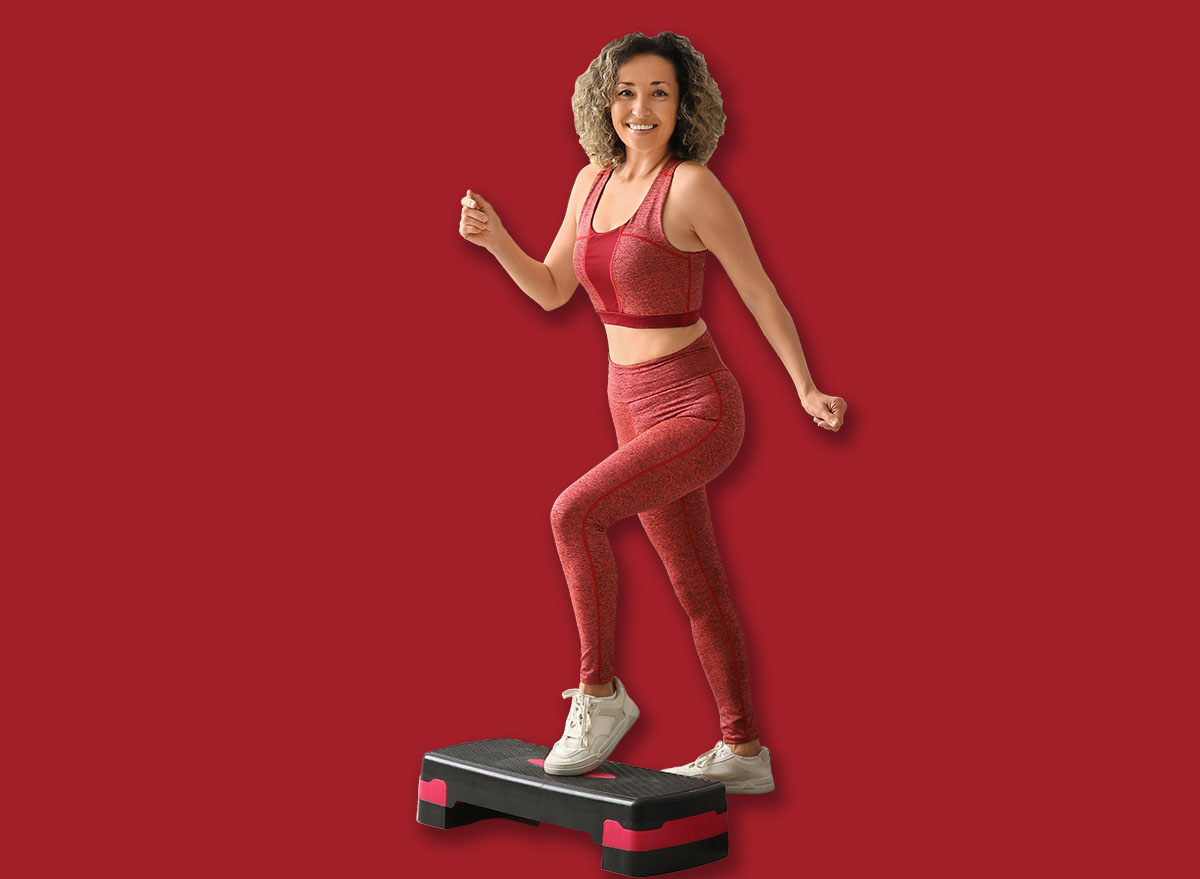

Stair climbing is one of those activities that reveals fitness gaps faster than almost anything else. When someone in their mid-50s or beyond starts avoiding stairs or gripping the handrail tightly, it’s usually not just one problem; it’s several hitting at once. I’m a personal trainer and fitness educator at TRAINFITNESS, and I’ve been working with older adults for nearly 40 years. The good news is that a handful of simple, targeted moves you can do every day during or around your walks can rebuild your stair-climbing strength faster than any gym machine. Here are the five I recommend.
Why Stairs Get Harder After 55
Stairs demand strength, power, balance, and cardiovascular fitness all at the same time. When any one of these systems starts to decline, the stairs become harder. When multiple systems decline together, stairs can feel impossible.
Our leg strength drops by around 1% per year after 50 if we’re not working against it. That might not sound like much, but over five or ten years, it adds up. The quadriceps are particularly affected. These muscles are what lift your body weight up each step, and when they weaken, every step requires more effort.
Power declines even faster than strength. Power is your ability to generate force quickly, and we lose it at roughly double the rate of strength. This is why getting up from a low chair becomes difficult and why pushing yourself up a step starts to feel like hard work.
Balance plays a bigger role than most people realize. Climbing stairs requires you to shift your entire body weight onto one leg while the other leg moves to the next step. If your balance is shaky, your brain compensates by slowing you down and making you grip the handrail. This creates a feedback loop; the less you challenge your balance, the worse it gets.
Cardiovascular fitness is the fourth piece. Even if your legs are strong enough, if your heart and lungs can’t deliver oxygen efficiently, you’ll be out of breath halfway up.
Most people don’t realize how much they’ve declined until the stairs force the issue. You start taking the lift more often, or you slow down and use the handrail without thinking about it. These small compensations mask the problem until one day you realize that stairs have become genuinely difficult.
Step-Ups on a Low Step
This is the single most effective movement for rebuilding the strength and power you need to climb stairs. It mimics the exact motion of stair climbing but in a controlled way that lets you focus on quality and gradually build up.
Muscles Trained: Quadriceps, glutes, calves
How to Do It:
- Find a step that’s around 15-20cm high. A kerb works perfectly, or the bottom step of your stairs at home.
- Stand facing the step with your feet hip-width apart.
- Place your right foot fully on the step, making sure your entire foot is in contact with the surface.
- Push through your right heel to lift your body up until your right leg is straight and your left foot is off the ground.
- Step back down slowly and under control. That’s one rep.
Avoid These Mistakes:
- Don’t push off with your back foot. All the work should come from your front leg.
- Don’t lean forward too much. Keep your torso upright and drive through your heel.
- Don’t rush the movement. Lower yourself back down slowly; the controlled descent builds as much strength as the push up.
Recommended Sets and Reps: 8-10 reps on each leg, twice a day. As you get stronger, increase to 12-15 reps or use a slightly higher step.
Form Tip: Make sure all the work comes from your front leg. If your back foot is helping push you up, you’re not getting the full benefit.
I worked with a client in her early 60s who had started avoiding the stairs in her house entirely. She was using step-ups on her bottom stair twice a day, 10 reps each leg. Within three weeks, she was climbing the full flight without stopping. Within six weeks, she wasn’t even thinking about it anymore.
Sit-to-Stand From a Dining Chair
This builds the power you need to push yourself up each stair step.
Muscles Trained: Quadriceps, glutes, core
How to Do It:
- Sit in a standard dining chair with your feet flat on the floor, hip-width apart.
- Cross your arms over your chest or hold them out in front of you.
- Lean forward slightly from your hips, then push through your heels to stand up without using your hands.
- Sit back down slowly and under control.
Avoid These Mistakes:
- Don’t rock forward to generate momentum.
- Don’t use your hands to push off the chair or your thighs.
- Don’t sit down too quickly. Control the descent.
Recommended Sets and Reps: 10 reps, 2-3 times per day. As it gets easier, slow down the sit-back-down phase to 3-4 seconds.
Form Tip: Slowing down the lowering phase makes this significantly harder and builds more strength.
One of my clients, in his late 50s, couldn’t get out of a low sofa without using his hands. After four weeks of sit-to-stands twice a day, he was standing up from any chair without thinking about it.
Calf Raises
Your calves push you off each step, and when they’re weak, stair climbing becomes exhausting.
Muscles Trained: Gastrocnemius, soleus (calf muscles)
How to Do It:
- Stand with your feet hip-width apart, holding onto a wall or sturdy surface for balance.
- Rise up onto the balls of your feet as high as you can.
- Hold for a second at the top, then lower back down slowly.
Avoid These Mistakes:
- Don’t cut the range short. Rise as high as you can so your calf muscles are working hard.
- Don’t bounce through the movement. Slow and controlled is what builds strength.
Recommended Sets and Reps: 12-15 reps, twice a day. Once this becomes easy, do them one leg at a time.
Form Tip: Get the full range of motion on every rep. If you’re not feeling your calves working hard, you’re probably not rising high enough.
Single-Leg Balance Holds
Balance is half the battle with stairs.
Muscles Trained: Ankle stabilizers, hip stabilizers, core
How to Do It:
- Stand next to a wall or sturdy surface for safety.
- Lift one foot slightly off the ground and hold the position for 20-30 seconds.
- Switch legs.
Avoid These Mistakes:
- Don’t shift your weight around constantly. Find a stable position and hold it.
- Don’t hold your breath. Keep breathing normally throughout.
Recommended Sets and Reps: 20-30 seconds per leg, twice a day on each leg. As you improve, try it with your eyes closed or without holding onto anything.
Form Tip: Closing your eyes is a simple way to make this dramatically harder once the basic version feels easy.
I had a client in her mid-60s who was terrified of stairs because she felt unsteady. After two weeks of daily balance holds, her confidence improved noticeably, and she stopped gripping the handrail on every step.
Walking With an Exaggerated Knee Lift
This trains your hip flexors and quads to lift your leg higher, which is exactly what stair climbing demands.
Muscles Trained: Hip flexors, quadriceps
How to Do It:
- During your normal daily walk, spend 2-3 minutes lifting your knees higher than usual with each step.
- Aim to bring your knee up to hip height if possible.
- You can break it into shorter bursts if needed.
Avoid These Mistakes:
- Don’t lean back when you lift your knees. Keep your torso upright so the work stays in your hip flexors.
- Don’t rush. Lift your knees deliberately and under control.
Recommended Sets and Reps: 2-3 minutes during your regular walk. Break into shorter bursts if needed.
Form Tip: Keep your torso upright throughout. Leaning back takes the work away from exactly the muscles you’re trying to train.
How Quickly You’ll Notice a Difference
If you’re doing these movements daily, you’ll notice changes faster than you probably expect.
Within the first week, you’ll feel less fatigued during the day. Your legs won’t feel as heavy or tired. This is your nervous system getting better at activating your muscles; early strength gains happen in the brain, not the muscles.
By week two or three, you’ll notice that climbing a single flight of stairs doesn’t leave you as out of breath. You might still need the handrail, but you won’t be gripping it as tightly. Everyday movements like getting out of your car or standing up from a chair will feel easier.
By week four to six, most people can climb a full flight of stairs without stopping or needing the handrail for balance. You’ll still be aware that you’re working, but it won’t feel like a struggle.
By eight weeks, stairs should feel routine again. You won’t be thinking about them before you climb them, and you won’t be avoiding them when you have the option of a lift.
The timeline depends on how weak you’ve become and how consistently you practice. Daily practice is non-negotiable; doing these movements three times a week won’t get you there.
Nutrition, Sleep, and Habits That Speed Up Recovery

The most important piece of the puzzle is getting enough protein. After the age of 50, the body gets worse at both digesting protein and turning it into muscle, so try to aim for an intake of 1.2-1.6 grams per kilo of bodyweight every day, broken up throughout the day with each meal. You don’t need protein shakes. You simply need enough from the meat, fish, eggs, dairy, nuts, seeds, and pulses in your daily meals.
Sleep is where your muscles actually recover and build themselves. If you’re not sleeping well, you’re not going to see the results you should be from your workouts. Aim for seven to eight hours, and just like with workouts, quality is just as important as quantity.
Walking more is also helpful. The targeted exercises above should sit on top of a good level of general activity. If you’re able to do so, aim for 6,000-8,000 steps daily. This keeps your cardiovascular system working for you and supports recovery.
Something I’ve noticed people rarely think about is hydration. Not enough water is going to negatively impact both muscle function and recovery. You should be drinking enough so that your urine is a pale yellow color. If you’re not drinking water until you’re feeling thirsty, you’ve already missed the boat.
Finally, consistency will beat intensity every time. Doing these exercises correctly, day in, day out, will give you a better result than sporadic days of greater effort. The body adapts to regular and repeated stresses, so give it that stress on a regular basis and it will change in response.