6 Wall Exercises That Build Lower Back Strength Faster Than Squats After 60
Lower back strength after 60 usually depends on the muscles around your spine more than people realize. Your glutes, hips, core, hamstrings, and upper body all help support your back when you stand, walk, bend, lift, or hold good posture for any length of time. When those areas lose strength or stop working together well, your lower back often ends up doing more than it should, and that’s when simple daily movement can start to feel tiring or stiff.
Squats can help build lower-body strength, but they don’t always teach the support system around your lower back to work well. Wall exercises give you a more controlled entry point. The wall provides feedback, support, and a clear target, helping you focus on bracing, hip movement, posture, and glute engagement without feeling rushed or unstable.
I like wall work for people rebuilding strength because it makes the movement easier to understand right away. You can feel where your hips and spine are, and whether your body is drifting out of position. The six exercises below train your legs, glutes, core, hips, and trunk, so your lower back receives stronger support from the surrounding muscles.
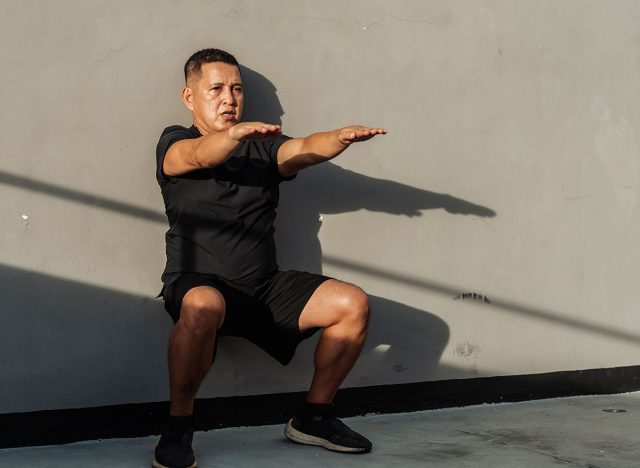
Wall Sits
Wall sits train your quads, glutes, and core while your back stays supported against the wall. Holding the position builds lower-body endurance, which helps your legs take on more of the workload instead of leaving your lower back to compensate. Your core also has to stay engaged so your ribs and pelvis remain in a strong position. Stronger legs and better bracing translate into standing longer, climbing stairs, and moving through the day without your lower back feeling like the weak link.
Muscles Trained: Quadriceps, glutes, hamstrings, core
How to Do It:
- Stand with your back against a wall.
- Walk your feet forward slightly.
- Slide down the wall until your knees bend comfortably.
- Brace your core and press your back gently into the wall.
- Hold the position while breathing steadily.
- Stand back up with control.
Recommended Sets and Reps: Perform 3 sets of 20 to 30 second holds. Rest for 45 seconds between each set.
Best Variations: Higher wall sit, lower wall sit, wall sit with heel raises
Form Tip: Keep your feet flat and your knees tracking with your toes.
Wall Marching
Wall marching trains your hip flexors, glutes, calves, and core while providing a supported way to practice single-leg control. Each knee lift asks your standing leg to stabilize and your midsection to maintain a tall posture. Better single-leg control helps reduce unnecessary stress on the lower back during walking, on stairs, and during balance shifts. The wall gives you just enough support to move with confidence while your hips and core do the work.
Muscles Trained: Hip flexors, glutes, calves, core
How to Do It:
- Stand facing a wall with your hands lightly placed against it.
- Step your feet hip-width apart.
- Brace your core and stand tall.
- Lift one knee toward your waist.
- Lower your foot back to the floor with control.
- Alternate legs in a steady rhythm.
Recommended Sets and Reps: Perform 3 sets of 10 to 12 reps per leg. Rest for 30 seconds between each set.
Best Variations: Slower wall marches, paused knee lifts, hands-free marches
Form Tip: Stay tall and avoid leaning your chest into the wall.
Wall-Supported Side Plank
Wall-supported side planks target your obliques, hips, shoulders, and glutes while reducing the strain on your body compared to floor-based side planks. The muscles along your waist help keep your trunk steady, and your hips help prevent your body from collapsing or rotating. Stronger side-body support can help your lower back feel more stable during walking, carrying, and turning. The wall gives you a manageable way to build lateral core strength without needing to hold a full side plank on the floor.
Muscles Trained: Obliques, core, shoulders, glutes, outer hips
How to Do It:
- Stand sideways near a wall.
- Place your forearm against the wall at shoulder height.
- Step your feet slightly away from the wall.
- Brace your core and keep your body in a straight line.
- Press your forearm into the wall and hold the position.
- Switch sides after each hold.
Recommended Sets and Reps: Perform 3 sets of 20 to 30 second holds per side. Rest for 30 seconds between each set.
Best Variations: Shorter stance side plank, longer stance side plank, wall side plank with top-leg lift
Form Tip: Keep your hips stacked and avoid letting your torso twist toward the wall.
Hip Hinge to a Wall
Hinging at a wall trains your glutes, hamstrings, and core while teaching your hips to move without overloading your lower back. Reaching your hips back toward the wall gives you a target, so you can learn the hinge pattern without guessing. Stronger hinging helps you bend, lift, and pick things up with more support from your hips, rather than asking your lower back to do the job alone. This is one of the most useful wall drills for rebuilding back-friendly movement after 60.
Muscles Trained: Glutes, hamstrings, lower back, core
How to Do It:
- Stand about a foot in front of a wall with your back facing it.
- Place your feet hip-width apart.
- Brace your core and soften your knees.
- Push your hips back toward the wall.
- Tap the wall lightly with your hips.
- Drive your hips forward to return to standing.
Recommended Sets and Reps: Perform 3 sets of 10 to 12 reps. Rest for 45 seconds between each set.
Best Variations: Bodyweight good morning, banded good morning, dumbbell RDL
Form Tip: Move through your hips and keep your spine long.
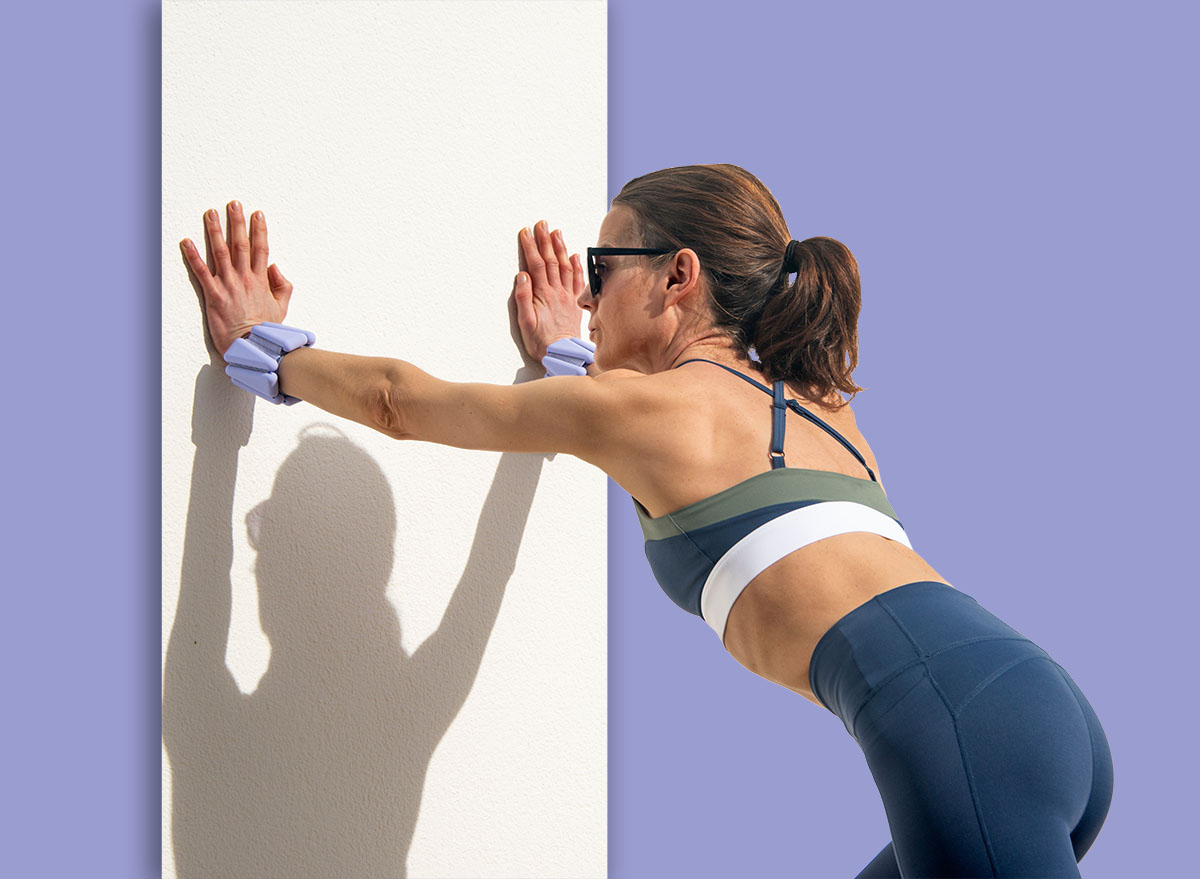
Wall Plank
Wall planks train your abs, shoulders, glutes, and deep core while keeping the position more approachable than a floor plank. Your midsection has to brace to keep your hips from sagging and your ribs from flaring. Better bracing helps your lower back because your core learns to support your spine during standing and moving. The wall lets you build strength with less pressure on your wrists, shoulders, and lower back.
Muscles Trained: Core, shoulders, glutes, chest
How to Do It:
- Stand facing a wall.
- Place your hands on the wall at shoulder height.
- Step your feet back until your body forms a straight line.
- Brace your core and squeeze your glutes.
- Hold the position while breathing steadily.
- Step forward to break the hold.
Recommended Sets and Reps: Perform 3 sets of 20 to 40 second holds. Rest for 30 to 45 seconds between each set.
Best Variations: Wall plank with shoulder taps, lower-angle wall plank, wall plank with knee drives
Form Tip: Keep your ribs down and avoid letting your hips drift forward.
Wall-Supported Hip Extensions
Wall-supported hip extensions train your glutes and hamstrings while your core keeps your pelvis steady. Extending one leg behind you strengthens the muscles that help support your hips and lower back during walking, climbing, and standing. The wall provides balance support, so you can focus on squeezing your glutes instead of arching your back. Stronger glutes reduce the workload on your lower back during everyday movement.
Muscles Trained: Glutes, hamstrings, core
How to Do It:
- Stand facing a wall with your hands lightly placed against it.
- Shift your weight onto one foot.
- Brace your core and keep your chest tall.
- Extend your opposite leg straight behind you.
- Squeeze your glute at the top.
- Lower your foot with control and switch sides after your reps.
Recommended Sets and Reps: Perform 3 sets of 10 to 12 reps per leg. Rest for 30 to 45 seconds between each set.
Best Variations: Banded hip extensions, paused hip extensions, slower tempo hip extensions
Form Tip: Lift from your glute and avoid arching through your lower back.
How to Build Lower Back Strength With Wall Support
Wall exercises work best when the wall helps you find better positions instead of doing the work for you. Use the support to stay steady, then focus on bracing your core, moving through your hips, and keeping tension in your glutes and legs. A few focused sessions each week can help your lower back feel better supported because the muscles around it start doing their share.
- Train your hips first: Hip hinges and hip extensions teach your glutes and hamstrings to help with bending, lifting, and walking. Stronger hips reduce the load your lower back has to manage.
- Keep your core lightly braced: Wall planks, marches, and side planks work better when your ribs stay down, and your pelvis stays steady. Bracing gives your spine more support.
- Use the wall as feedback: A wall can tell you when your posture shifts, your hips drift, or your back starts to arch. Adjust your position before adding more reps.
- Move slowly enough to stay clean: Fast reps usually hide poor positions. Slower movement helps your hips, core, and glutes control the work.
- Progress with small changes: Hold longer, step farther from the wall, pause at the top, or add a light band when the movement feels easy. Small progressions build strength without turning the routine into a grind.
Think of the wall as a coach you can lean on lightly. It gives support while your core, hips, and glutes rebuild the strength your lower back needs for daily movement.
References
- Gordon, Rebecca, and Saul Bloxham. “A Systematic Review of the Effects of Exercise and Physical Activity on Non-Specific Chronic Low Back Pain.” Healthcare (Basel, Switzerland) vol. 4,2 22. 25 Apr. 2016, doi:10.3390/healthcare4020022
- Chang, Wen-Dien et al. “Core strength training for patients with chronic low back pain.” Journal of physical therapy science vol. 27,3 (2015): 619-22. doi:10.1589/jpts.27.619