4 Wall Exercises That Restore Hip Mobility Faster Than Yoga After 60
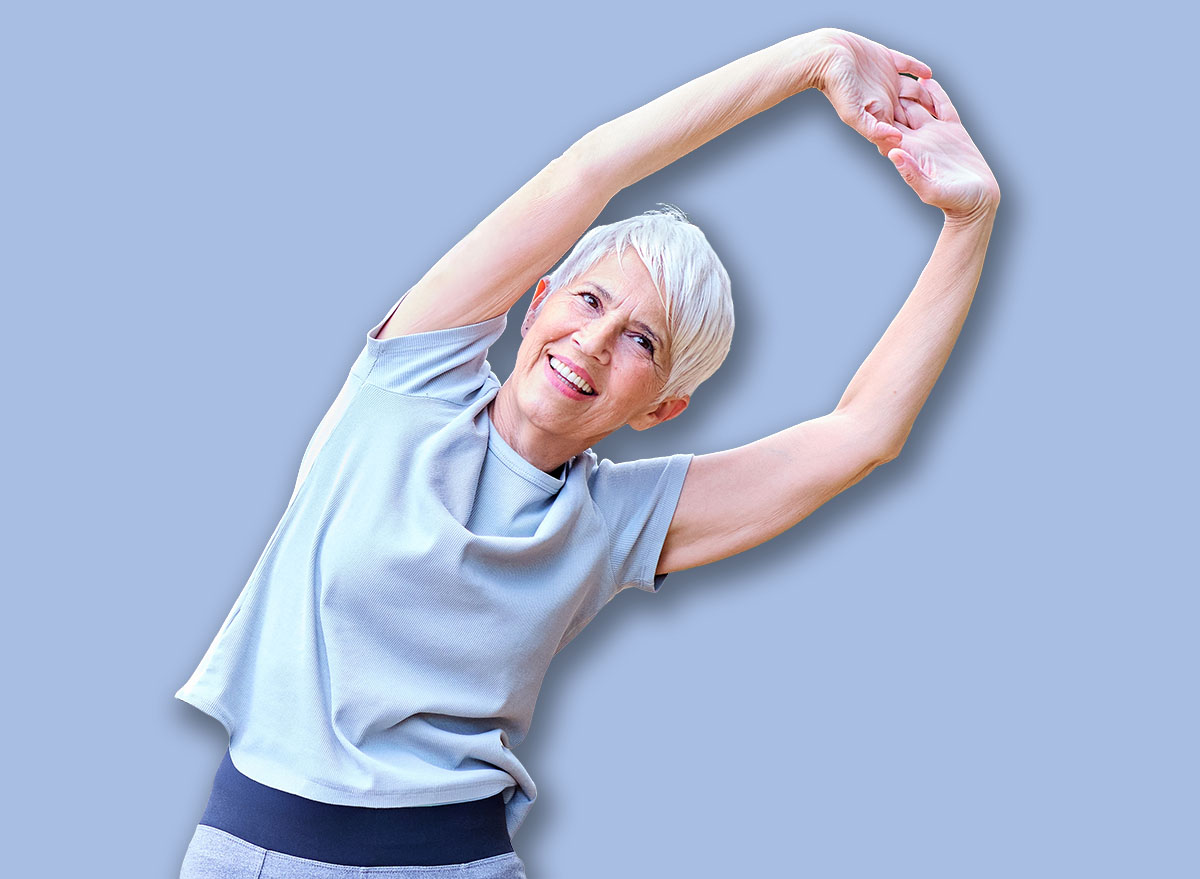

I’ve been a personal trainer for over 35 years and have spent the last 25 training other PTs. In all that time, restricted hip mobility is probably the number one issue I see in older adults. The good news is that you don’t need a gym, a yoga mat, or even much floor space to fix it. All you need is a wall and about 15 minutes, three times a week.
After 60, three things start happening to your hips simultaneously: the joint capsule stiffens, the surrounding muscles shorten from decades of sitting, and synovial fluid stops circulating as well. These aren’t independent problems — they feed each other in a cycle that gets harder to reverse the longer it goes on.
The effects go far beyond tight hips. When your hips don’t rotate properly, your lower back compensates, your knees absorb more stress, and your balance suffers. Many falls in older adults are caused by hip mobility problems — the body simply can’t react fast enough when the hips aren’t moving freely.
These four wall exercises target that cycle at its root. The wall removes the balance challenge so you can actually focus on the movement, and you never have to get down on the floor.
Why Hip Mobility Declines
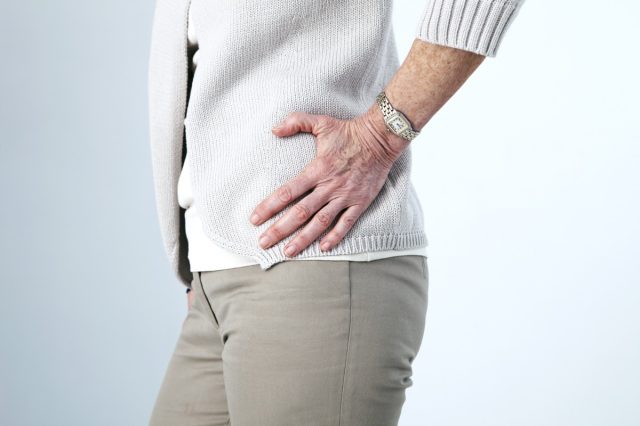
Most of us no longer use our hips through a full range of motion. We drive, sit at desks, sit on sofas. The body is an adaptive machine — it tightens and shortens around the positions we spend the most time in. After years of this, the tissue surrounding the hip joint actually starts to alter its structure in response to that decreased range of motion.
You’ll notice it in specific ways: needing your hands to pull your knees up when putting on socks, difficulty getting in and out of a car, stiffness on stairs, shorter strides when walking. In more severe cases, it shows up as a shuffling gait because the hip simply can’t extend the way it needs to.
The wall changes the equation. It gives you support without locking you in place — you can hold on, lean against it, or use it for alignment feedback, depending on the exercise. And because you’re standing, you don’t have to fight with getting down and back up from the floor, which means you’re far more likely to actually do the work.
Wall Hip Flexor Stretch
This targets the hip flexors, which get chronically shortened from sitting. When they’re tight, your pelvis tilts forward, your lower back arches excessively, and your stride length shortens. Opening up the front of your hips changes how you walk and stand.
Muscles Trained: Hip flexors, iliopsoas, rectus femoris
How to Do It:
- Stand facing away from the wall, about two feet out
- Step your right foot back and place the top of your right foot against the wall, knee bent
- Keep your left foot planted forward with your knee slightly bent
- Place both hands on your left thigh for support
- Gently push your hips forward until you feel a stretch down the front of your right hip and thigh
- Keep your torso upright — don’t lean forward
- Hold for 30–45 seconds, then switch sides
Avoid These Mistakes:
- Don’t arch your lower back to get more stretch — keep your core engaged and your ribs down; the stretch should be in your hip, not your spine
- Don’t let the back knee collapse inward — keep it pointing straight down
Form Tip: A gentle pelvic tuck at the top of the stretch — tucking your pelvis under slightly — increases tension in the hip flexor without loading the lower back.
Variations: Move closer to the wall to reduce the difficulty. For a more advanced version, hold a light weight in both hands overhead, which adds a shoulder reach component that deepens the stretch.
Wall Leg Swings
Leg swings work on hip mobility through movement rather than static stretching. Your hip joint moves through its full range of motion repeatedly, which helps restore synovial fluid flow and reminds your nervous system that your hips are capable of moving this way. Think of it as a reset signal rather than a stretch.
Muscles Trained: Hip flexors, hip extensors, hip abductors, adductors
How to Do It:
- Stand sideways to the wall, about arm’s length away
- Place your right hand on the wall for support
- Swing your left leg forward and back in a controlled motion, keeping the leg relatively straight but not locked
- Start with small swings and gradually increase the range as you warm up
- Complete 10–15 swings, then turn around and repeat with the right leg
- After both legs, turn to face the wall and swing each leg side to side across your body
Avoid These Mistakes:
- Don’t swing so aggressively that your torso starts rotating — the movement should come from your hip, not momentum or your lower back
- Don’t grip the wall with tension in your shoulders — stay relaxed through your upper body
- Keep your standing leg slightly bent and your core engaged throughout
Form Tip: As you progress, add a brief pause at the end range of each swing — hold the position for one second before swinging back. That pause is where the real mobility work happens.
Variations: Reduce the range of motion and do more reps with smaller swings to make it easier. The advanced version removes the wall entirely — keep it nearby to grab if needed, but try to balance through each swing.
Wall Squats with Hip Rotation
This combines hip flexion with rotation, which is exactly what your hips need to do during everyday movements like sitting down or getting in and out of a car. The wall provides enough support that you can actually focus on the rotation component without your brain being distracted by balance.
Muscles Trained: Glutes, hip rotators, quadriceps, hip flexors
How to Do It:
- Stand facing the wall, feet hip-width apart, about 12 inches away
- Place both palms flat on the wall at shoulder height
- Slowly squat down, sliding your hands down the wall as you lower
- At the bottom of your comfortable squat range, gently rotate your right knee out to the side while keeping your left knee forward
- Hold for one breath, return to center, then rotate your left knee out
- Come back up to standing
- Complete 6–8 repetitions
Avoid These Mistakes:
- Don’t squat too deep too quickly — start with partial squats and increase depth gradually over time
- Don’t force the knee rotation — it should be controlled and comfortable, not aggressive
- Don’t let your heels come off the ground or your weight shift too far forward onto your toes
Form Tip: If the rotation feels like too much at first, do the squat portion alone for a week until it feels solid, then add the rotation in.
Variations: Reduce squat depth to make it easier. Moving slightly further from the wall reduces support and increases the challenge. The advanced version holds the bottom position with rotation for 3–5 seconds before coming back up.
Wall Angel Hip Stretch
This opens up the outer hip and glute area while also working on shoulder mobility. Tightness in the outer hip affects how your leg swings through when you walk and can cause a waddling or shuffling pattern. Combining it with the wall angel arm position gives you a full-body check: if you can’t keep your back flat against the wall, your posture is telling you something.
Muscles Trained: Piriformis, glutes, hip external rotators, thoracic spine
How to Do It:
- Stand with your back against the wall, feet about 6 inches away from it
- Press your lower back, upper back, and the back of your head against the wall
- Raise your arms to shoulder height, elbows bent at 90 degrees, backs of your hands and forearms pressed against the wall — like a goalpost shape
- Cross your right ankle over your left knee to create a figure-4 shape with your legs
- Slowly bend your left knee and lower yourself a few inches, keeping your back on the wall
- Hold for 20–30 seconds, return to standing carefully, then switch sides
Avoid These Mistakes:
- Don’t let your lower back lose contact with the wall — if it arches away, you’ve gone too deep; start shallow and work your way down over time
- Don’t let the crossed ankle slide down the thigh — keep it positioned just above the knee
- Don’t force your bent knee out to the side; let it relax where it naturally wants to sit
Form Tip: If your back keeps peeling off the wall, reduce how far you lower and work on the wall angel arm movement on its own first. That upper back contact is doing real postural work.
Variations: Cross the leg lower or barely bend your standing knee to reduce intensity. To progress, sink lower or hold longer. The advanced version adds a very gentle press down on the crossed knee with your hand to deepen the stretch slightly.
How To Structure Your Routine

Do all four exercises in one session, three times a week. That frequency is enough to drive progress without overdoing it — rest days matter because your tissues need time to adapt to the new ranges of motion you’re demanding of them.
A complete session takes 15–20 minutes. Start with a minute or two of general movement: marching in place, walking around the room. Then work through the exercises in order. Don’t rush. Quality matters more than speed here.
Most people notice something in the first week, but it’s subtle — hips that feel slightly less locked when you stand up from a chair, mornings that start a little easier. The real changes become obvious around weeks 3 and 4. That’s when your stride starts lengthening without any conscious effort, or putting your shoes on stops being a small ordeal.
By 8 weeks, the improvements should be significant enough that other people comment on how you’re moving. Your hips will feel more fluid, less creaky, and more willing to go where you ask them. That only happens with consistency — sporadic effort won’t get you there.
Habits That Accelerate Progress

Walking supports this work well. A 20–30 minute walk most days keeps your hips moving through their available range repeatedly, reinforcing what you’re building in your sessions. The more you move, the more your body understands that hip mobility is something you actually use.
Hydration matters more than most people realize. Your joint cartilage needs water to stay supple, and the synovial fluid that lubricates your joints is mostly water. Aim for consistent intake throughout the day, not just before a workout.
Movement breaks help too. Every hour or two, stand up and do a few hip circles or gentle leg swings. These micro-sessions add up and prevent your hips from locking up in a seated position between your longer exercise sessions.
Sleep is the last piece. Your body does most of its tissue repair and adaptation while you sleep. Chronic poor sleep will slow your progress. It doesn’t have to be perfect every night, but it can’t be consistently bad either.
When To See a Doctor First

If you’ve had a hip replacement, check with your surgeon before starting. There are specific movement restrictions — particularly around combining extreme hip flexion with rotation — and you need to know your individual limits.
Sharp, pinching pain inside the hip joint itself is a stop sign, not a push-through signal. Some stretching discomfort is normal. Sharp pain could indicate a labral tear, impingement, or another structural issue that needs assessment first.
Osteoarthritis doesn’t disqualify you from this work — movement is actually good for arthritic joints — but you’ll need to start in smaller ranges and progress more gradually. Talk to your doctor about what’s appropriate for your situation.
If you have a history of hip fractures, severe osteoporosis, significant balance problems, or hip pain that’s been progressively worsening, get medical clearance before starting. Worsening pain suggests something that needs a diagnosis, not a stretch.
Nerve issues like sciatica or numbness down the leg don’t automatically rule out hip mobility work, but they do mean you need professional guidance about which movements are safe and which might aggravate your condition. Same applies to diagnosed disc problems in your lower back.
The rule is simple: stretching discomfort is fine, anything that feels wrong beyond that isn’t. These exercises are meant to improve your quality of life, not create new problems.
- Source: https://pubmed.ncbi.nlm.nih.gov/11978258/
- Source: https://intech-files.s3.amazonaws.com/a043Y00000yJC6gQAG/a093Y00001g4jbmQAA/Final-Aging%20and%20Synovial%20Joint%20Function%3A%20Changes%20in%20Stru%20%282024-03-11%2015%3A47%3A46%29.pdf
- Source: https://pubmed.ncbi.nlm.nih.gov/32402136/
- Source: https://linkinghub.elsevier.com/retrieve/pii/S0966636201001916
- Source: https://pubmed.ncbi.nlm.nih.gov/34090549/