This 12-Minute Bodyweight Routine Builds More Muscle Than 50 Minutes of Weights After 55
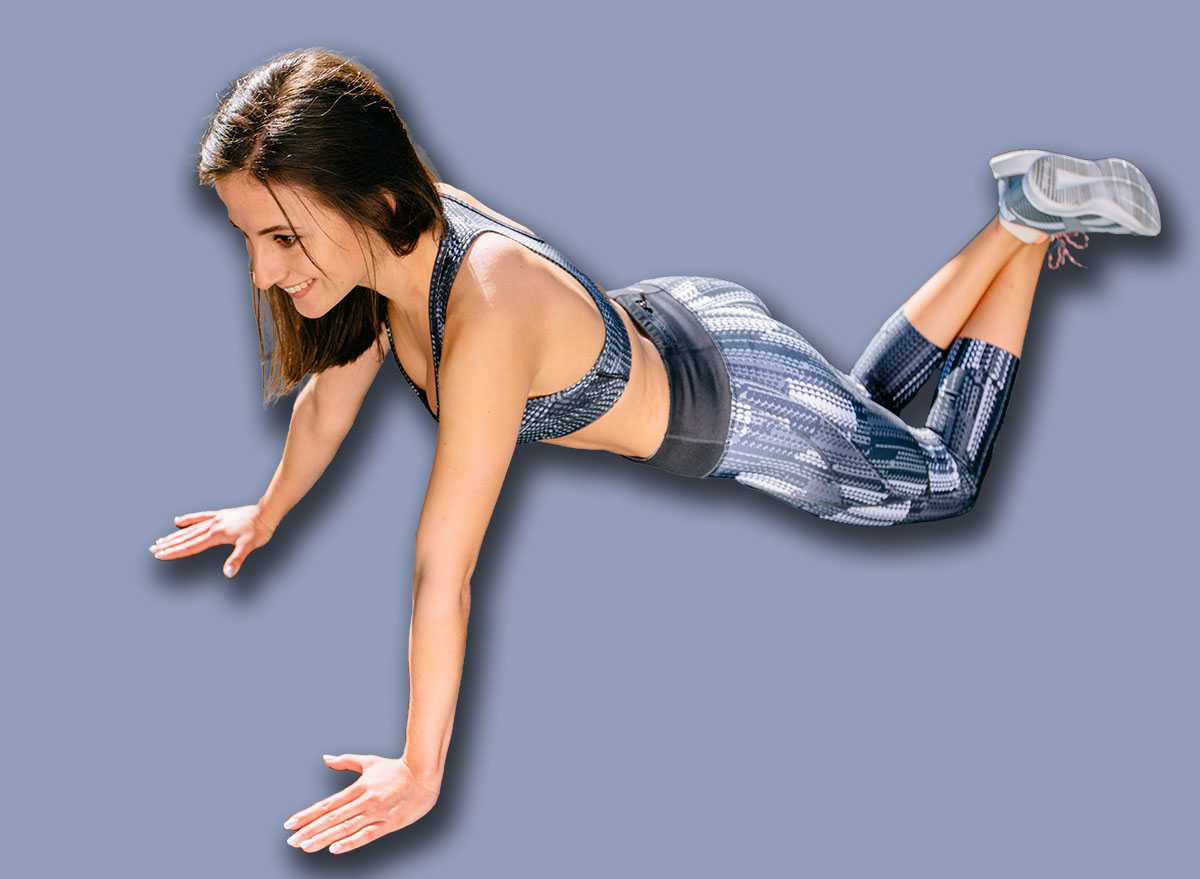

I’ve worked in the fitness industry all my adult life. I started as a group exercise instructor, then worked for many years as a personal trainer before focusing on fitness education and creating the next generation of fitness professionals.
One thing I’ve always found frustrating is the belief that it’s impossible for older adults to build muscle. This just isn’t the case. Is it harder? Yes, but those challenges aren’t insurmountable if approached in the right way.
This 12-minute bodyweight routine can help you build real, functional strength without setting foot in a gym and it works better than hour-long weight sessions for most people over 55.
Why Building Muscle Gets Harder After 55
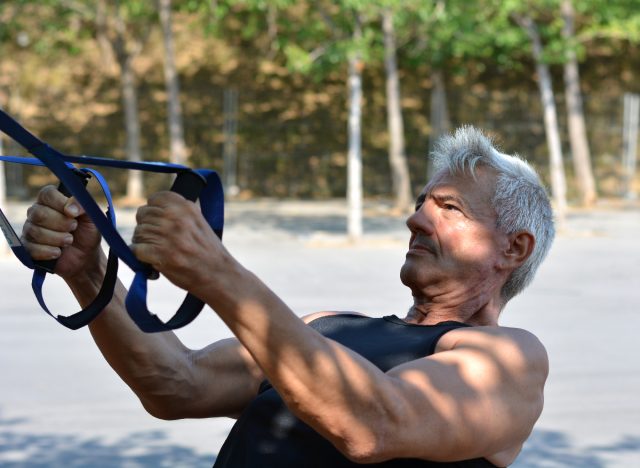
The biggest challenge I see is that people just wait too long to get started. They’ve watched as they get weaker over the years and wrongly assumed it’s just part of getting older. By the time they do decide to take action, they are starting from a lower baseline than they realise.
Our bodies produce less testosterone and growth hormone after 55, making building muscle slower than it was when we were in our 30s and 40s. It’s not impossible—it just takes more time and we need to be more patient when waiting for progress and more consistent with training.
Recovery takes longer too. The workout itself might feel fine, but your muscles need more time between sessions to repair and grow. Most people over 55 who struggle with muscle building are actually training too often, not resting enough.
Joint stiffness and old injuries create real barriers. You might want to do certain exercises but your knees, shoulders or back won’t cooperate. This is where bodyweight training becomes so effective—you can modify movements to work around limitations whilst still building strength.
There’s also a confidence issue that people don’t talk about enough. After years of avoiding exercise, the gym feels intimidating. Heavy weights seem dangerous. Complex equipment looks confusing. This mental barrier stops people from even starting, which is why a simple home routine can be so powerful.
Why 12 Minutes Beats an Hour at the Gym

Intensity matters more than duration, especially as we age. Twelve minutes of focused bodyweight work creates enough stimulus to trigger muscle growth without the fatigue that comes from hour-long gym sessions. Your body doesn’t need to be exhausted to grow stronger—it just needs the right signal.
Bodyweight exercises are self-limiting in the best possible way. You can’t load your joints beyond what they can handle because you’re only lifting yourself. This is important after 55 when joint health becomes as important as muscle strength. You get the muscle-building stimulus without the joint stress that comes from external weights.
Consistency beats intensity every single time. A 12-minute routine you’ll actually do five times a week is infinitely better than a 90-minute gym session you do once and never repeat. The muscles you’re trying to build respond to regular stimulus, not occasional punishment.
Your nervous system recovers faster from bodyweight training. After 55, your central nervous system takes longer to bounce back from heavy lifting. Shorter bodyweight sessions let you train more frequently, which means more opportunities for your muscles to grow throughout the week.
There’s zero equipment barrier. No gym membership needed, no weights to buy, no commute required. You can do this routine in your bedroom the moment you wake up. This removes every excuse and makes consistency automatic.
Wall Press-Ups
Your chest, shoulders and arms all work together in this movement. The angle at the wall lets you control the intensity—the further your feet are from the wall, the harder it becomes. This builds upper body strength without putting pressure on your wrists or shoulders.
Muscles Trained: Chest, shoulders, triceps.
How to Do It:
- Stand arm’s length from a wall.
- Place your hands flat against it, slightly wider than shoulder width.
- Keep your body straight from head to heels.
- Lower your chest towards the wall by bending your elbows.
- Push back to the starting position. That’s one rep.
Common Mistakes to Avoid:
- Don’t let your hips sag or stick your bottom out. Your body should move as one straight line.
- Keep your elbows at about 45 degrees from your body, not flared out to the sides.
- Don’t rush—take two seconds to lower, pause briefly at the wall, then push back up.
Time: 2 minutes
Chair Squats
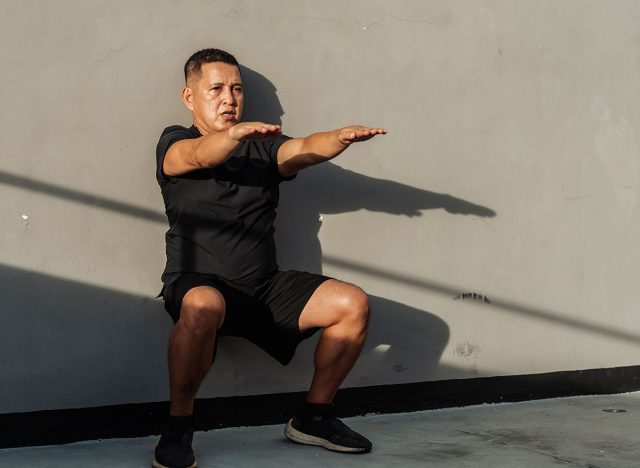
Our legs contain the biggest muscles in our bodies. Working them triggers a hormonal response that helps us build muscle everywhere. The chair gives you a target depth and a safety net, which allows you to focus on form and not worry about getting stuck at the bottom.
Muscles Trained: Quadriceps, glutes, hamstrings.
How to Do It:
- Stand in front of a sturdy chair with your feet hip-width apart.
- Lower yourself by bending at your hips and knees as if you’re about to sit down.
- Lightly touch the chair with your bottom, then stand back up.
- Don’t actually sit—just tap and rise.
Common Mistakes to Avoid:
- Don’t let your knees cave inward as you lower down. They should track in line with your toes.
- Don’t lean too far forward—you should feel this in your thighs and bottom, not your lower back.
- Don’t use momentum—control the movement both ways.
Time: 2 minutes
Modified Plank Hold
Your core muscles stabilise everything else you do. A stronger core means better posture, less back pain, and more strength in every other movement. The modified version on your knees builds the same muscles without the shoulder strain.
Muscles Trained: Transverse abdominis, rectus abdominis, spinal stabilizers.
How to Do It:
- Get down on your hands and knees.
- Walk your hands forward until your body forms a straight line from your head to your knees.
- Keep your hands directly under your shoulders.
- Hold this position, keeping your stomach pulled in and your back flat.
- Do four holds of 20-30 seconds with short breaks between.
Common Mistakes to Avoid:
- Don’t let your hips drop towards the floor or pike up towards the ceiling.
- Don’t hold your breath—breathe normally throughout.
- Don’t tense your shoulders up by your ears—keep them relaxed and away from your neck.
Time: 2 minutes total, broken into intervals
Standing Knee Raises
This works your hip flexors, core, and helps with balance—all things that decline rapidly after 55. It’s also brilliant for maintaining the strength you need to climb stairs and get in and out of cars.
Muscles Trained: Hip flexors, core, balance stabilizers.
How to Do It:
- Stand next to a wall or chair for light support if needed.
- Lift one knee up towards your chest, hold for a second, then lower it back down with control.
- Alternate legs.
- Keep your standing leg slightly bent, not locked straight.
Common Mistakes to Avoid:
- Don’t lean back as you lift your knee—stay upright.
- Don’t swing your leg up using momentum.
- Don’t hold onto your support too tightly—use it for balance only, not to hold yourself up.
- Don’t rush—this isn’t about speed.
Time: 2 minutes
Wall Sits
This is pure leg and glute strengthening without any impact on your joints. Your muscles have to work constantly to hold the position, which builds both strength and endurance. It’s particularly good for knee stability.
Muscles Trained: Quadriceps, glutes, hamstrings.
How to Do It:
- Stand with your back against a wall.
- Walk your feet out and slide down until your thighs are parallel to the floor (or as low as comfortable).
- Your knees should be directly above your ankles.
- Hold this position.
- Do three holds of 30-40 seconds with breaks between.
Common Mistakes to Avoid:
- Don’t let your knees push forward past your toes.
- Don’t hold your breath—keep breathing steadily.
- Don’t slide too low if you feel strain in your knees—a higher position is fine.
- Don’t let your back arch away from the wall.
Time: 2 minutes total, broken into intervals
Standing Calf Raises
Your calves get weaker with age, which affects your balance and walking. Strong calves also help pump blood back up from your legs to your heart. This exercise builds strength in a way that directly transfers to everyday movement.
Muscles Trained: Gastrocnemius, soleus.
How to Do It:
- Stand with your feet hip-width apart, using a wall or chair for balance.
- Rise up onto your toes as high as you can.
- Hold for a second at the top, then lower back down with control.
- Don’t let your heels touch the floor between reps—keep constant tension on your calves.
Common Mistakes to Avoid:
- Don’t bounce at the bottom—this should be a controlled movement.
- Don’t roll your ankles inward or outward as you rise.
- Don’t lean forward or backward—stay upright.
- Don’t rush through the reps—two seconds up, pause, two seconds down.
Time: 2 minutes
How to Structure Your 12 Minutes
Do each exercise for its allocated time with minimal rest between movements. The goal is to keep moving for the full 12 minutes. If you need to pause during an exercise, that’s fine—take five seconds, shake it out, then continue.
For the plank holds and wall sits, break the two minutes into manageable chunks. Most people over 55 won’t hold a plank for two minutes straight, and that’s not the point anyway. Four 30-second holds with 10-second rests works brilliantly.
Start each exercise at a pace you can maintain. If you go too hard in the first 30 seconds, you’ll be spent for the remaining 90. Find a rhythm that challenges you but doesn’t leave you gasping.
The order matters. We’re alternating between upper body, lower body and core work. This lets each muscle group recover slightly whilst you’re working something else. Don’t rearrange the exercises.
Use a timer or stopwatch. Set it for 2-minute intervals and don’t watch it constantly. Trust the timer and focus on your form. When it beeps, move straight to the next exercise.
How Often You Should Do This Routine
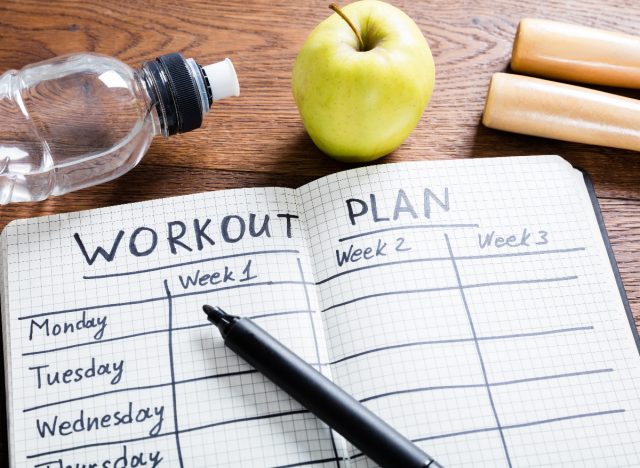
Aim for five times a week. This gives you two rest days, which your muscles need to repair and grow. Most people do Monday to Friday with weekends off, but you can split it however works for your schedule.
If you’re completely new to exercise, start with three times a week for the first fortnight. Let your body adapt. Once those sessions feel manageable, add a fourth session. After another fortnight, add the fifth.
Don’t train on consecutive days if you’re very sore. Some stiffness is normal, but if you’re struggling to move the next day, take an extra rest day. Your muscles grow during recovery, not during the workout itself.
You can do light activity on your rest days—walking, gentle stretching, swimming. Just don’t do another full muscle-building session. Your body needs proper recovery time.
After about six weeks, your body will adapt to this routine. At that point, you can make it harder by increasing the difficulty of each exercise rather than adding more time. Move your feet further from the wall for press-ups, lower the chair height for squats, extend your plank time.
What Results to Expect After 4 to 8 Weeks

Within the first couple of weeks, you’ll start to feel like everyday tasks are easier. Simple things like getting up from your chair won’t take as much effort, or carrying shopping bags won’t tire your arms as quickly. These are the functional improvements that show up first before you see visible changes.
Four weeks in, your muscles will already be feeling firmer when you press on them. Don’t expect dramatic size increases yet, but the density of the muscles will have improved. Your posture will be a lot better—to the point that it will be noticeable to other people, and they might comment that you’re standing taller—all due to your core getting stronger.
By six weeks, you’ll see some visible changes. Your arms will look more defined. Your legs will feel more solid. Your stomach will be flatter because your core muscles are stronger and pulling everything in better.
After eight weeks of five-times-a-week training, most people over 55 will have added noticeable muscle tone. Not bodybuilder muscle—realistic, functional strength that shows in how you move and how your clothes fit. Your shirts might feel tighter around your arms and looser around your waist.
The mental changes often surprise people more than the physical ones. Your confidence improves. You sleep better. You have more energy throughout the day. These aren’t minor side effects—they’re often the results that make people stick with training long-term.
It’s really important to be realistic with yourself about timelines. It’s slower to build muscle after 55 than it was in your mid-twenties. Being consistent over months is much more effective than perfection over a few weeks.