4 Simple Exercises That Restore Muscle Faster Than Lifting Weights After 60

There’s a common misconception in the fitness world that the best way to restore muscle is by relying on heavy barbells, cable machines, and fancy gym equipment. But if you’re over 60 and trying to regain strength, the truth is far simpler (and far more encouraging). At this life stage, the most effective strength-building tools you have are your own bodyweight, using a controlled tempo, and staying consistent in your workouts.
Age-related muscle loss (known as sarcopenia) begins in your 30s and accelerates as the decades pass. Research suggests that after 60, adults naturally lose strength at a faster rate unless they intervene with resistance training. However, what most people don’t realize is that resistance training doesn’t always require lifting heavy weights. In fact, it can be created with nothing more than how you move your body and how slowly you lower into each repetition.
This is exactly how Kris Herbert, CPT, a certified personal trainer and owner of The Gym Venice, trains older adults safely and effectively. “You don’t need heavy barbells or complicated gym machines to rebuild muscle after 60,” Herbert explains. “Movements that use your own body weight can absolutely qualify as resistance training, and resistance training remains the number one way to slow and even reverse age-related muscle loss.”
Herbert’s approach is rooted in two key principles: a) meet people where they’re at, and b) build progressively over time. “As you get stronger and more confident, gradually increasing resistance—eventually including free weights—is what truly moves the needle and keeps strength, muscle, and independence improving over time,” he says.
In this article, Herbert shares his top four simple exercises designed to engage major muscle groups, increase time under tension, and lay the foundation for lifelong strength, proving that you don’t need a gym membership to reverse muscle loss after 60. Keep reading to learn more.
(And when you’re finished, check out these 5 Walking Exercises That Build Core Strength Faster Than Ab Workouts After 60.)
Supported Squat to Chair
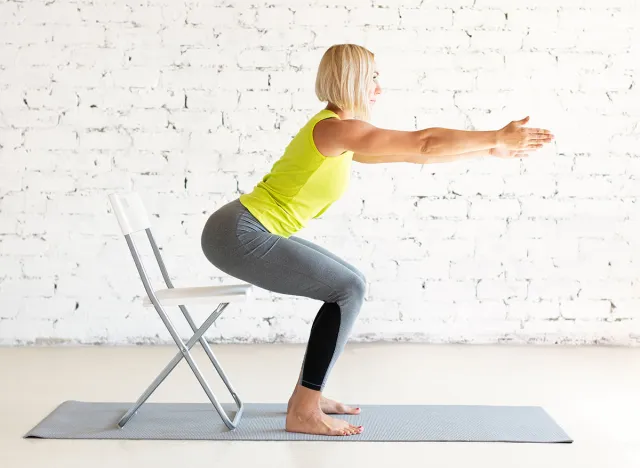
This foundational lower-body movement targets your glutes and quads, which are two of the most crucial muscle groups for maintaining independence as you age. Strong legs impact everything from balance to stair climbing to your ability to get in and out of chairs safely.
How to do it:
- Stand in front of a sturdy chair with your feet shoulder-width apart.
- Sit back and lower toward the chair over three to four seconds.
- Lightly tap the chair while keeping tension in your legs.
- Stand up in one second while driving through your heels.
Why it works:
- Trains the major muscles tied to lower-body strength and balance
- Improves sit-to-stand ability
- Builds muscle without harming your joints
Progressions
- Move the chair slightly behind you and squat deeper
- Try touching elbows to thighs for added depth
- Hover above the chair instead of tapping it
Incline Push-Up
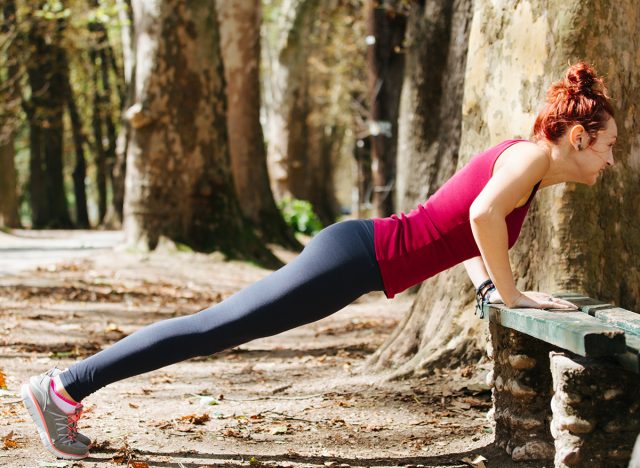
Incline push-ups strengthen your chest, shoulders, triceps, and core without the strain of floor push-ups. That’s because this variation is easier on your wrists and shoulders, yet still provides enough resistance to stimulate muscle growth.
How to do it:
- Place your hands on a sturdy countertop or bench.
- Walk your feet back until your body forms a straight line.
- Lower your chest to the surface over three seconds.
- Press back to the starting position in one second.
Why it works:
- Strengthens large upper-body muscle groups
- Improves core stability
- Supports real-life pushing tasks
Progressions:
- Use a lower surface
- Add a one to two second pause at the bottom
Superman
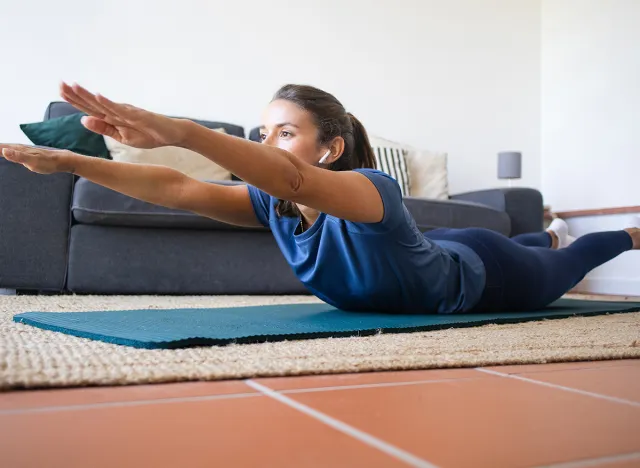
The Superman exercise boosts strength in the muscles running along the back of your body that support posture, balance, and spine health, all of which help prevent falls. This exercise counteracts the slumped posture common after years of sitting or forward-leaning habits.
How to do it:
- Lie face down with your arms extended overhead.
- Gently lift your chest, arms, and legs for one to two seconds.
- Lower back down in three to four seconds with control.
Why it works:
- Strengthens the lower back, glutes, and upper back
- Supports upright posture
- Builds the muscles needed for daily lifting and bending
Progressions
- Hold the top position for three to five seconds
- Lift higher while keeping your neck neutral
Chair Hip-Hinge Deadlift
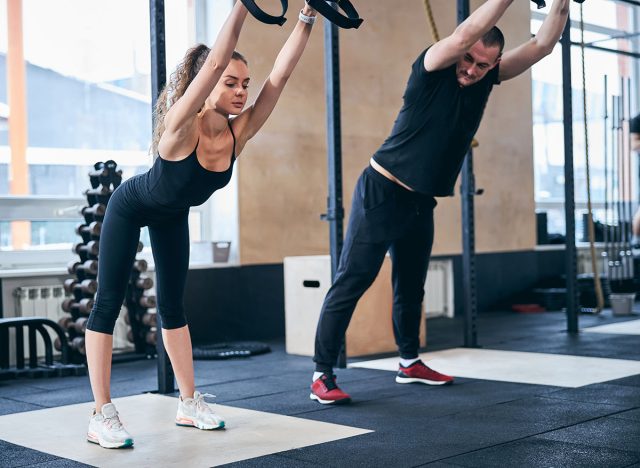
This deadlift-style movement trains your glutes, hamstrings, and lower back (collectively known as the posterior chain) which plays a major role in strength, balance, and everyday movement. Performing it seated in a chair adds resistance and helps support proper hip-hinge form.
How to do it:
- Stand facing a sturdy chair with a countertop or table a few inches behind your hips.
- Push your hips back slowly until they touch the table.
- Keep your chest lifted and your spine neutral.
- Grip the sides of the chair seat.
- Drive your heels into the floor and stand up tall in one second while keeping the chair close.
- Lower the chair back down over three to four seconds while pushing your hips back again.
Why it works:
- Strengthens the major posterior chain muscles
- Supports real-life lifting movements
- Builds muscle without heavy loads
- Reinforces safe spinal alignment
Progressions:
- Hold the chair slightly farther forward
- Add a one to two second pause at the bottom
- Place a weighted backpack or object in the chair
The Bottom Line
For adults 60 and beyond, these four trainer-approved exercises will help increase strength, support joint health, improve posture, and boost independence. To get the most out of this workout, Herbert recommends following this structure:
- For each exercise, complete eight to 12 reps for two to three sets with a slow, controlled tempo.
- Rest for 60 to 90 seconds between sets.
- Perform this workout consistently two to three times per week.
- Gradually add progressions as you get stronger over time.
If you stick with it, you’ll move better and feel stronger for many years to come.