4 Standing Exercises That Shrink Belly Overhang Faster Than Gym Workouts After 55

If you’re over 55 and trying to trim your midsection, you know that even with regular gym workouts, shedding belly fat can be difficult and frustrating. Part of the reason is that many traditional gym workouts focus too much on isolated core exercises or ab machines that don’t translate to improved mobility and increased calorie expenditure.
It’s important to note that classic ab exercises like crunches and sit-ups, while effective in their own right, don’t directly target fat loss around your belly. Research published in Physiological Reports found that spot reduction, which is the idea of burning fat in one specific area, is largely ineffective. Instead, reducing belly fat requires increasing your overall energy expenditure (calories burned) while strengthening the muscles that improve your posture, mobility, and core stability.
That’s where standing exercises come into play. Since these exercises require your body to stabilize itself upright against gravity, they recruit more muscle groups at once, particularly in your core, hips, glutes, and legs. This increases muscular demand and calorie expenditure compared to many seated or isolated gym exercises.
If you’re unsure where to start, you’re in the right place. We chatted with James Brady, CPT, a certified personal trainer at OriGym, who shares his top four standing exercises designed specifically to help reduce belly overhang. Keep reading for the exercises and detailed step-by-steps. And when you’re done, don’t miss these 5 Standing Exercises That Restore Knee Strength Faster Than Gym Machines After 60.
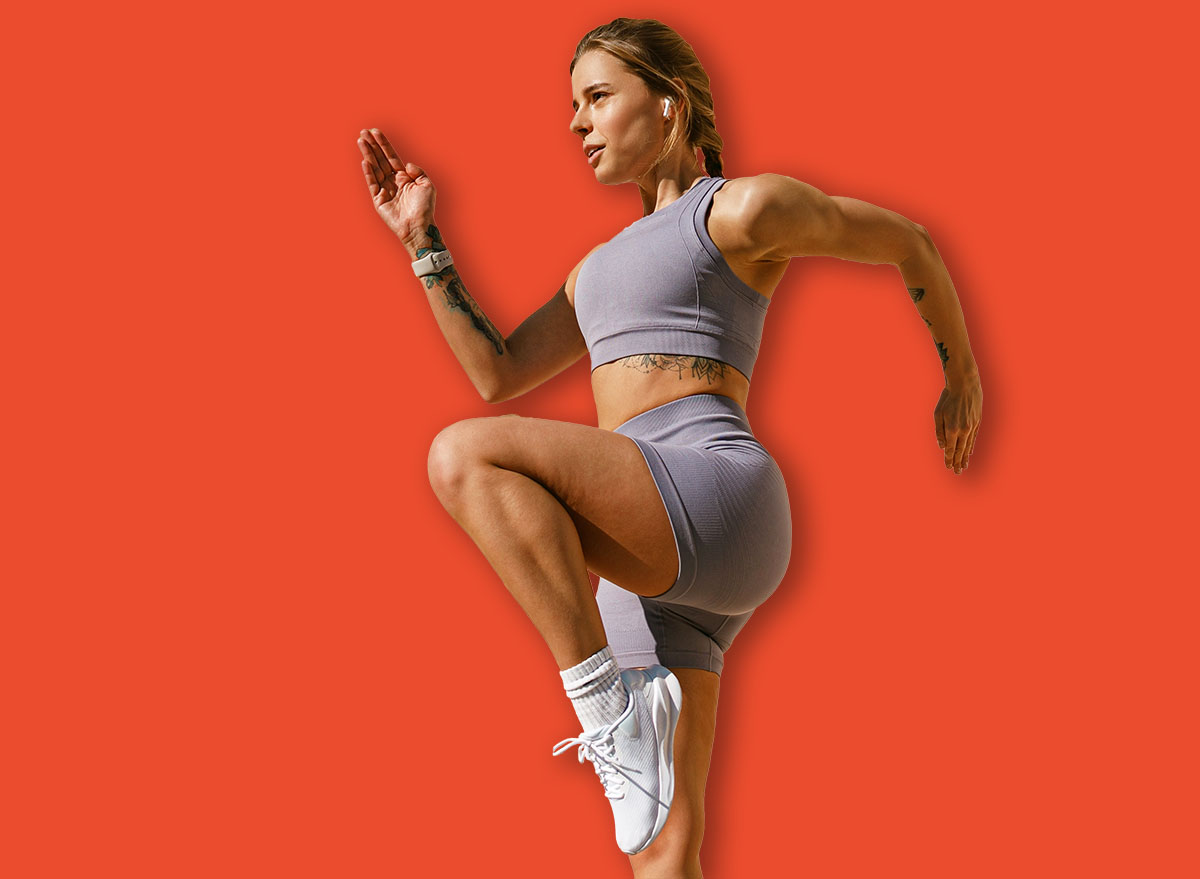
Standing Knee Drives
Standing knee drives combine core activation with cardiovascular movement. Lifting your knees repeatedly forces your ab muscles to stabilize your torso while elevating your heart rate. Plus, since the movement is performed upright, it places less strain on your lower back than many floor-based exercises.
How to do it:
- Stand tall with your feet hip-width apart.
- Raise your hands to chest height or place them lightly on your hips.
- Engage your core by tightening your abs.
- Drive one knee upward toward your torso.
- Keep your chest upright and avoid leaning backward.
- Lower your leg back down with control.
- Repeat with the opposite leg and continue alternating sides at a steady pace.
- Complete two to three sets of 20 to 30 total reps. Rest for 45 to 60 seconds between sets.
Standing Wood Chops
Standing wood chops target your obliques (side abs) and core rotational muscles. Rotational strength is essential for healthy aging because many common daily movement patterns involve twisting, reaching, and turning.
How to do it:
- Stand with your feet shoulder-width apart.
- Clasp your hands together in front of your body.
- Flex your core and keep your chest lifted.
- Rotate your torso as you move your hands diagonally across your body and imagine performing a controlled chopping motion.
- Pivot slightly through your hips and torso during the movement.
- Return to the starting position and repeat on the opposite side.
- Perform two to three sets of 10 to 15 reps per side, resting for 45 to 60 seconds between sets.
Side Leg Raises
“Side leg raises strengthen the hips and core muscles that support better posture and abdominal control,” explains Brady. Improving strength in these muscles can help improve boost overall body control and pelvic stability.
How to do it:
- Stand beside a chair or wall for balance if needed.
- Position your feet hip-width apart.
- Engage your core and stand upright.
- Slowly lift one leg out to the side.
- Keep your torso tall and avoid leaning sideways.
- Raise your leg as high as comfortable with control.
- Pause for one to two seconds at the top of the movement.
- Lower your leg back down with control.
- Do two to three sets of 12 to 15 reps per leg. Rest for 45 to 60 seconds between sets.
Standing Marches With Arm Swings
Standing marches with arm swings increase mobility while engaging your core and enhancing coordination. The combination of marching and arm movement creates a low-impact cardio effect that also challenges balance. “Standing marches are low impact but highly effective for improving calorie burn and engaging the entire midsection,” says Brady.
How to do it:
- Stand tall with your feet hip-width apart.
- Brace your core and maintain upright posture.
- Begin marching in place.
- Lift your knees as high as comfortable and swing your arms naturally with each step.
- Keep your ab muscles flexed throughout the movement.
- Aim for two to three sets lasting 30 to 60 seconds. Rest for 45 to 60 seconds between rounds.