This 8-Minute Morning Routine Reverses Aging Better Than Hour-Long Workouts After 50

Waking up your body first thing in the morning sets the tone for how you move, feel, and perform the rest of the day. After 50, long workouts often feel harder to recover from, especially when joints feel stiff and energy ramps up slowly. Short, intentional movement sessions work differently. They restore range of motion, reestablish coordination, and activate muscles that support posture and balance before daily stress builds.
Daily morning movement also supports healthier aging by improving circulation, joint lubrication, and nervous system readiness. Getting your hips, spine, and shoulders moving early can reduce aches that tend to linger when the body stays sedentary too long. Over time, these brief sessions reinforce strength, stability, and confidence without draining your energy reserves.
This eight-minute routine checks every box that matters after 50. It blends mobility, strength, balance, and breathing into a simple flow you can do at home. Each move opens tight areas while building control and resilience. Knock it out in less time than it takes to brew coffee and start your day feeling younger, steadier, and more capable.
The 8-Minute Morning Reset

What You Need
You need only your body weight and enough space to move comfortably. Optional additions include a yoga mat for comfort and a light dumbbell for progression. The entire routine takes eight minutes from start to finish and works well as a standalone session or a warm-up before walking, lifting, or cycling.
The Routine
- Reverse Lunge with Overhead Reach: Perform 40 seconds of work followed by 20 seconds of rest
- Plank with Leg Lifts: Perform 30 seconds of work followed by 30 seconds of rest
- Lateral Lunge with Overhead Reach: Perform 40 seconds of work followed by 20 seconds of rest
- Single-Arm Down Dog to Cobra: Perform 45 seconds of work followed by 15 seconds of rest
Complete one round of all four exercises. Move with control and steady breathing throughout.
Directions
Move through the exercises in order, resting only as prescribed. Focus on smooth transitions, controlled tempos, and a full range of motion. The goal is to wake the body up, not exhaust it. If time allows, repeat the circuit a second time at an easier pace. Read on for the detailed instructions.
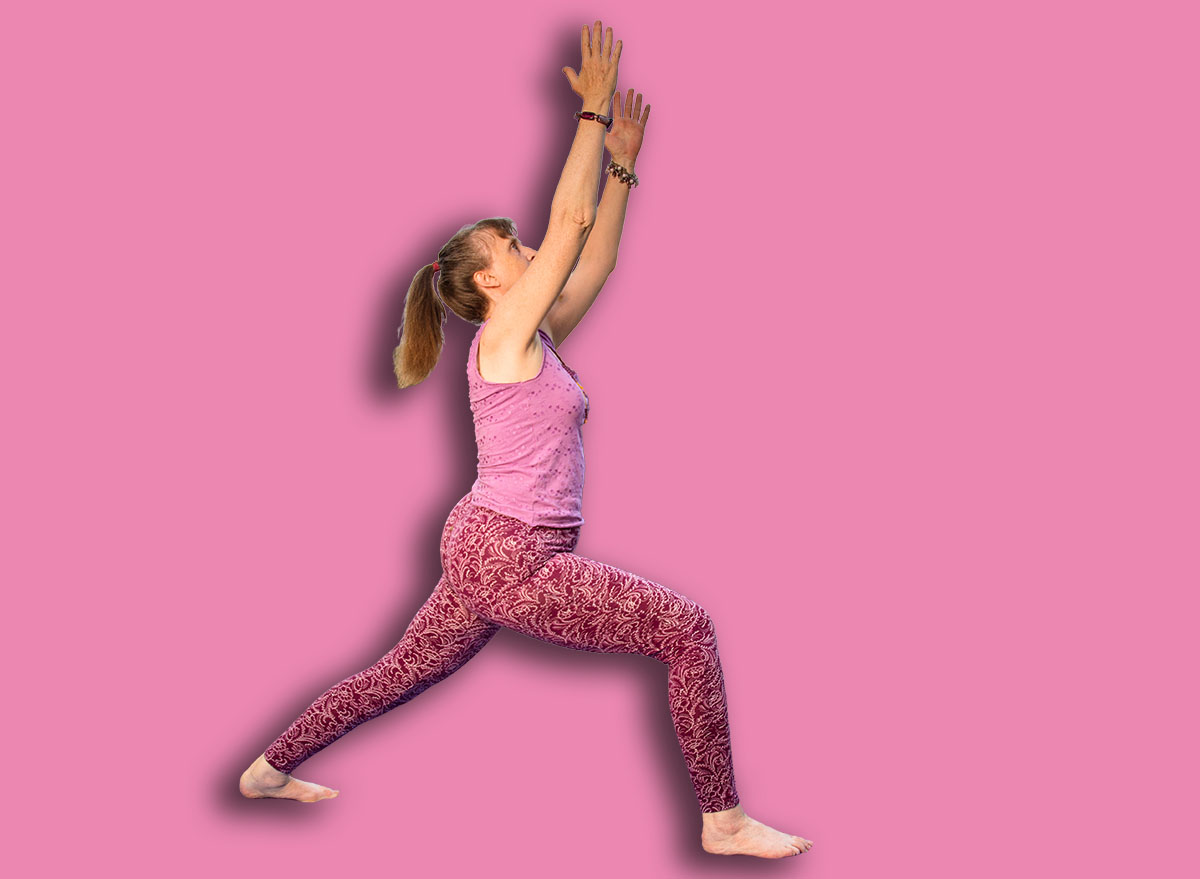
Reverse Lunge with Overhead Reach
This movement opens tight hips while strengthening the legs and glutes, which play a significant role in balance and joint protection as you age. The overhead reach encourages thoracic spine mobility and reinforces upright posture. Pairing lower-body strength with upper-body mobility improves coordination and keeps everyday movements smooth. It also elevates your heart rate just enough to stimulate circulation without fatigue.
How to Do It:
- Stand tall with your feet hip-width apart and arms at your sides.
- Step your right foot back into a reverse lunge and lower under control.
- As you lower, reach both arms overhead and slightly back.
- Press through your front heel to return to standing.
- Alternate sides with each repetition.
Best Variations: Bodyweight only, holding a light dumbbell overhead, or adding a knee drive at the top.
Plank with Leg Lifts
Core strength protects the spine and supports efficient movement at any age. Adding leg lifts challenges hip stability and glute activation, which often decline after 50. This variation reinforces full-body tension while teaching your core to stabilize against movement. The result is better posture, improved balance, and stronger force transfer during daily tasks.
How to Do It:
- Set up in a forearm plank with elbows under shoulders.
- Brace your core and squeeze your glutes.
- Lift one leg a few inches while keeping hips level.
- Lower with control and switch legs.
- Continue alternating without rushing.
Best Variations: Kneeling plank with leg lifts, high plank leg lifts, or adding a brief pause at the top.
Lateral Lunge with Overhead Reach
Side-to-side strength often gets overlooked, yet it plays a significant role in fall prevention and joint health. This exercise builds hip mobility and inner thigh strength while improving coordination. The overhead reach adds spinal mobility and reinforces tall posture. Together, they help maintain agility and confidence when changing directions.
How to Do It:
- Stand with feet wider than shoulder-width.
- Shift your weight to the right and sit back into your hip.
- Reach both arms overhead as you lower.
- Push through your right foot to return to the center.
- Alternate sides with each repetition.
Best Variations: Shallow range lateral lunges, goblet-style with a light weight, or tempo-controlled reps.
Single-Arm Down Dog to Cobra
This flowing movement improves shoulder stability, spinal mobility, and breathing mechanics. Supporting yourself on one arm increases core engagement and shoulder control. Moving between flexion and extension helps reduce stiffness from sitting and restores natural movement patterns. It is especially effective first thing in the morning when joints feel tight.
How to Do It:
- Start in a downward dog position with hips high.
- Lift one hand and place it behind your back or on your hip.
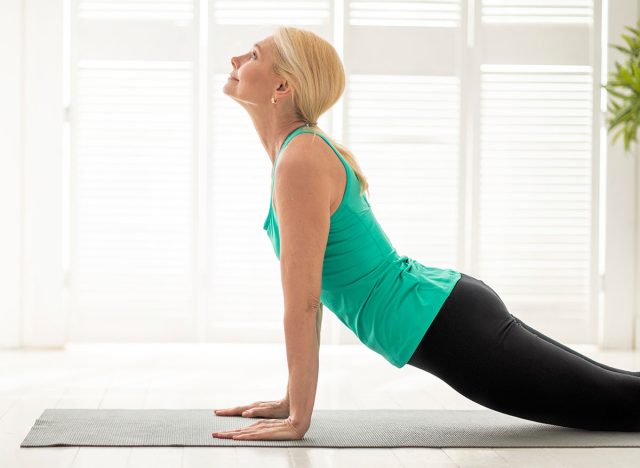
- Shift forward and lower into a gentle cobra position.
- Press back into the down dog while maintaining control.
- Switch arms halfway through the interval.
Best Variations: Both hands on the floor, slower tempo transitions, or adding a deep exhale at the bottom.
Best Daily Movement Tips After 50
Consistency matters more than intensity when the goal is healthy aging. Short routines done daily reinforce strength, mobility, and confidence without draining recovery. These habits compound quickly when paired with wise choices throughout the day.
- Move before screens: Light movement first thing iin the morning mproves circulation and joint readiness before long periods of sitting.
- Focus on quality reps: Controlled motion protects joints and builds usable strength.
- Breathe with purpose: Slow nasal breathing supports posture, balance, and stress control.
- Progress gradually: Add time, reps, or light resistance only when movements feel smooth.
- Stack habits: Pair this routine with a daily walk or mobility break to stay active all day.
References
- Schumacher, Leah M et al. “Consistent Morning Exercise May Be Beneficial for Individuals With Obesity.” Exercise and sport sciences reviews vol. 48,4 (2020): 201-208. doi:10.1249/JES.0000000000000226