5 Bed Exercises That Flatten Belly Overhang Faster Than Floor Workouts After 55

There’s something powerful about getting a few intentional movements in before your day really starts. Knocking out a short set of bed exercises first thing in the morning wakes up your muscles, boosts your energy, and gives your metabolism a gentle nudge before breakfast even happens. You’re not trying to crush a workout—you’re simply telling your body it’s time to move.
A smart mix of dynamic movements and static holds does more than help tone your midsection. It teaches your core to support you during everyday tasks like standing up, walking, and reaching. When your abs learn to stay engaged while you move and while you hold steady, your core becomes more functional, and your waist starts to feel firmer throughout the day.
Any movement counts, especially early in the morning. Even a few minutes of intentional exercise increases your daily calorie burn and makes it easier to stay active later on. These bed exercises fit right into that mindset. They’re approachable, easy to repeat, and designed to help you feel better, move better, and start your day with momentum.
Flutter Kicks
Flutter kicks keep constant tension on the lower abdominal muscles, which play a big role in belly overhang. Performing them on the bed reduces pressure on your spine while still challenging your core. The continuous leg movement increases endurance and raises overall energy output. When done slowly, this exercise helps your abs stay engaged for longer. That endurance carries over into better posture and daily movement.
Muscles Trained: Lower abdominals, hip flexors, transverse abdominis.
How to Do It:
- Lie on your back with your legs extended.
- Place your hands under your hips for support.
- Brace your core and lift your legs slightly off the bed.
- Alternate lifting and lowering your legs in small controlled kicks.
- Keep your lower back gently pressed into the bed.
Recommended Sets and Reps: Perform 3 sets of 20 to 30 total kicks. Rest for 30 seconds between each set.
Best Variations: Bent knee flutter kicks, slow tempo kicks, alternating hold kicks.
Form Tip: Keep the kicks small and controlled to maintain abdominal tension.
Reverse Crunches
Reverse crunches target the lower abs without straining your neck. Lifting your hips rather than your torso shifts the emphasis where many people want it most. The bed provides cushioning, helping you move with greater control. This exercise also improves pelvic control and core coordination. Over time, it helps your midsection feel firmer and more supported.
Muscles Trained: Lower abdominals, transverse abdominis, hip flexors.
How to Do It:
- Lie on your back with your knees bent and feet lifted.
- Place your arms at your sides for stability.
- Brace your core and curl your hips toward your ribs.
- Lower your hips back down slowly.
- Reset and repeat without swinging your legs.
Recommended Sets and Reps: Perform 3 sets of 10 to 15 reps. Rest for 30 seconds between each set.
Best Variations: Bent knee reverse crunch, alternating reverse crunch, pause reps.
Form Tip: Think about lifting your hips, not your feet.
Dead Bugs
Dead bugs train your core to stay stable while your arms and legs move independently. This improves deep abdominal strength that supports a flatter belly. The bed helps limit range of motion, making it easier to maintain control. This exercise also reinforces breathing and posture. When done daily, it builds core endurance without fatigue.
Muscles Trained: Transverse abdominis, rectus abdominis, hip flexors, lower back stabilizers.
How to Do It:
- Lie on your back with your arms extended toward the ceiling.
- Bend your hips and knees to ninety degrees.
- Brace your core and press your lower back gently into the bed.
- Lower your opposite arm and leg with control.
- Return to the start position and switch sides.
Recommended Sets and Reps: Perform 3 sets of 8 to 10 reps per side. Rest for 30 seconds between each set.
Best Variations: Heel tap dead bug, bent arm dead bug, alternating hold reps.
Form Tip: Stop the rep if your lower back lifts off the bed.
Butterfly Sit-Up
The butterfly sit-up shortens the lever at your hips, making sit-ups more accessible and comfortable. This allows your abs to work through a smoother range of motion. The bed adds support that reduces strain on your spine. When controlled, this exercise builds endurance and improves trunk strength. It’s a practical way to consistently train the front of your core.
Muscles Trained: Rectus abdominis, hip flexors, obliques.
How to Do It:
- Lie on your back and bring the soles of your feet together.
- Let your knees fall open comfortably.
- Extend your arms overhead.
- Sit up by engaging your abs and reaching forward.
- Lower back down with control.
Recommended Sets and Reps: Perform 3 sets of 8 to 12 reps. Rest for 30 seconds between each set.
Best Variations: Short-range reps, arms-crossed sit-ups, tempo reps.
Form Tip: Exhale as you sit up to reinforce core engagement.
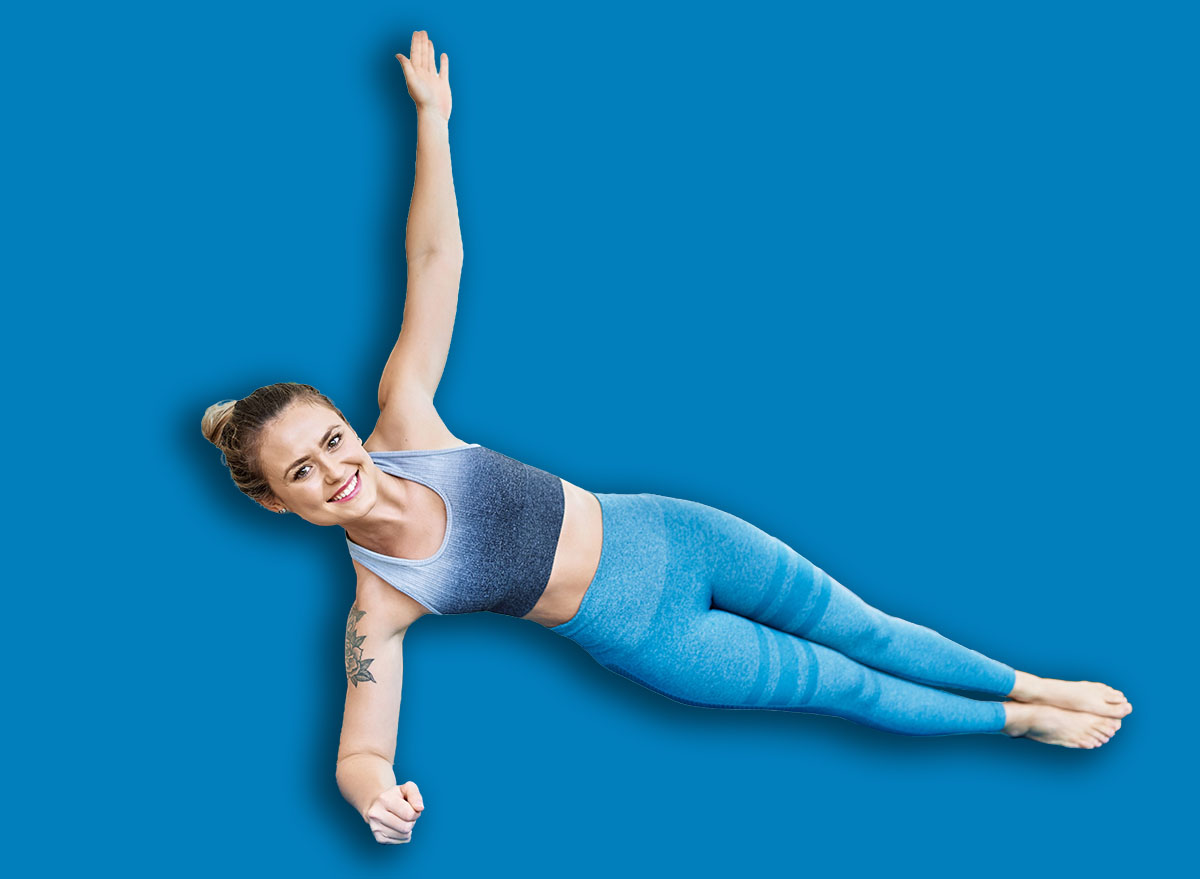
Side Plank Hold
Side plank holds strengthen the muscles that wrap around your waist. These muscles support posture and help control belly overhang. Holding the bed reduces pressure on your shoulder and hip. Isometric tension builds endurance without repeated movement. Short daily holds add up quickly.
Muscles Trained: Obliques, transverse abdominis, shoulders, glutes.
How to Do It:
- Lie on your side with your elbow under your shoulder.
- Bend your knees or stack your feet comfortably.
- Brace your core and lift your hips.
- Hold the position while breathing steadily.
- Lower down and switch sides.
Recommended Sets and Reps: Perform 3 sets of 20 to 30 second holds per side. Rest for 30 seconds between each set.
Best Variations: Kneeling side plank, short lever hold, alternating holds.
Form Tip: Keep your hips stacked and your neck relaxed.
The Best Daily Habits for Flattening Belly Overhang After 55

Flattening belly overhang becomes much more achievable when your daily habits reinforce the work you’re doing in bed-based exercises. These movements activate and strengthen your core, but what happens between sessions determines how well those muscles adapt. Consistent movement, smart nutrition, and recovery all play a role in how your midsection looks and feels over time. When those habits stay aligned, progress feels steady instead of frustrating.
- Move early and keep moving: Light activity in the morning helps wake up your metabolism, but continued movement throughout the day matters just as much. Short walks, gentle stretching, and standing breaks prevent long periods of inactivity that slow energy use.
- Train your core with intention: Focus on slow, controlled reps and steady breathing rather than rushing through exercises. Quality tension teaches your abdominal muscles to stay engaged longer, which supports a flatter appearance during daily movement.
- Prioritize protein consistently: Protein supports muscle repair and helps maintain lean tissue as you age. Spreading protein evenly across meals improves recovery and helps manage appetite, which supports long-term fat loss.
- Support digestion and hydration: Staying hydrated and eating regular meals can reduce bloating and abdominal discomfort. A calmer digestive system often makes the belly appear flatter even before fat loss occurs.
- Protect your lower back: Gentle mobility work and good posture throughout the day reduce strain that can interfere with core engagement. When your spine feels supported, your abs can do their job more effectively.
- Stay patient and repeatable: Belly overhang changes gradually. Small daily efforts that feel manageable will always outperform occasional intense sessions. Consistency is what leads to visible, lasting improvement.
References
- Khaledi, Arash, and Mehdi Gheitasi. “Isometric vs Isotonic Core Stabilization Exercises to Improve Pain and Disability in Patients with Non-specific Chronic Low Back Pain: A Randomized Controlled Trial.” Anesthesiology and pain medicine vol. 14,1 e144046. 15 Feb. 2024, doi:10.5812/aapm-144046
- Fanning, Jason et al. “Intervening on exercise and daylong movement for weight loss maintenance in older adults: A randomized, clinical trial.” Obesity (Silver Spring, Md.) vol. 30,1 (2022): 85-95. doi:10.1002/oby.23318