4 Bed Exercises That Rebuild Core Strength Faster Than Planks After 60
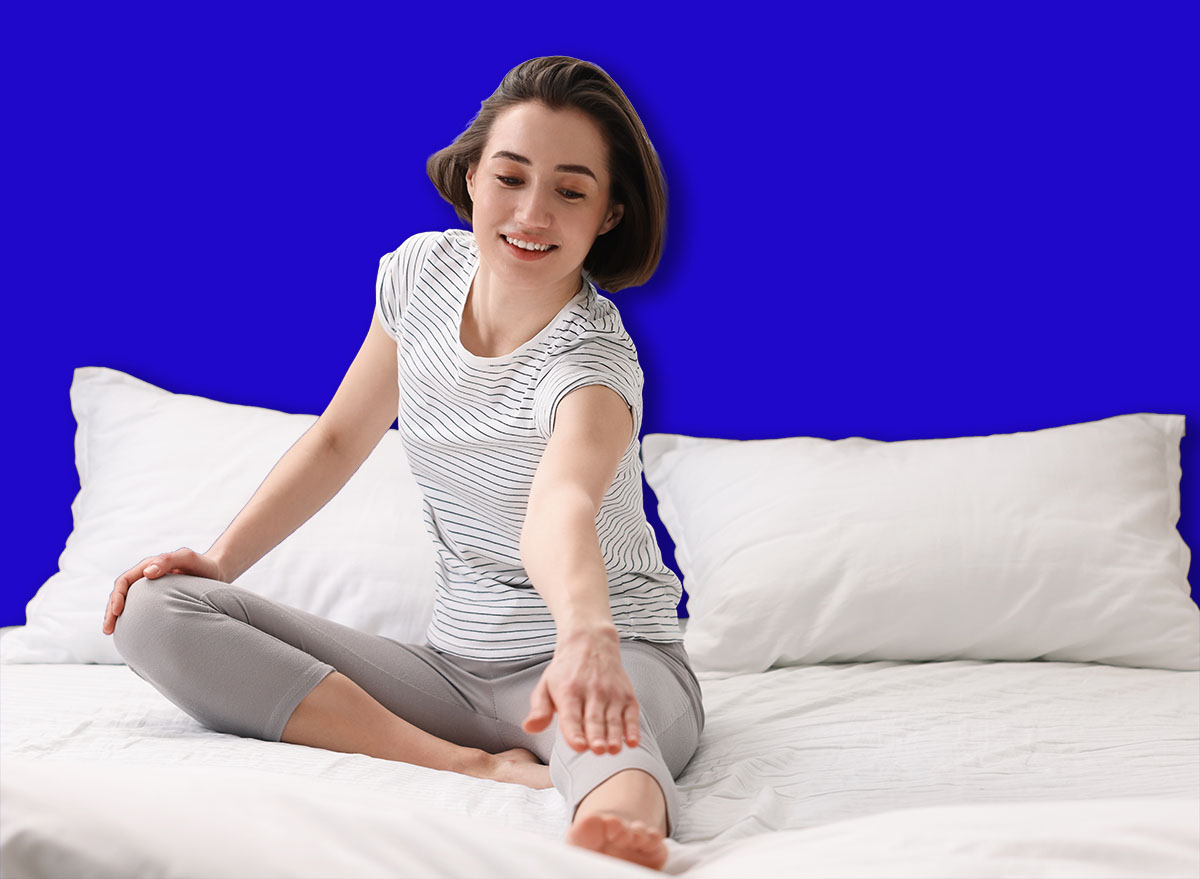
Planks build solid bracing strength, but bed-based exercises let you train your core in a way that feels more controlled and approachable. You can lie back, slow your movements, and focus on how your ribs, pelvis, and lower back work together. Instead of holding one position, your abs guide your legs, control your hips, and keep your midsection steady through each rep.
Core strength after 60 shows up in small daily moments. Rolling out of bed, standing tall, walking with better balance, reaching across your body, and lifting groceries all require your midsection to help organize movement. When your abs, obliques, and deep core muscles work together well, your lower back gets more support and your body feels more connected.
When I coach core work for adults over 60, I look for three things before adding difficulty: can you keep your lower back supported, can you move your legs without swinging, and can you breathe while holding tension? These bed exercises make those details easier to feel. Dead bugs, heel drops, oblique heel taps, reverse crunches, and leg drops all give your core a clear job without turning the session into a long plank hold.
Use this routine as a simple core reset in the morning or at night. Keep the range small at first, move with control, and treat each rep like practice. The goal is a stronger midsection that supports your body during everyday movements.
Alternating Dead Bugs
Alternating dead bugs train your lower abs and deep core while your arms and legs move in opposite directions. Your midsection has to keep your ribs and pelvis steady, which builds the kind of core control that supports your lower back during daily movement. The bed provides a comfortable surface, and the slow pace helps you feel your abs working throughout the entire rep. Move only as far as your core can control, then return with patience.
Muscles Trained: Lower abs, deep core, hip flexors, and shoulders.
How to Do It:
- Lie on your back with your arms reaching toward the ceiling.
- Lift your knees over your hips and bend them to 90 degrees.
- Press your lower back gently into the bed.
- Extend your right arm and left leg away from your body.
- Return to the starting position with control.
- Repeat on the opposite side.
Recommended Sets and Reps: Perform 3 sets of 8 to 10 reps per side. Rest for 30 seconds between each set.
Best Variations: Heel-tap dead bugs, same-side dead bugs, paused dead bugs.
Form Tip: Keep your lower back set as your arm and leg move.
Ab Heel Drops
Ab heel drops train your lower abs by asking your core to control one leg at a time. As your heel lowers toward the bed, your abs work to keep your pelvis steady and your lower back supported. This makes the movement a great option for rebuilding core strength with more motion than a plank. Start with a small range, then lower the heel farther as your control improves.
Muscles Trained: Lower abs, deep core, and hip flexors.
How to Do It:
- Lie on your back with your knees bent over your hips.
- Press your lower back gently into the bed.
- Brace your core before moving your legs.
- Lower one heel toward the bed with control.
- Tap your heel lightly without relaxing your core.
- Bring your leg back up and switch sides.
Recommended Sets and Reps: Perform 3 sets of 10 to 12 reps per side. Rest for 30 seconds between each set.
Best Variations: Alternating heel drops, slower heel drops, supine leg drops.
Form Tip: Lower your heel only as far as your core can control.
Oblique Heel Taps
Oblique heel taps train the sides of your waist while your core keeps your upper body controlled. Reaching toward each heel engages the obliques, which helps strengthen the muscles that support rotation, side bending, and trunk control. This movement pairs well with lower-ab exercises because it gives your waist direct attention without needing to hold a side plank. Keep the reach small and smooth, so your obliques guide each rep.
Muscles Trained: Obliques, abs, and deep core.
How to Do It:
- Lie on your back with your knees bent and your feet flat on the bed.
- Place your arms by your sides.
- Brace your core and lift your head and shoulders slightly.
- Reach one hand toward the heel on the same side.
- Return to the center with control.
- Alternate sides in a steady rhythm.
Recommended Sets and Reps: Perform 3 sets of 10 to 12 reps per side. Rest for 30 seconds between each set.
Best Variations: Smaller-range heel taps, paused heel taps, slower tempo heel taps.
Form Tip: Reach through your waist instead of pulling through your neck.
Reverse Crunch
Reverse crunches train your lower abs and deep core while teaching your pelvis to curl with control. Instead of lifting your chest toward your knees, you bring your hips slightly off the bed, which places the focus on the lower part of your midsection. This movement helps rebuild core strength because your abs guide your pelvis rather than relying on momentum. A small, controlled curl can be much more effective than a big swing.
Muscles Trained: Lower abs, deep core, and hip flexors.
How to Do It:
- Lie on your back with your knees bent and your feet lifted.
- Place your arms at your sides for support.
- Brace your core and keep the movement small.
- Curl your hips slightly off the bed.
- Pause briefly at the top.
- Lower your hips with control.
Recommended Sets and Reps: Perform 3 sets of 8 to 12 reps. Rest for 30 to 45 seconds between each set.
Best Variations: Bent-knee reverse crunches, paused reverse crunches, supine leg drops.
Form Tip: Curl your pelvis with control and keep your legs from swinging.
How to Rebuild Core Strength From Bed
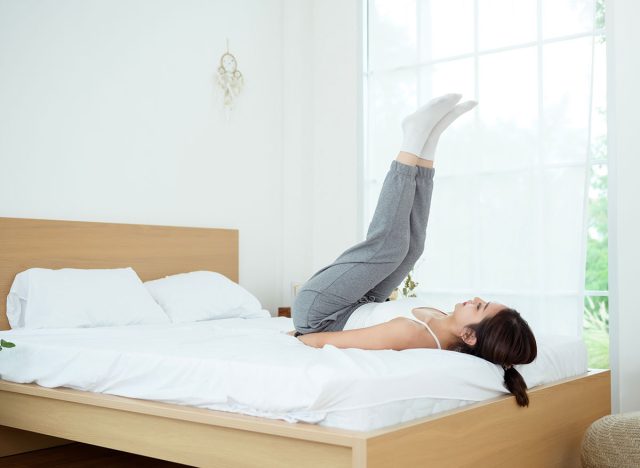
Bed-based core training works best when every rep feels controlled and connected. Your goal is to train your abs to manage your ribs, pelvis, hips, and lower back while your legs or torso move. Keep the routine smooth, breathe through each rep, and let your core build strength through quality movement.
- Start with pelvic control: Dead bugs, heel drops, and reverse crunches teach your abs to keep your pelvis steady. Better pelvic control supports your lower back during daily movement.
- Train your lower abs with patience: Heel drops and reverse crunches work best with slow reps. A smaller range with strong control beats a larger range that loses tension.
- Add oblique work for waist strength: Oblique heel taps strengthen the sides of your midsection. Stronger obliques help with turning, reaching, and staying steady.
- Use the bed for consistency: A routine you can do before getting up or before going to sleep is easier to repeat. A few focused minutes can build momentum quickly.
- Progress gradually: Add reps, slow the lowering phase, pause longer, or move into supine leg drops once your core control feels solid.
A stronger core after 60 should help your body feel more supported through everyday movement. Start with these bed exercises, keep the reps clean, and build the kind of control that carries into walking, lifting, reaching, and standing tall.
References
- Maccarone MC, Caregnato A, Regazzo G, Carriero A, Casellato G, Finamoni C, Jirillo R, Laskova O, Marigo E, Sánchez DY, Seno I, Venturin C, Veronese H, Ravara B, Giurati W, Carraro U, Masiero S. Effects of the Full-Body in-Bed Gym program on quality of life, pain and risk of sarcopenia in elderly sedentary individuals: preliminary positive results of a Padua prospective observational study. Eur J Transl Myol. 2023 Sep 26;33(3):11780. doi: 10.4081/ejtm.2023.11780. PMID: 37753778; PMCID: PMC10583150.
- Rodríguez-Perea Á, Reyes-Ferrada W, Jerez-Mayorga D, Chirosa Ríos L, Van den Tillar R, Chirosa Ríos I, Martínez-García D. Core training and performance: a systematic review with meta-analysis. Biol Sport. 2023 Oct;40(4):975-992. doi: 10.5114/biolsport.2023.123319. Epub 2023 Feb 3. PMID: 37867742; PMCID: PMC10588579.