4 Bed Exercises That Trim Waist Overhang Better Than Ab Workouts After 50
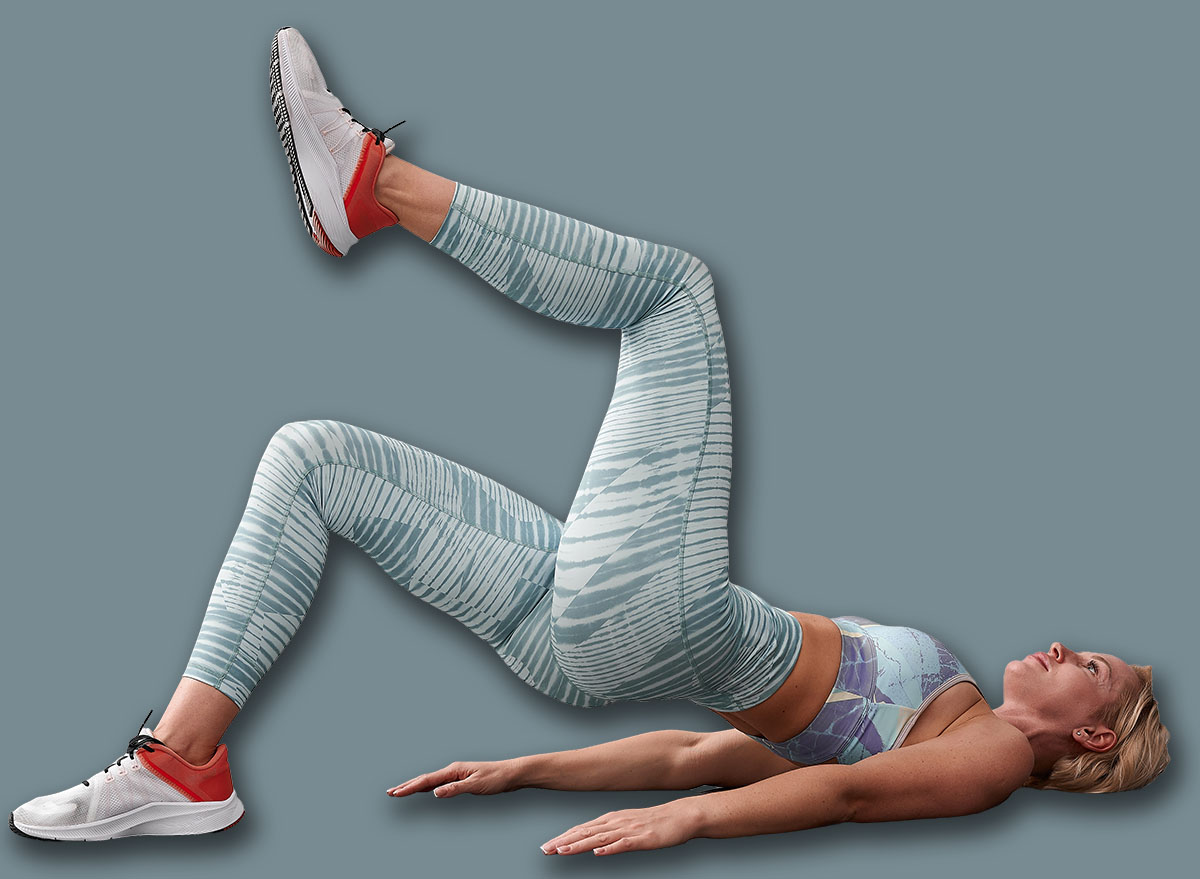

After 50, waist overhang rarely responds to traditional ab workouts alone. Crunches and sit-ups hammer surface muscles while ignoring the deeper stabilizers that actually pull the midsection inward. What reshapes the waist now comes from controlled tension, breath-driven engagement, and positions that force your core to stabilize without spinal strain. That combination builds strength where it matters while keeping joints protected.
Bed-based training offers an underrated advantage for midlife bodies. The softer surface challenges balance and control, forcing your deep core to stay switched on throughout every rep. That constant engagement tightens the waist from the inside out while removing the neck and hip stress that derails progress for so many people after 50. Precision replaces momentum, and results follow faster.
These four movements focus on the layers beneath visible abs: the transverse core, obliques, hip stabilizers, and low-back supporters. Together, they create compression through the waist rather than bulk through the front. Commit to these drills consistently and the overhang starts shrinking because your core finally works as a unit instead of isolated parts.
Supine Heel Slides
Supine heel slides look subtle, yet they place relentless demand on the lower abdominal wall, exactly where waist overhang settles with age. Lying flat removes momentum, leaving your deep core responsible for controlling every inch of movement. As the heel glides away from your body, your lower abs brace to prevent arching, teaching your midsection to stay tight under extension. That sustained tension retrains your core to hold the waist inward during daily movement, which drives visible change over time.
Unlike aggressive ab drills, this pattern reinforces pelvic control and spinal alignment simultaneously. That matters after 50, when poor control often feeds belly protrusion regardless of effort. Each slow rep strengthens the muscles responsible for flattening the lower belly without stressing hips or neck. The bed surface amplifies the challenge by reducing stability, forcing deeper engagement with every slide.
How to Do It
- Lie flat on your back with knees bent and feet on the bed
- Brace your core as if tightening a belt around your waist
- Slowly slide one heel away until the leg nearly straightens
- Slide it back in under control and switch sides
- Perform 10–12 reps per leg
Bent-Knee Bed Marches
Bent-knee marches attack waist overhang by teaching your core to stabilize while your legs move independently. That separation trains the exact function your abs lose with age, leading to belly drift and poor posture. Each lift challenges your transverse core to resist rotation and pelvic tilt, creating compression through the waistline rather than outward pressure. The slower the lift, the harder your deep abs work.
This drill also rebuilds hip-core coordination, a missing link in many over-50 routines. When hips move freely without dragging the pelvis along, the waist tightens naturally. The bed surface reduces impact while increasing demand on stabilizers, making every repetition count more. Over time, this movement restores control that flattens the midsection during standing and walking.
How to Do It
- Lie on your back with knees bent and feet planted
- Brace your core and lift one knee toward your chest
- Lower slowly without letting your pelvis shift
- Alternate sides with steady control
- Continue for 40–60 seconds
Side-Lying Waist Lifts
Side-lying waist lifts target the obliques that carve shape along the sides of your midsection. This position isolates lateral core fibers often skipped by front-focused ab routines. As you lift your torso slightly off the bed, your waist muscles shorten and brace simultaneously, pulling the sides inward. That action creates visible narrowing where overhang tends to spill outward.
Because the movement stays small and controlled, the workload stays exactly where it belongs. No swinging, no neck strain, no compensation through the hips. The bed cushions pressure points while still demanding strength through the waist. Consistent practice builds tension along the entire sidewall of your core, sharpening definition and improving posture together.
How to Do It
- Lie on your side with knees slightly bent
- Place your lower arm under your head for support
- Lift your ribcage slightly off the bed using your waist
- Lower slowly and repeat
- Perform 12–15 reps per side
Glute Bridge With Core Brace
Glute bridges reshape the waist by linking the hips and core into one powerful system. When your glutes fire properly, your abs brace harder to stabilize the pelvis, pulling the lower belly inward. That coordination removes the sagging look that appears when the hips dominate movement without core support. Holding the bridge amplifies time under tension where it counts most.
The bed surface increases instability, forcing your core to stay engaged throughout the hold. Every second teaches your waist to stay tight under load rather than relax outward. This drill also improves posture and walking mechanics, both of which influence how your midsection looks daily. Strong hips paired with a braced core produce lasting change after 50.
How to Do It
- Lie on your back with knees bent and feet flat
- Brace your core and squeeze your glutes
- Lift hips until your body forms a straight line
- Hold for 3–5 seconds, then lower slowly
- Perform 10–12 controlled reps