The 5-Minute Morning Routine That Shrinks Belly Pooch After 50, According to a Coach

After 50, belly pooch sticks around not because people stop moving, but because the body stops responding to high-intensity workouts the same way. Spin classes and long cardio sessions burn calories, but they rarely retrain the deep abdominal muscles that hold the belly flat. Without restoring that internal support system, sweat alone won’t change how the midsection looks or feels.
Morning routines work best for belly pooch because the nervous system stays fresh and receptive. Gentle, targeted movement early in the day reactivates the muscles that stabilize the pelvis, ribs, and core before hours of sitting or standing reinforce poor posture. When those muscles fire correctly, the abdomen naturally draws inward instead of hanging forward.
This five-minute routine focuses on deep core activation, breathing control, and upright alignment. Each movement builds tension where it matters most, delivering faster visible changes than spin class without joint stress or exhaustion.
Minute 1: Standing Heel Press Brace
Belly pooch often reflects a weak connection between the legs and the core. This exercise restores that connection immediately. Pressing the heels into the floor activates the glutes and hamstrings, which signals the deep abdominal muscles to engage automatically.
Standing upright matters here. Gravity forces the core to stabilize the body instead of relaxing against the floor or bike seat. As the heels press down, the pelvis stabilizes and the lower belly tightens subtly but consistently. This quiet activation trains the core to stay “on” throughout the day.
Because the movement stays simple and controlled, it works especially well first thing in the morning when joints feel stiff and coordination hasn’t fully kicked in yet.
How to Do It
- Stand tall with feet hip-width apart
- Press heels firmly into the floor
- Brace the abdomen gently
- Release and repeat
Minute 2: Standing Cross-Body Knee Drive
Lower belly pooch responds best to movements that combine rotation and controlled leg lift. This exercise engages the deep core and obliques without spinal strain or speed.
Lifting the knee slowly forces the abdominal wall to stabilize the pelvis, while the cross-body element activates muscles that flatten the waistline from the sides. Standing balance demands amplify the effect, turning a simple movement into a powerful core signal.
Done deliberately, this movement trains coordination rather than fatigue, which produces better carryover to daily posture and walking.
How to Do It
- Stand tall with hands at chest
- Lift one knee toward opposite elbow
- Lower slowly
- Alternate sides.
Minute 3: Upright Rib-to-Pelvis Crunch
Many people try to flatten the belly by crunching forward aggressively. This exercise does the opposite by teaching the ribs and pelvis to stack correctly.
By gently shortening the distance between ribs and hips while standing tall, the deep abdominal muscles engage without spinal flexion. This improves posture instantly, which often reduces the appearance of belly pooch within minutes.
This movement also reinforces breathing mechanics, helping the core stay engaged rather than pushed outward during inhalation.
How to Do It
- Stand tall with hands out in front
- Exhale and gently draw ribs downward
- Hold briefly
- Relax and repeat.
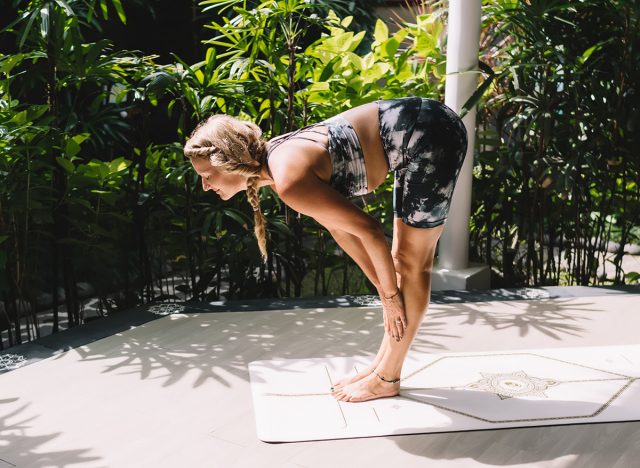
Minute 4: Standing Hip Hinge Reach
Belly pooch often worsens when the hips stop moving well and the lower back compensates. This exercise restores proper hip motion while forcing the core to stabilize the spine.
Hinging forward with a long spine shifts load into the hips and hamstrings. Reaching the arms forward increases core demand without adding impact. The abdominal muscles must brace to protect the spine, which builds endurance and tone rather than bulk.
This movement also improves circulation and loosens the lower back, making it ideal mid-routine.
How to Do It
- Stand with feet shoulder-width apart
- Hinge hips back with flat back
- Reach arms forward
- Return to standing.
Minute 5: Standing Posture Lock Hold
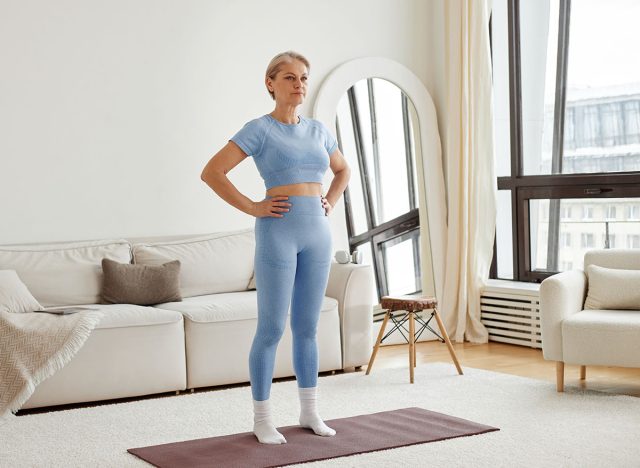
The final minute trains the core to stay engaged when nothing moves, a skill spin classes rarely develop. Holding upright posture with gentle tension reinforces everything activated earlier in the routine.
Pulling the shoulders back slightly, stacking ribs over hips, and bracing the abdomen creates a full-body alignment reset. This teaches the body how a flat, supported midsection should feel during standing and walking.
Ending with a hold locks in neuromuscular awareness, which helps the belly stay flatter long after the routine ends.
How to Do It
- Stand tall with feet planted
- Stack ribs over hips
- Gently brace core
- Hold while breathing.