5 Standing Bodyweight Exercises That Build Thigh Strength Faster Than Squats After 55
There’s a point where your legs either feel like they’re working with you or just trying to keep up. You notice it when you stand up, shift your weight, or spend a little more time on your feet than usual. Strong thighs make those moments feel smooth and controlled. When that strength fades, everything starts to feel a bit heavier and less steady than it should.
In working with clients over the years, one pattern has become clear. Progress tends to come faster when people focus on how their legs actually move rather than rushing into harder exercises. When you can stay upright, control your position, and feel your thighs doing the work, strength starts to build in a way that carries over. That connection is where things begin to click.
Standing exercises fit well here because they keep you in a position that feels natural and easy to adjust. You can use support when needed, clean up your movement, and stay focused on where the effort is going. These movements build strength through your thighs while also helping you stay balanced and in control. Stick with them, and you’ll start to feel your legs holding up better across everything you do.
Supported Split Squats
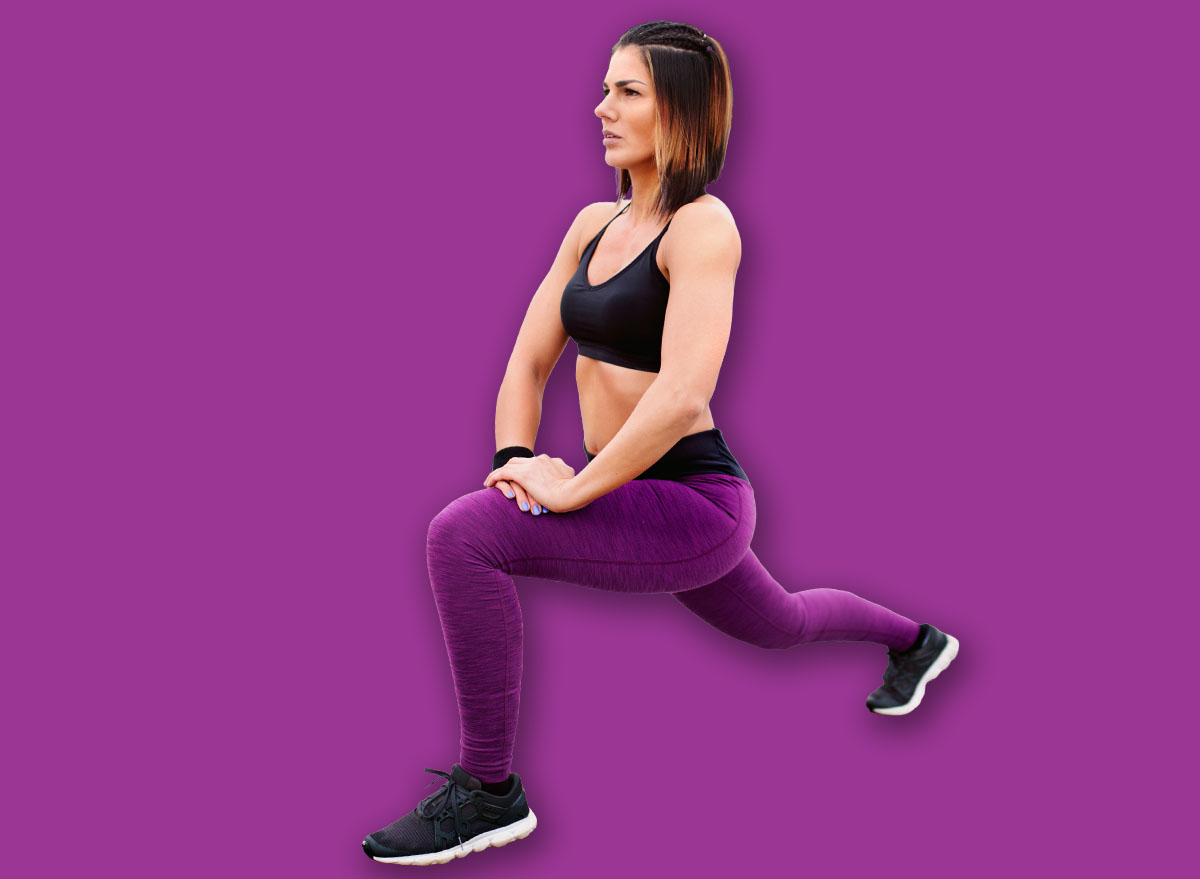
Supported split squats give you a way to build serious thigh strength while staying balanced and in control. With one foot forward and one back, your front leg takes on most of the work, which lets you focus directly on your quads. Holding onto a chair or wall helps you stay steady so you can concentrate on the movement instead of your balance. As you lower, your thigh controls the descent, and as you come back up, it drives the movement. That combination builds strength through the full range. Over time, you’ll notice your legs feeling more stable and capable during everyday movement.
Muscles Trained: Quadriceps, glutes, hamstrings, and core
How to Do It:
- Stand with one foot forward and one foot back.
- Hold onto a chair or wall for support.
- Keep your chest upright and engage your core.
- Lower your back knee toward the ground.
- Press through your front foot to stand back up.
- Repeat for your reps and switch sides.
Recommended Sets and Reps: Perform 3 sets of 8 to 12 reps per side. Rest for 45 to 60 seconds between each set
Best Variations: Shallow range split squats, tempo reps, assisted versions
Form Tip: Keep your front heel grounded to load your thigh.
Wall Sits
Wall sits bring a different kind of challenge that your thighs respond to quickly. Holding that seated position against the wall keeps constant tension on your quads, and you’ll feel it build as the seconds pass. This type of effort helps develop strength and endurance simultaneously. It also reinforces how to keep your knees and hips in a solid position. Staying with the hold teaches your legs to stay engaged without shifting or relying on momentum. Over time, that translates into better control when you’re on your feet. It’s simple, but it works.
Muscles Trained: Quadriceps, glutes, and core
How to Do It:
- Stand with your back against a wall.
- Slide down until your knees are bent at about 90 degrees.
- Keep your feet flat and slightly in front of you.
- Press your back into the wall.
- Hold the position.
- Stand back up when finished.
Recommended Sets and Reps: Perform 3 sets of 20 to 40 seconds. Rest for 45 seconds between each set
Best Variations: Longer holds, single-leg holds, weighted holds
Form Tip: Keep your knees tracking over your toes.
Step-Ups
Step-ups build thigh strength in a way that carries over naturally into daily movement. As you step onto a platform, your front leg does the work of lifting your body, placing a strong demand on your quads. Controlling the way down adds another layer of strength. It also helps improve coordination and balance since you’re working one leg at a time. Staying controlled through each rep keeps the tension in your thigh where it belongs. Over time, this movement helps your legs feel more capable and steady.
Muscles Trained: Quadriceps, glutes, hamstrings, and core
How to Do It:
- Stand in front of a sturdy step or platform.
- Place one foot on the step.
- Press through that foot to step up.
- Bring your other foot up to meet it.
- Step back down with control.
- Alternate sides and repeat.
Recommended Sets and Reps: Perform 3 sets of 8 to 12 reps per side. Rest for 45 seconds between each set
Best Variations: Lower step height, slow tempo reps, assisted step-ups
Form Tip: Drive through your whole foot, not just your toes.
Terminal Knee Extensions (Band)
Terminal knee extensions help build strength around your knee joint while directly targeting your quads. The band creates resistance as you straighten your leg, keeping your thigh engaged throughout the entire movement. This helps improve how your knee feels during daily activity. It also reinforces control at the end range, which is often overlooked. Staying steady during the movement helps you keep the tension where it belongs. Over time, your quads feel stronger and more supportive.
Muscles Trained: Quadriceps and stabilizing muscles around the knee
How to Do It:
- Anchor a resistance band behind your knee.
- Step forward to create tension in the band.
- Slightly bend your knee.
- Straighten your leg against the band.
- Squeeze your quad at the end.
- Return to the starting position and repeat.
Recommended Sets and Reps: Perform 3 sets of 12 to 15 reps per side. Rest for 30 to 45 seconds between each set
Best Variations: Slower reps, longer holds, heavier band resistance
Form Tip: Finish each rep by fully straightening your leg.
Bodyweight Good Mornings
Good mornings bring your hips and thighs together in a way that helps you build strength through a longer range of motion. As you hinge forward, your hamstrings and upper thighs load up, and as you stand back up, they work to bring you back into position. That back-and-forth creates a strong training effect without needing any weight. It also helps you get more comfortable controlling your hips, which plays a big role in how your legs function overall. When done with control, you’ll feel a stretch through the back of your legs followed by a solid contraction as you return to standing. Over time, this helps your thighs feel stronger and more responsive. It’s a great way to round things out and tie your lower-body strength together.
Muscles Trained: Hamstrings, glutes, quadriceps, and lower back
How to Do It:
- Stand with your feet hip-width apart.
- Place your hands on your hips or behind your head.
- Keep your chest up and engage your core.
- Push your hips back as you hinge forward.
- Lower until you feel a stretch in your hamstrings.
- Drive your hips forward to return to standing.
Recommended Sets and Reps: Perform 3 sets of 10 to 12 reps. Rest for 45 seconds between each set
Best Variations: Slow tempo reps, staggered stance, banded good mornings
Form Tip: Keep your back flat and move through your hips, not your lower back.
The Best Tips for Building Thigh Strength After 55
Thigh strength builds best when you stay connected to each rep and give your muscles a reason to stay engaged. These exercises work well because they let you control the movement and keep tension where it belongs. When that starts to click, your legs begin to feel stronger in a way that carries over into everything you do. That’s usually where the biggest changes show up.
- Take your time on the way down: Slowing the lowering phase helps your quads stay under tension longer and builds more strength.
- Own the top position: When your legs are straight or you’ve finished the rep, take a brief moment to fully engage your thighs.
- Keep your feet doing the work: Pressing evenly through your foot helps your thighs stay active and supports better movement.
- Stay aware of your knee path: Let your knees move naturally in line with your toes to keep things smooth and controlled.
- Use support to your advantage: Holding onto something stable lets you focus more on your muscles and less on balance.
- Build from where you are: Shorter ranges and controlled reps help you stay locked in and build strength that sticks.
References
- McCrory, Jean L et al. “Thigh muscle strength in senior athletes and healthy controls.” Journal of strength and conditioning research vol. 23,9 (2009): 2430-6. doi:10.1519/jsc.0b013e3181bab46d
- American College of Sports Medicine. “American College of Sports Medicine position stand. Progression models in resistance training for healthy adults.” Medicine and science in sports and exercise vol. 41,3 (2009): 687-708. doi:10.1249/MSS.0b013e3181915670