4 Chair Exercises That Restore Leg Strength Faster Than Gym Machines After 60

Leg strength determines how well the body moves after 60. Strong legs support balance, protect the knees and hips, improve walking endurance, and make everyday tasks feel safer and easier. Standing up from a chair, climbing stairs, carrying groceries, and getting in and out of a car all depend heavily on lower-body strength. When the legs weaken, movement slows down, and confidence often drops with it.
Many adults turn to gym machines hoping to rebuild lost strength, but machines frequently isolate muscles in rigid positions that fail to improve real-world movement. Chair exercises create a more practical and approachable solution because they strengthen the legs through natural movement patterns while providing stability and support. That combination allows adults over 60 to train consistently without worrying about balance problems or heavy joint strain. Better consistency almost always leads to better results than occasional intense workouts.
The four exercises below strengthen the quads, glutes, calves, and stabilizing muscles that support daily movement and independence. Each exercise improves coordination and lower-body control while remaining gentle enough for regular practice. Stick with these movements consistently, and your legs will feel stronger, steadier, and more capable during everyday activity.
Sit-to-Stand Squats
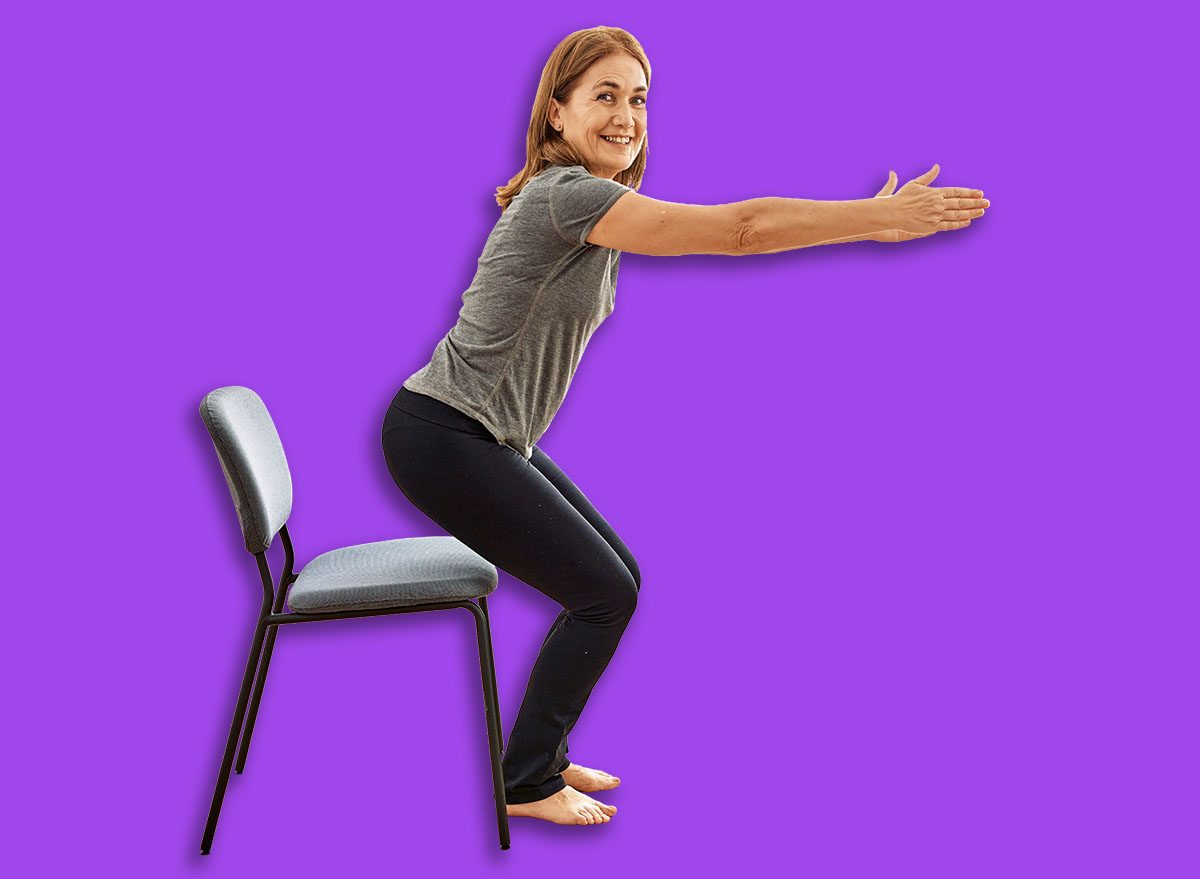
Few exercises strengthen the legs more effectively than sit-to-stand squats. This movement directly trains one of the most important daily actions while strengthening the quads, glutes, hips, and core together. Many adults over 60 rely too heavily on momentum or their arms while standing, which gradually weakens the lower body over time. Sit-to-stands restore controlled leg power while improving balance and posture during movement transitions. The chair also provides a safe depth target that builds confidence and encourages proper mechanics during every repetition. Performed consistently, this exercise improves stair climbing, walking strength, and overall lower-body endurance far more naturally than many seated gym machines.
How to Do It
- Sit near the front of a sturdy chair
- Place your feet shoulder-width apart
- Lean slightly forward
- Press through your heels
- Stand up smoothly
- Fully straighten your hips at the top
- Lower slowly back into the chair
- Perform 10 to 15 repetitions.
Seated Leg Extensions
Strong quadriceps protect the knees and support nearly every lower-body movement. Many adults lose quad strength rapidly after 60 because prolonged sitting and reduced activity limit lower-body engagement throughout the day. Seated leg extensions isolate and strengthen the front of the thighs while improving knee control and muscular endurance. Unlike many gym machines that encourage fast repetitive motion, this exercise allows slow controlled movement that keeps constant tension through the muscles. The seated position also removes unnecessary balance demands, so the legs can focus fully on the strengthening effort. Consistent practice helps improve walking stability and makes standing movements feel more powerful and controlled.
How to Do It
- Sit tall in a sturdy chair
- Keep your feet flat on the floor
- Slowly straighten one leg forward
- Tighten the thigh muscles at the top
- Pause briefly
- Lower with control
- Alternate sides slowly
- Complete 10 to 12 repetitions per leg.
Chair Marches
Chair marches strengthen the hips, thighs, and core while improving coordination and lower-body endurance. Many adults over 60 struggle with walking confidence because the hips and stabilizing muscles weaken alongside the legs. This movement restores strength through repeated controlled lifting while teaching the body to stabilize during alternating leg motion. The exercise also increases circulation and encourages better posture during seated movement. Unlike fixed gym machines that isolate one muscle group at a time, chair marches train the lower body to work together as a coordinated system. Performed consistently, this movement improves stamina and supports smoother walking mechanics during daily life.
How to Do It
- Sit upright near the front of the chair
- Keep your chest lifted
- Tighten your core slightly
- Lift one knee upward
- Lower slowly with control
- Alternate sides continuously
- Avoid leaning backward
- Perform 20 total marches.
Seated Heel Raises
Calf strength plays a massive role in balance, walking speed, and lower-leg stability after 60. Weak calves reduce push-off power during walking and place extra stress on the knees and hips during movement. Seated heel raises strengthen the calves and ankles while improving circulation and lower-leg endurance. The controlled lifting motion also supports better foot stability and balance during standing activities. Many adults overlook calf training completely, yet stronger lower legs often lead to smoother walking mechanics and greater confidence during movement. This exercise feels simple, but consistent repetition creates noticeable improvements in lower-body stability and endurance.
How to Do It
- Sit tall with feet flat on the floor
- Keep your knees bent at 90 degrees
- Press through the balls of your feet
- Lift your heels upward slowly
- Pause briefly at the top
- Lower with control
- Maintain steady posture throughout
- Perform 15 to 20 repetitions.