4 Classic Exercises That Build More Muscle After 60 Than Any Gym Machine
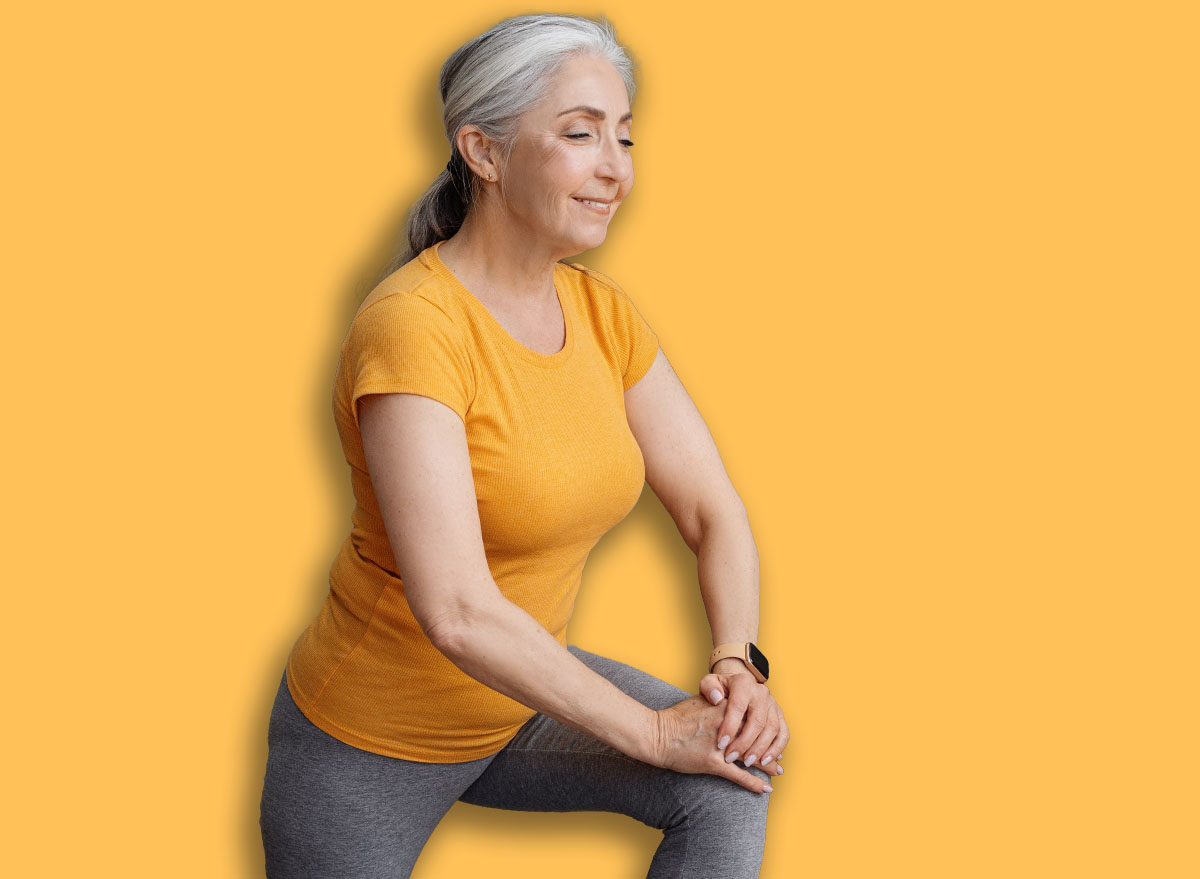

Building muscle mass after 60 is a goal of many fitness enthusiasts—for good reason. But it’s so much more than developing an impressive physique; muscle is necessary in order to live an active, independent lifestyle. Everyone naturally starts to lose muscle mass and strength after the age of 30, in a process known as sarcopenia. The loss continues at a rate of 3% to 8% every 10 years. But just because it happens, that doesn’t mean you can’t do something about it.
According to Eric North, aka The Happiness Warrior—a wellness speaker, coach, and advocate redefining what it means to age with purpose, strength, and emotional vitality, you can build more muscle after 60 than any machine workout at the gym, and he shares four stellar exercises to help make it happen.
“Classic (free weight and bodyweight) exercises can be more effective after 60 than gym machines because they better promote functional strength, balance, mental focus, and coordination,” North shares. “The necessary elements for daily living and injury prevention as we experience the aging process.”
Squats
Bodyweight squats fire up your core, legs, and glutes while challenging your balance.
As for technique, North breaks it down: “Stand with feet shoulder-width apart, as if sitting back into a chair. For beginners, use an actual chair to sit onto and stand back up (sit-to-stand). Keep chest up and knees aligned with toes.”
- Begin the exercise by standing tall with your feet shoulder-width apart.
- Extend your arms in front of you or place your hands on your hips. Use a chair for support, if necessary.
- Bend at the knees and hips as you lower into a squat.
- Use control to descend until your thighs are parallel to the ground.
- Press through your heels to return to standing.
- Perform 2 to 3 sets of 8 to 10 reps.
Standing Overhead Presses
The standing overhead press engages the upper back, shoulders, and triceps while promoting significant engagement of the core for stability.
North breaks down the technique: “Stand with feet hip-width apart, holding a dumbbell in each hand at shoulder height. Engage the core and glutes, then press the weights directly overhead. Slowly lower the weights back to shoulder height.”
- Stand tall, holding a dumbbell in each hand at shoulder level, palms facing inward.
- Press the weights overhead, extending your arms.
- Use control as you lower the weights to shoulder height.
- Perform 2 to 3 sets of 8 to 10 reps.
Lunges (or Split-Stance Lunges)
Lunges engage the quads, glutes, hamstrings, and core.
As for proper technique, North explains, “Stand upright and step one foot backward. Lower the back knee toward the floor, keeping the front knee bent at approximately a 90-degree angle and aligned with your toes. Push back into the starting position. Hold onto a wall or furniture for support if needed.”
- Stand tall, feet parallel, hip-width apart.
- Step one foot forward.
- Bring your hands to your hips.
- Engage your core as you bend your knees, lowering to form 90-degree bends in both legs.
- Keep your upper body straight.
- Press through your front heel and the ball of your back foot to rise back up.
- Perform 2 to 3 sets of 8 to 10 repetitions on each leg.
Dumbbell Rows (or Standing Single-Arm Dumbbell Rows)
Dumbbell rows emphasize the rear shoulders, back, and biceps.
For proper technique, North explains, “Stand with feet hip-width apart and a dumbbell in one hand. Hinge forward at your hips with a flat back, engaging the core. Pull the dumbbell up toward your waist, keeping your elbow close to your body. Pause, then lower the weight slowly.”
- Stand tall, feet hip-width apart and a dumbbell in each hand in front of you.
- Hinge at the hips until your torso is parallel to the ground.
- Maintain a flat back and soft knees.
- Allow the weights to lower with your arms completely extended.
- Row the dumbbells up toward your torso.
- Lower to the start position with control.
- Perform 2 to 3 sets of 10 to 12 reps on each arm.