Here’s How Long Your Incline Walking Workout Should Be To Shrink Hanging Belly Fat After 55
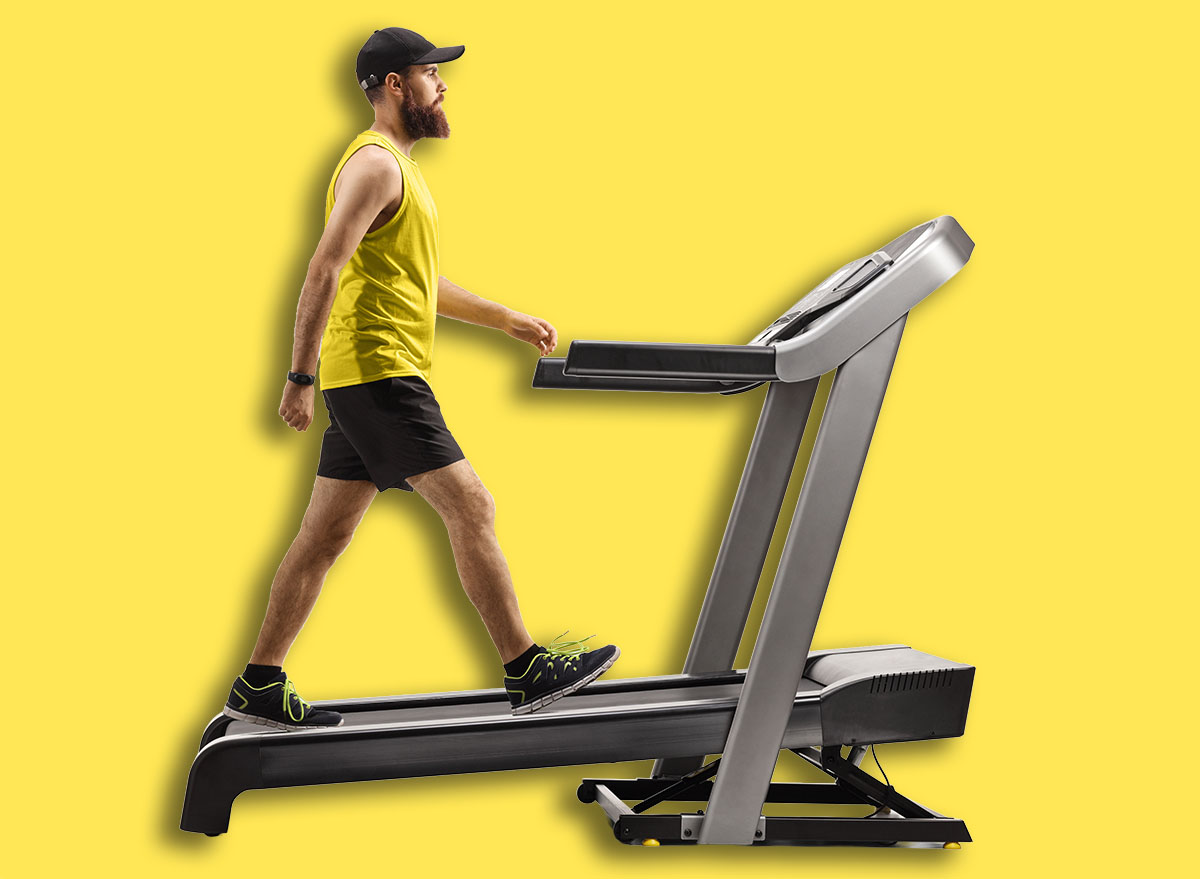

You already know that movement matters if fat loss sits on your priority list. You’ve heard that walking works, you’ve seen people swear by incline treadmill sessions, and you probably even enjoy how approachable it feels. The real question isn’t whether you should walk, but moreso how much walking actually moves the needle once your body hits its mid-50s and beyond.
That’s where dose becomes everything. Fat loss responds to consistency, intensity, and total output over time, not random effort. When daily calories out reliably outpace calories in, change follows. Miss that balance, and even solid workouts might stall. Nail it, and walking becomes far more than casual cardio. It turns into a repeatable strategy that fits real life and supports long-term weight control.
Incline walking earns its place because it boosts energy demand without beating up joints or recovery. It elevates heart rate, recruits more muscle, and encourages longer sessions without burnout. Pair it with strength training and a balanced diet, and it becomes a powerful lever for trimming stubborn belly fat. Let’s break down exactly how long your incline walking workouts should last, how to structure them, and how to get the most from every step.
Here’s How Long Your Incline Walking Workout Should Be
When it comes to shrinking hanging belly fat after 55, duration matters just as much as consistency. Your body responds best to repeatable effort that creates a steady calorie deficit without overstressing joints or recovery systems. Incline walking hits that balance by raising energy demand while staying sustainable enough to perform multiple times per week. The goal isn’t to walk forever. It’s to walk long enough, often enough, and with purpose.
- Aim for 30 to 45 minutes per session: This range provides enough total work to support fat loss while keeping fatigue manageable. Thirty minutes works well when intensity stays intentional. Forty-five minutes helps when progress slows or daily activity remains low.
- Train four to six days per week: Frequency drives results. Regular sessions create consistent calorie output, which matters more than occasional long workouts.
- Use a moderate incline most of the time: An incline between 5 and 8 percent increases muscle involvement and heart rate without pounding joints. Outdoor hills deliver similar benefits.
- Keep effort at a sustainable intensity: Breathe harder while still maintaining control. Short sentences should feel possible. This keeps sessions effective and repeatable.
- Avoid ultra-long sessions: Walking for more than 60 minutes often reduces intensity and increases fatigue without a meaningful added benefit in fat loss.
Two Incline Walking Workouts That Support Fat Loss After 55

One of the biggest reasons incline walking works so well is flexibility. You can adjust the structure without changing the core movement, which keeps progress moving while avoiding boredom or burnout. Some days call for steady, repeatable effort. Others benefit from brief intensity spikes that raise calorie burn and cardiovascular demand. Both approaches support fat loss when used consistently, and alternating between them often delivers the best long-term results.
Option 1: Steady Incline Walking Workout
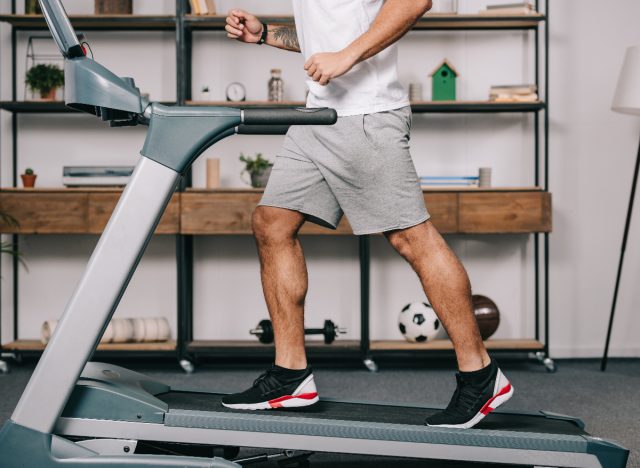
This option works best on most days of the week. It keeps stress low, supports recovery, and builds a reliable calorie deficit over time. Use it when energy feels solid, and you want a workout that fits easily into your routine.
- Warm-Up: 5 minutes
- Walk flat or with a very slight incline at an easy pace. Let breathing settle, and posture align.
- Main Walk: 30 to 40 minutes
- Set the incline to 5-8 percent. Choose a brisk pace that raises your heart rate while allowing you to speak short sentences. Focus on smooth, consistent steps.
- Optional Progression
- Every 5 to 10 minutes, slightly increase the speed or incline to prevent your body from settling into cruise mode.
- Cool Down: 5 minutes
- Lower the incline and slow your pace until breathing returns to normal.
Total Time: 40 to 50 minutes
Frequency: Four to six days per week.
Option 2: Incline Walking Interval Workout

This option adds short bursts of higher effort to increase calorie burn in less time. It works well one to two days per week or on days when time feels tight. The goal is controlled intensity, not exhaustion.
- Warm-Up: 5 minutes
- Walk flat or with a slight incline at an easy pace.
- Interval Block: 20 to 25 minutes, alternating between higher and moderate effort:
- Hard Interval: 1 to 2 minutes at a 7 to 10 percent incline with a brisk pace. Breathing should feel heavy but controlled.
- Recovery Interval: 2 to 3 minutes at a 3 to 5 percent incline at a comfortable pace.
- Repeat this cycle five to seven times.
- Cool Down: 5 minutes, returning to a flat surface or very low incline and walking easily.
Total Time: 30 to 35 minutes
Frequency: One to two days per week.
The Best Tips for Getting the Most Out of Your Walking Workouts After 55

Incline walking delivers results when it’s supported by smart habits. Small details compound over time, turning routine walks into a reliable fat loss tool. These tips help you get more return from every session without adding complexity.
- Walk with intention: Stay tall, engage your arms, and keep your strides purposeful. Strong posture increases muscle recruitment and calorie burn.
- Support workouts with balanced nutrition: Extreme calorie cuts reduce energy and slow recovery. Prioritize protein, fiber, and whole foods so walking feels energizing rather than draining.
- Pair walking with strength training: Two to three strength sessions per week help preserve muscle and support metabolic health. Walking helps with fat loss. Lifting protects lean mass.
- Track weekly minutes, not just workouts: Total volume matters. Aim for 150 to 225 minutes of incline walking per week to support steady fat loss.
- Progress gradually: Increase time or incline in small steps. Sudden jumps raise injury risk and reduce consistency.
- Protect your sleep: Poor sleep disrupts appetite regulation and the release of fat-loss hormones. Walking helps manage stress, but recovery still starts at night.
References
- Silder, Amy et al. “Predicting the metabolic cost of incline walking from muscle activity and walking mechanics.” Journal of biomechanics vol. 45,10 (2012): 1842-9. doi:10.1016/j.jbiomech.2012.03.032
- Howell, Scott, and Richard Kones. “Calories in, calories out” and macronutrient intake: the hope, hype, and science of calories.” American journal of physiology. Endocrinology and metabolism vol. 313,5 (2017): E608-E612. doi:10.1152/ajpendo.00156.2017
- Ungvari, Zoltan et al. “The multifaceted benefits of walking for healthy aging: from Blue Zones to molecular mechanisms.” GeroScience vol. 45,6 (2023): 3211-3239. doi:10.1007/s11357-023-00873-8