4 Morning Exercises That Shrink Belly Overhang Faster Than Gym Sessions After 65


A morning workout can set the tone before the day starts pulling you in every direction. It gives you a clean win early, gets your body moving, and makes it easier to keep your activity from getting pushed to “later,” which has a funny way of turning into tomorrow.
Belly overhang changes through the bigger picture. Targeted ab work can strengthen the muscles underneath. Still, the visible change comes from consistent movement, strength training, food habits that support your goal, and enough daily activity to keep your body working. A short morning routine helps because it gives you something repeatable and easy to build around.
When I coach adults after 65, I look for exercises that feel doable without feeling watered down. The routine should raise your effort, challenge your balance and core, and still leave you feeling like you can go on with your day. That’s the sweet spot for building consistency.
These four morning exercises use a mix of core strength, steady marching, walking, and low-impact conditioning. You can use them as a quick circuit or spread them through the morning if that fits your day better.
Kneeling Side Plank Hold
The kneeling side plank gives your core a focus without turning the exercise into a long grind. It targets the side of your midsection, which helps with posture, balance, and control when you walk, turn, or shift your weight. The bent-knee setup makes the hold more approachable while still giving your obliques real work.
Muscles Trained: Obliques, deep core, glutes, shoulders.
How to Do It:
- Lie on your side with your knees bent.
- Place your forearm under your shoulder.
- Stack your hips and keep your knees together.
- Brace your core and lift your hips from the floor.
- Hold the position while breathing steadily.
- Lower with control, then switch sides.
Recommended Sets and Reps: Perform 3 sets of 15 to 25-second holds per side. Rest for 30 to 45 seconds between sides.
Best Variations: Shorter kneeling side plank holds, side plank hip lifts, full side plank holds.
Form Tip: Keep your chest facing forward and avoid rolling your hips toward the floor.
Standing Marching
Standing marching is simple, which is exactly why it works well in the morning. It gets your hips, legs, and core involved without asking for a big setup or a lot of space. Move with purpose, lift each knee with control, and let the rhythm raise your breathing without making the exercise feel rushed.
Muscles Trained: Hip flexors, quadriceps, glutes, calves, core.
How to Do It:
- Stand tall with your feet hip-width apart.
- Brace your core lightly.
- Lift your right knee toward hip height.
- Lower your foot with control.
- Lift your left knee and continue alternating.
- Pump your arms naturally as you march.
Recommended Sets and Reps: Perform 3 sets of 30 to 45 seconds. Rest for 30 to 45 seconds between sets.
Best Variations: Supported marching, slow-tempo marching, high-knee marching.
Form Tip: Stay tall as your knees lift instead of leaning back or folding forward.
Morning Walk
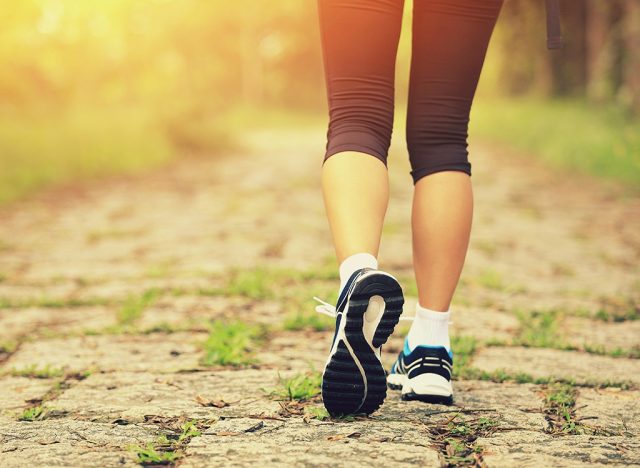
A morning walk gives this routine its steady calorie-burning piece. It’s easy to overlook because it doesn’t feel flashy, but walking is one of the most repeatable tools for changing daily energy use after 65. Keep the pace brisk enough to feel like exercise, but comfortable enough that you can come back to it most days.
Muscles Trained: Glutes, hamstrings, quadriceps, calves, core.
How to Do It:
- Start with 2 to 3 minutes at an easy pace.
- Stand tall and let your arms swing naturally.
- Pick up the pace until your breathing increases slightly.
- Walk with short, steady steps.
- Keep your shoulders relaxed.
- Finish with 1 to 2 minutes at an easier pace.
Recommended Sets and Reps: Walk for 10 to 20 minutes most mornings, or start with 5 minutes if that feels more realistic.
Best Variations: Indoor walking, treadmill walking, short walking intervals.
Form Tip: Choose a pace you can repeat consistently before worrying about speed.
RELATED: 5 Morning Exercises That Rebuild Knee Strength Faster Than Lunges After 60
Low-Impact Jumping Jacks
Low-impact jumping jacks bring a little more energy into the workout without the pounding of regular jumping jacks. You step one foot out at a time while your arms move overhead, which raises your heart rate and keeps the routine feeling active. It’s a useful finisher when you want a quick conditioning push before the day gets going.
Muscles Trained: Shoulders, glutes, calves, quadriceps, core.
How to Do It:
- Stand tall with your feet together and arms at your sides.
- Step your right foot out to the side as you raise both arms overhead.
- Bring your right foot back to center as your arms lower.
- Step your left foot out and repeat.
- Keep alternating sides at a steady pace.
- Continue for the full interval.
Recommended Sets and Reps: Perform 3 sets of 30 to 45 seconds. Rest for 30 to 45 seconds between sets.
Best Variations: Slower step jacks, smaller-range step jacks, faster low-impact jacks.
Form Tip: Keep the steps light and use a range your hips and shoulders can control.
How to Use These Morning Exercises After 65
Use these exercises as a morning circuit three to five days per week. Complete one set of each move in order, rest for 60 seconds, then repeat for two to three total rounds. On days when time is tight, do one round and take a short walk.
- Start with the core hold: The kneeling side plank gets your midsection working before the faster movements begin.
- Use marching as a warm-up or bridge: It helps you build rhythm before walking or low-impact jacks.
- Treat the walk as the anchor: A consistent morning walk can do a lot for your weekly activity total.
- Keep the finish energetic: Low-impact jumping jacks should raise your breathing while your joints still feel comfortable.
- Repeat the same window: Morning routines work better when they become familiar. Pick a time you can protect most days.
Shrinking belly overhang after 65 takes steady effort, and a morning routine can make that effort easier to repeat. Start with control, build into movement, and let the consistency do more work than any single gym session can.
References
- Schumacher, Leah M et al. “Consistent exercise timing as a strategy to increase physical activity: A feasibility study.” Translational journal of the American College of Sports Medicine vol. 8,2 (2023): e000227. doi:10.1249/tjx.0000000000000227
- Beekman, Marian et al. “Lifestyle-Intervention-Induced Reduction of Abdominal Fat Is Reflected by a Decreased Circulating Glycerol Level and an Increased HDL Diameter.” Molecular nutrition & food research vol. 64,10 (2020): e1900818. doi:10.1002/mnfr.201900818
- La New, Jacquelyn M, and Katarina T Borer. “Effects of Walking Speed on Total and Regional Body Fat in Healthy Postmenopausal Women.” Nutrients vol. 14,3 627. 31 Jan. 2022, doi:10.3390/nu14030627