5 Morning Exercises That Trim Lower Belly Pouch After 50, According to a Coach
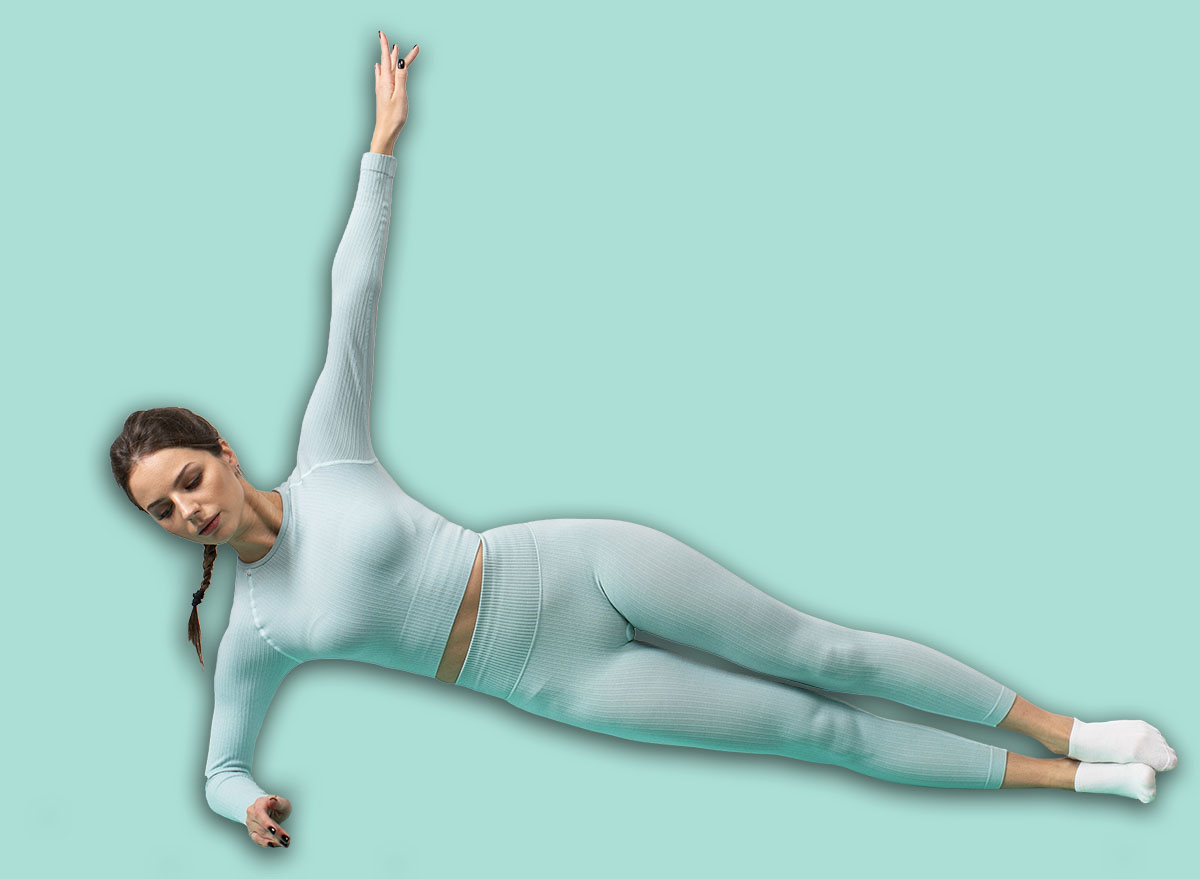

Lower belly fat tends to be the last place to change after 50, even when the scale is moving in the right direction. That’s because fat loss doesn’t happen where you want it to. It happens where your body decides based on metabolism, muscle activity, daily movement, and consistency. When those factors improve, stubborn areas follow.
Morning exercise helps set that process in motion early. Moving first thing raises metabolic activity, improves how your body handles blood sugar, and increases overall calorie burn before the day really begins. It also creates momentum. People who move in the morning tend to stay more active throughout the day without trying to force it.
These five exercises combine core engagement with full-body movement to wake up your metabolism and challenge the muscles that influence lower belly control. Used together, they help your body burn more energy, stabilize better, and stay active long after the workout ends.
Alternating Dead Bugs
Alternating dead bugs train your deep core muscles to stabilize your spine while your arms and legs move independently. This coordination is essential for lower belly control and back support. Because the movement is slow and controlled, it builds strength without stressing your joints first thing in the morning. It also helps switch your core on before more dynamic exercises.
Muscles Trained: Transverse abdominis, rectus abdominis, hip flexors, and spinal stabilizers.
How to Do It:
- Lie on your back with your arms pointed toward the ceiling and knees bent at ninety degrees.
- Brace your core and gently press your lower back into the floor.
- Extend one arm and the opposite leg away from your body.
- Pause briefly while staying braced.
- Return to the start and alternate sides.
Recommended Sets and Reps: Perform 3 sets of 8 to 10 reps per side. Rest for 30 seconds between each set.
Best Variations: Longer pauses, arms only dead bugs, legs only dead bugs.
Form Tip: If your lower back lifts, shorten the range.
Plank With Hip Dips
Plank hip dips add rotation to a traditional plank, which increases core activation and energy demand. This challenges the obliques and lower abs while keeping your shoulders and hips working together. The added movement raises your heart rate slightly, which supports early-day fat loss. It’s a strong bridge between controlled core work and higher intensity movement.
Muscles Trained:
Obliques, transverse abdominis, rectus abdominis, and shoulder stabilizers.
How to Do It:
- Start in a forearm plank with your body in a straight line.
- Brace your core and rotate your hips slightly toward one side.
- Return to center with control.
- Rotate toward the opposite side.
- Continue alternating sides.
Recommended Sets and Reps: Perform 3 sets of 16 to 20 total dips. Rest for 45 seconds between each set.
Best Variations: Knee plank hip dips, slower tempo dips, shorter range dips.
Form Tip: Keep your shoulders steady as your hips move.
Flutter Kicks
Flutter kicks place continuous tension on the lower abs, which helps build endurance and control. Because your legs stay extended, your core has to work harder to stabilize your pelvis. This makes them effective for targeting the lower belly area when done with good form. They also keep your heart rate elevated without standing impact.
Muscles Trained: Lower rectus abdominis, hip flexors, transverse abdominis, and quads.
How to Do It:
- Lie on your back with your hands under your hips for support.
- Lift your legs slightly off the floor and brace your core.
- Kick one leg up as the other lowers.
- Keep your movements small and controlled.
- Continue alternating kicks.
Recommended Sets and Reps: Perform 3 sets of 30 to 45 second intervals. Rest for 45 seconds between each set.
Best Variations: Bent knee flutter kicks, shorter intervals, slower tempo kicks.
Form Tip: Press your lower back gently into the floor.
Standing Cross Body Crunch
Standing cross-body crunches combine rotation with balance and posture, which increases total muscle involvement. Because you’re upright, your core must stabilize your pelvis and spine with every rep. This raises calorie burn compared to floor-based crunches. It also helps reinforce better movement patterns for the rest of the day.
Muscles Trained: Obliques, rectus abdominis, transverse abdominis, and hip flexors.
How to Do It:
- Stand tall with your hands lightly touching your temples.
- Brace your core and lift one knee.
- Rotate your torso to bring the opposite elbow toward that knee.
- Return to the start with control.
- Alternate sides.
Recommended Sets and Reps: Perform 3 sets of 10 to 14 reps per side. Rest for 30 seconds between each set.
Best Variations: Slow tempo reps, pause at the crunch, alternating holds.
Form Tip: Rotate through your torso, not just your arms.
Jump Squats
Jump squats recruit large muscle groups and quickly elevate your heart rate, which boosts calorie burn and metabolic demand. Power-based movements like this create a stronger after-effect than low-intensity exercise alone. When performed with control, they also improve coordination and lower-body strength. This makes them a powerful finisher for a morning routine.
Muscles Trained: Glutes, quadriceps, hamstrings, calves, and core.
How to Do It:
- Stand with your feet about shoulder-width apart.
- Brace your core and sit your hips back into a squat.
- Drive through your feet and jump upward.
- Land softly with bent knees.
- Reset and repeat.
Recommended Sets and Reps: Perform 3 sets of 8 to 12 reps. Rest for 60 seconds between each set.
Best Variations: Bodyweight squats, pause squat jumps.
Form Tip: Land quietly and stay controlled.
Best Morning Fat Loss Tips for Adults After 50
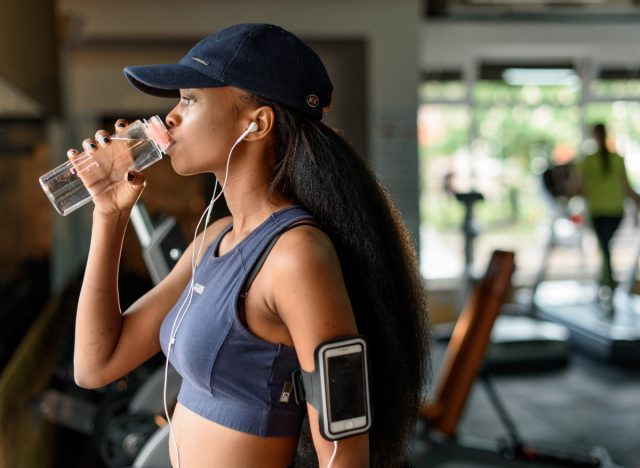
Morning workouts work best when they feel sustainable and purposeful. The goal is to wake up your body, not exhaust it. When movement comes early, calorie burn and better habits tend to follow naturally.
- Start with control: Lead with core-focused exercises before higher intensity work.
- Stay upright when possible: Standing movements involve more of the body.
- Keep effort moderate: You should feel warm and energized, not wiped out.
- Hydrate after training: Water supports metabolism and recovery.
- Repeat often: Consistency matters more than workout length.
- Carry movement into your day: Short walks and posture resets extend the benefits.
Do this routine regularly, and trimming the lower belly pouch becomes a byproduct of better daily movement and metabolic momentum.
References
- Cox, Carla E. “Role of Physical Activity for Weight Loss and Weight Maintenance.” Diabetes spectrum : a publication of the American Diabetes Association vol. 30,3 (2017): 157-160. doi:10.2337/ds17-0013
- Schumacher, Leah M et al. “Consistent Morning Exercise May Be Beneficial for Individuals With Obesity.” Exercise and sport sciences reviews vol. 48,4 (2020): 201-208. doi:10.1249/JES.0000000000000226