5 Morning Exercises That Restore Glute Strength Faster Than Lunges After 60

Your glutes are among the most essential muscles in your body, yet they’re often one of the weakest after 60. Long stretches of sitting, lack of physical activity, and age-related muscle loss (a.k.a. sarcopenia) can all contribute to weak, underactive glutes. As you age, weak glutes can result in slower walking speed, poor balance, lower back issues, unstable knees, and decreased mobility.
The good news? Restoring your glute strength can help combat these common pitfalls of aging. Morning exercise in particular can be especially helpful since your body tends to feel stiffer and less activated after sleeping. Low-impact glute exercises can help wake up your hips, enhance mobility, and boost your quality of life.
We spoke with James Brady, CPT, a certified personal trainer at OriGym, who reveals his five best glute-focused exercises that he deems critical for maintaining lower body strength and mobility later in life. Keep reading for the exercises and detailed step-by-step instructions. Then, when you’re finished, be sure to check out these 6 Home Exercises That Restore Muscle Tone Faster Than Gym Classes After 60.
Glute Bridges
Glute bridges are a fantastic morning exercise that helps improve walking power, pelvic stability, and posture. “Glute bridges are one of the most effective morning exercises for restoring glute strength,” Brady explains.
How to do it:
- Lie on your back with your knees bent and your feet flat on the floor.
- Position your feet hip-width apart.
- Rest your arms comfortably at your sides.
- Engage your core before beginning the movement.
- Press through your heels to lift your hips upward.
- Raise your hips until your body forms a straight line from shoulders to knees.
- Squeeze your glutes for one to two seconds at the top of the movement.
- Lower your hips back down slowly with control.
- Perform two to three sets of 12 to 15 reps. Rest for 45 to 60 seconds between sets.
Standing Hip Extensions
“Standing hip extensions help strengthen the glutes while improving balance and hip mobility,” explains Brady. Since this exercise involves only one leg at a time, it puts your stability and coordination to the test and helps improve them gradually.
How to do it:
- Stand tall behind a chair or countertop for support.
- Position your feet hip-width apart.
- Flex your core and keep your posture upright.
- Slowly extend one leg straight behind you.
- Avoid arching your lower back during the movement.
- Lift the leg only as high as comfortable.
- Pause for one to two seconds at the top of the movement.
- Lower your leg back down slowly with control.
- Complete two to three sets of 10 to 12 reps per leg, resting for 30 to 45 seconds between sets.
Chair Squats
This foundational lower body exercise strengthens your glutes, quads, and hips. “Chair squats are excellent for rebuilding glute strength because they train the muscles used for standing, climbing stairs, and maintaining stability during daily movement,” says Brady.
How to do it:
- Stand in front of a sturdy chair with your feet shoulder-width apart.
- Keep your chest lifted and your core braced.
- Push your hips backward like you’re sitting down.
- Lower yourself until you lightly touch the chair.
- Keep your knees stacked above your feet.
- Drive through your heels to stand back up.
- Squeeze your glutes at the top of the movement.
- Aim for two to three sets of 10 to 15 reps. Rest for 45 to 60 seconds between sets.
Standing Side Leg Raises
“Standing side leg raises target the glute medius, a key muscle for balance, pelvic stability, and reducing the risk of falls as we age,” Brady says. Strengthening this muscle can help improve walking mechanics and reduce fall risk, which the National Institutes of Health says is essential for healthy aging.
How to do it:
- Stand up tall beside a chair or wall for support.
- Position your feet hip-width apart.
- Engage your core and keep your posture tall.
- Slowly lift one leg out to the side.
- Keep your torso upright without leaning.
- Raise your leg as high as comfortable with control.
- Pause for one to two seconds at the top of the movement.
- Lower your leg back down slowly with control.
- Perform two to three sets of 12 to 15 reps per leg, resting for 45 to 60 seconds between sets.
RELATED: 4 Quiet Exercises That Restore Balance Better Than Treadmill Sprints After 60
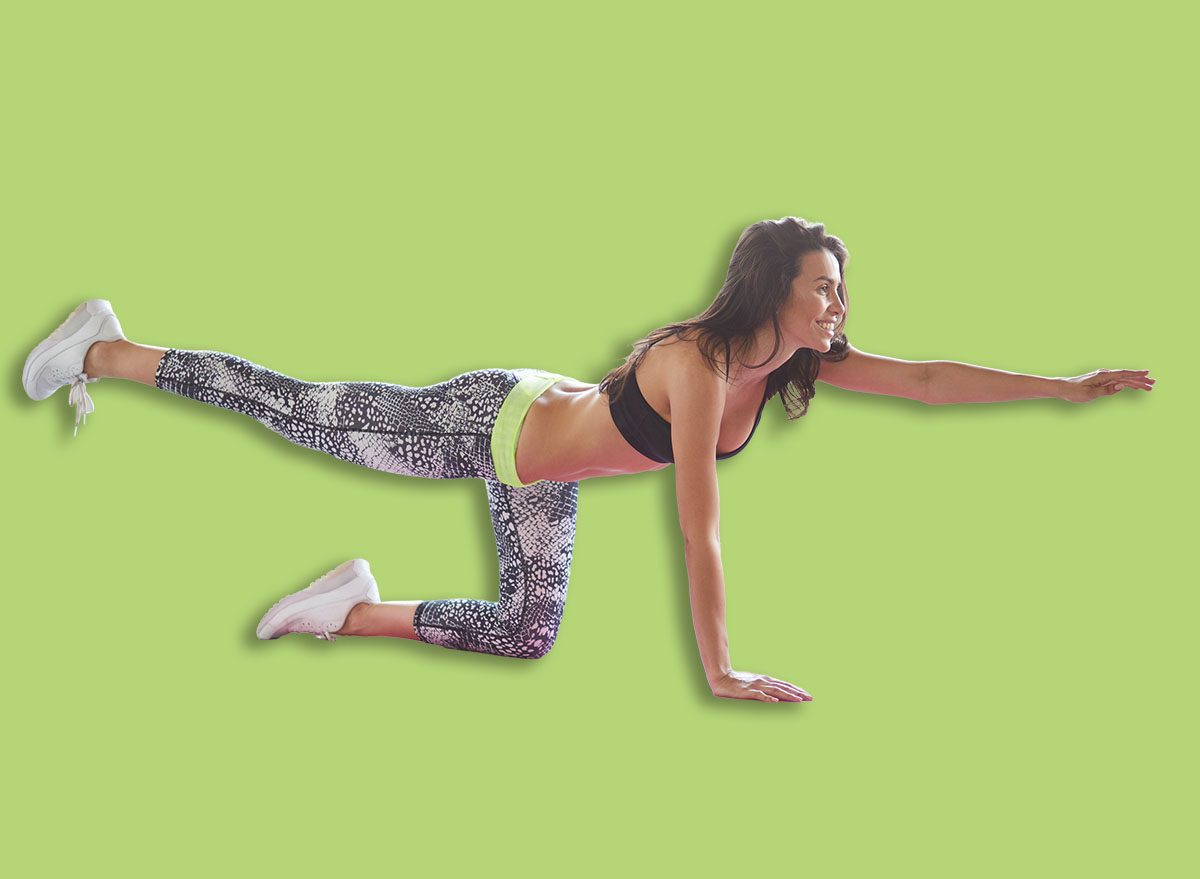
Bird Dogs
Bird dogs strengthen your glutes, as well as your core and lower back. “Bird dogs are particularly effective for improving posture, coordination, and overall walking mechanics,” explains Brady.
How to do it:
- Get down on your hands and knees with your back straight.
- Position your hands beneath your shoulders and knees beneath your hips.
- Engage your core before beginning the movement.
- Extend one arm forward and your opposite leg backward (keep both limbs straight and level with your body).
- Pause for one to two seconds at full extension.
- Return to the starting position slowly and switch sides.
- Complete two to three sets of 8 to 10 reps per side. Rest for 45 to 60 seconds between sets.