If You Can Complete These 4 Pushup Positions After 50, Your Arm Strength Is Elite
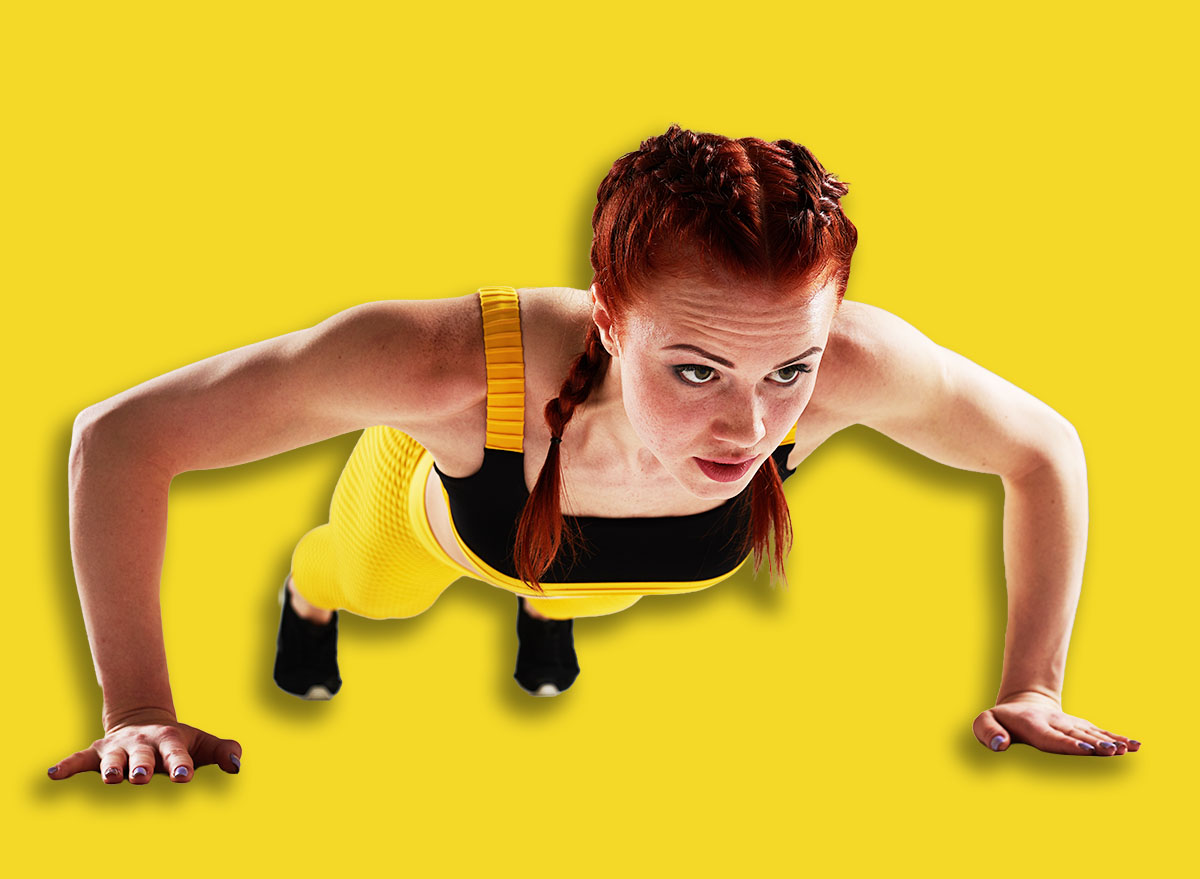

Pushups have always been the baseline test for upper-body strength and endurance. They don’t rely on machines, cables, or clever setups. It’s just you, the floor, and whether your arms can repeatedly move your body with strength and control. That simplicity is exactly why pushups still matter after 50.
If you grew up doing school fitness tests, you probably remember the pushup station well. Someone counted reps. Someone rushed through half reps. Someone argued their nose hit the floor. As crude as those tests were, they nailed one thing. Pushups quickly reveal strength, stamina, and body control.
What most people overlook is that pushups aren’t one single skill. Different hand positions and movement demands stress your arms in very different ways. Some light up your triceps. Others test shoulder stability or core control. Being able to handle all four positions shows your arm strength is well-rounded, resilient, and functional. Here’s how to tell if yours qualifies as elite.
Traditional Pushup
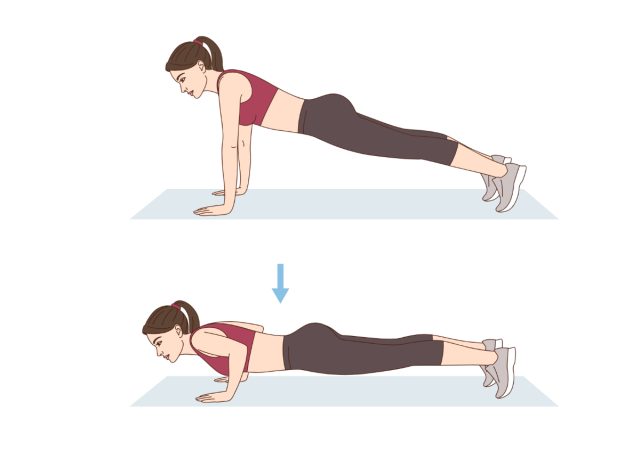
The traditional pushup sets the foundation for every other variation. It demands balanced strength across your arms, shoulders, and torso while reinforcing clean movement patterns. This position also highlights joint control through your shoulders and elbows, which becomes more important with age. If this variation feels smooth and repeatable, your base level of arm strength is solid. Everything else builds off this.
Muscles Trained: Chest, triceps, shoulders, and core.
How to Do It:
- Place your hands slightly wider than shoulder width on the floor.
- Extend your legs behind you and set your feet hip-width apart.
- Brace your core and squeeze your glutes to form a straight line.
- Lower your chest toward the floor with control.
- Keep your elbows angled slightly back as you descend.
- Press the floor away until your arms fully extend.
Recommended Sets and Reps: Perform 3 sets of 8 to 12 reps. Rest for 60 seconds between each set.
Best Variations: Incline pushup, tempo pushup, pause pushup.
Form Tip: Keep your neck neutral by looking slightly ahead of your hands.
Close-Grip Pushup
The close-grip pushup shifts more work directly onto your triceps. That makes it one of the best bodyweight tests of arm strength. It also challenges elbow stability, which often weakens when training volume drops or technique slips. This variation rewards patience and control rather than speed. Strong arms show up when every rep stays tight.
Muscles Trained: Triceps, chest, shoulders, and core.
How to Do It:
- Place your hands directly under your shoulders or slightly inside.
- Extend your legs behind you and set your feet slightly wider for balance.
- Brace your core and lock your body into a straight line.
- Lower your chest toward the floor while keeping your elbows close.
- Pause briefly near the bottom without resting.
- Press up until your arms fully straighten.
Recommended Sets and Reps: Perform 3 sets of 6 to 10 reps. Rest for 60 to 75 seconds between each set.
Best Variations: Knee close-grip pushup, incline close-grip pushup, tempo close-grip pushup.
Form Tip: Think about driving your palms down and back into the floor.
Three-point Pushup
The single-leg three-point pushup raises the difficulty by removing one point of contact with the floor. Lifting one leg forces your arms and shoulders to manage more load while your core works overtime to prevent rotation. This variation exposes strength gaps fast, especially through your triceps and stabilizing shoulder muscles. It also challenges coordination in a way standard pushups don’t. If you can stay controlled here, your arm strength is backed by real stability.
Muscles Trained: Triceps, shoulders, chest, and core.
How to Do It:
- Start in a strong pushup position with your hands under your shoulders.
- Set your feet hip-width apart and brace your core.
- Lift one foot slightly off the floor while keeping your hips level.
- Lower your chest toward the floor with control.
- Press the floor away until your arms fully extend.
- Complete all reps before switching legs.
Recommended Sets and Reps: Perform 2 to 3 sets of 6 to 8 reps per side. Rest for 60 seconds between each set.
Best Variations: Elevated single-leg pushup, tempo single-leg pushup, alternating single-leg pushup.
Form Tip: Keep your hips square as the leg lifts.
Pushup + Shoulder Taps
This variation blends pushing strength with single-arm support. Each shoulder tap forces one arm to stabilize your full body weight while the other moves freely. That challenge ramps up core engagement and quickly exposes weak links. It also mimics real-world demands where stability matters as much as strength. Smooth taps signal elite arm control.
Muscles Trained: Triceps, shoulders, chest, and core.
How to Do It:
- Start in a strong pushup position with hands under your shoulders.
- Set your feet slightly wider than normal for balance.
- Lower into a controlled pushup.
- Press back to the top with full arm extension.
- Lift one hand and tap the opposite shoulder.
- Repeat on the other side before starting the next rep.
Recommended Sets and Reps: Perform 2 to 3 sets of 6 to 10 total reps. Rest for 60 to 75 seconds between each set.
Best Variations: Wide-stance shoulder tap pushup, elevated shoulder tap pushup, slow tempo shoulder tap pushup.
Form Tip: Keep your hips quiet throughout each tap.
The Best Pushup Tips for Building Elite Arm Strength After 50
Pushups reward intention more than intensity. As you age, how you perform each rep matters just as much as how many you complete. Small technical choices protect your joints while still allowing you to keep climbing strong. Dialing in these habits helps your arms stay powerful and reliable.
- Control the descent: Slower lowering builds strength without joint stress.
- Rotate variations: Changing positions spreads the load across tissues.
- Brace before every rep: A strong core makes your arms more effective.
- Leave a rep in reserve: Clean reps beat sloppy grinders.
- Train pulling patterns: Rows and band work support shoulder health.
If you can move confidently through all four pushup positions, your arm strength isn’t slipping. It’s holding strong and earning its status.
References
- Yang, Justin et al. “Association Between Push-up Exercise Capacity and Future Cardiovascular Events Among Active Adult Men.” JAMA network open vol. 2,2 e188341. 1 Feb. 2019, doi:10.1001/jamanetworkopen.2018.8341
- Ebben, William P et al. “Kinetic analysis of several variations of push-ups.” Journal of strength and conditioning research vol. 25,10 (2011): 2891-4. doi:10.1519/JSC.0b013e31820c8587