4 Seated Exercises That Build Upper-Body Strength Better Than Lifting Weights After 60
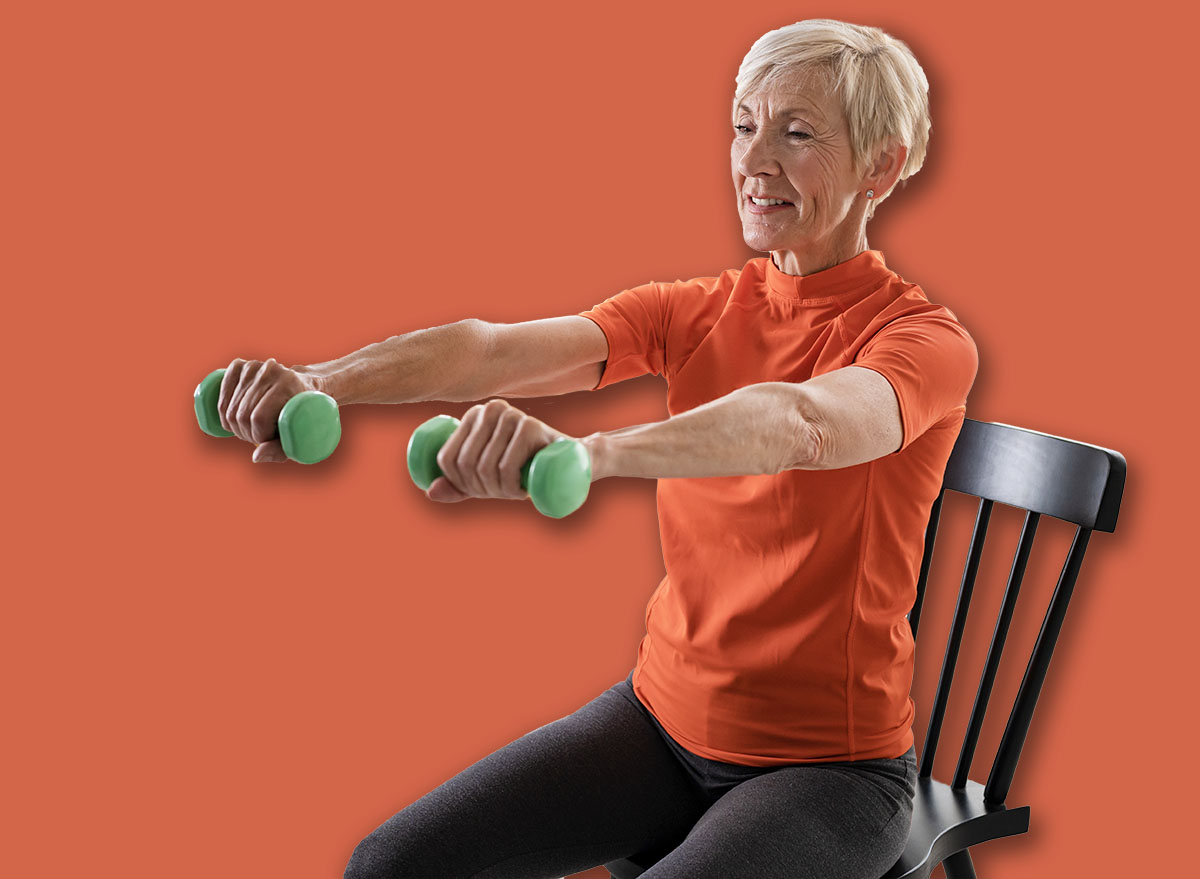

Building upper-body strength is essential after 60 for so many reasons. Sure, your physique will be impressive, but a strong upper body will help you perform daily tasks much easier while allowing you to live independently. You need solid upper-body strength to carry and lift things—and the right workout will build bone density, boost your metabolism, and support your overall wellness.
We spoke with Daniella Rivka, a Neuro Restorative Movement Specialist and co-founder of The Neu Gym—Dallas’s first boutique adaptive gym dedicated to neurological recovery, and learned four seated exercises that will get the job done effectively. This routine builds upper-body strength even better than lifting weights after 60.
Sure, lifting weights is always incredibly beneficial, but seated exercises are low-impact and extremely productive as well.
Why Seated Strength Training Can Be Safer for Older Adults
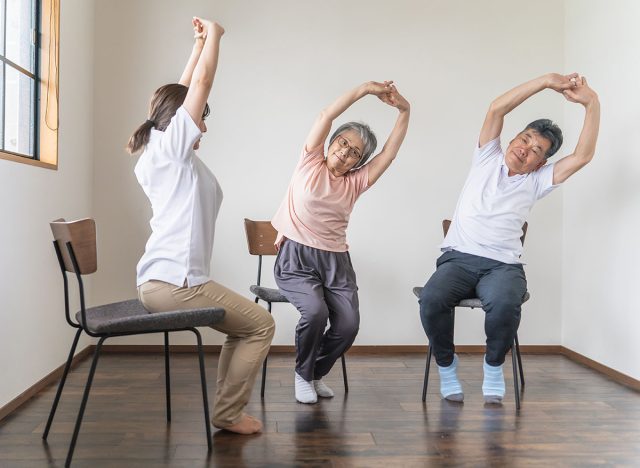
Seated strength workouts offer plenty of benefits for older adults. They significantly decrease the fall and injury risk that’s typically associated with heavy weight lifting. By having a stable base to work with, these moves help you focus on your movements without worrying about balance, which is key for individuals with weak muscles or joint problems.
“[Seated moves] place less strain on joints and connective tissues, lowering the likelihood of injuries, particularly for individuals with arthritis or osteoporosis,” Rivka points out. “Furthermore, seated exercises effectively promote muscle engagement and can be easily modified to accommodate various fitness levels, enabling older adults to challenge their strength without feeling intimidated by heavy weights. This ultimately helps preserve and build muscle mass, combating sarcopenia and improving everyday functionality and independence. In addition to enhancing muscle strength, seated strength training plays a critical role in increasing bone density, which is essential for reducing the risk of osteoporosis.”
The Case for Lifting Heavy
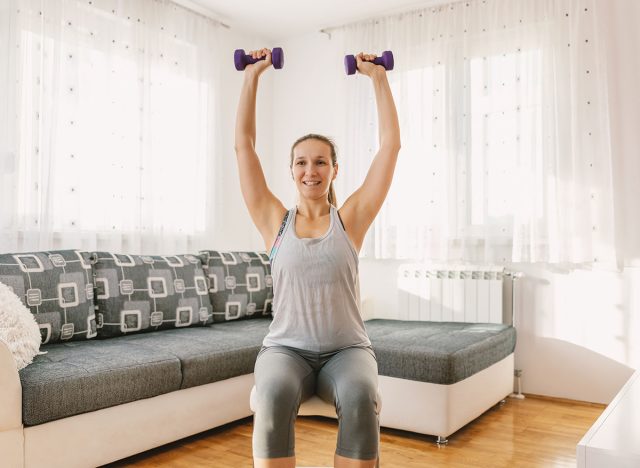
Seated exercises prove to be incredibly advantageous for those with safety and stability concerns. That said, traditional strength training is still beneficial for older adults who are fit enough to lift heavy in a safe manner.
“Thus, seated exercises provide a tailored solution for those needing support, while conventional strength training can further enhance muscle mass and functional capabilities,” Rivka adds. “Both approaches are integral in fostering improved physical health, active living, and long-term well-being, making them essential components of a comprehensive fitness program for older adults.”
4 Seated Exercises That Build Upper-Body Strength
Below, Rivka breaks down four seated moves that help build a strong upper body. All you need is a sturdy chair and some essential fitness tools like light dumbbells and resistance bands to get started.
Seated Chest Press With Bands
- Begin sitting on a sturdy chair with your feet flat on the floor.
- Hold the ends of a resistance band.
- Use control as you press the band forward.
- Slowly return to the start position.
Seated Shoulder Press
- Begin sitting tall on a sturdy chair with your feet flat on the floor and your core engaged.
- Hold a pair of lightweight dumbbells at shoulder level, palms facing forward.
- Press the weights straight overhead without locking out your elbows.
- Gradually lower the weights back to the start position.
Seated Band Row
- Begin seated with your legs extended.
- Wrap a resistance band around your feet.
- Pull the band toward you, focusing on your upper-back muscles.
- Use control as you return to the start.
Seated Lateral Raise
- Begin seated with your feet flat on the floor and a dumbbell in each hand, palms facing in.
- Slowly lift your arms out to the side until they reach shoulder height.
- Use control to lower.
How Often To Perform These Exercises
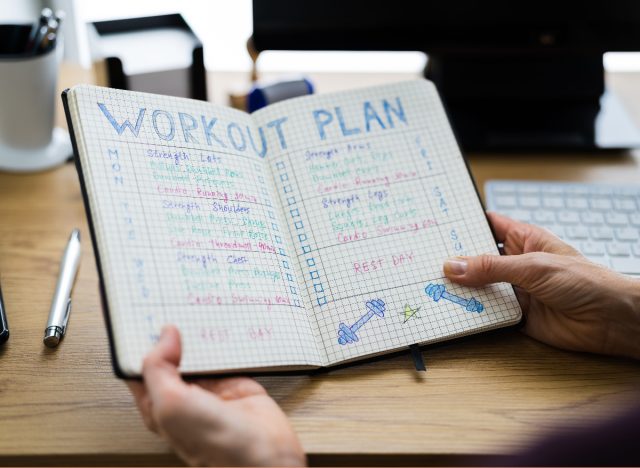
According to Rivka, it’s suggested to perform seated strength training two to three times a week to build strength while allowing for ample recovery time, which is essential for preventing overexertion and fatigue.
“Maintaining a workout frequency of three to four times a week, whether seated or standing, is essential for promoting overall fitness, including improved cardiovascular health, flexibility, and balance,” Rivka explains. “Incorporating both seated and standing exercises into a comprehensive fitness program provides older adults the flexibility to choose movements that align with their comfort levels, ultimately enhancing their physical health, functionality, and independence while empowering them to lead more active and fulfilling lives.”