5 Standing Exercises That Flatten Stubborn Belly Pooch Faster Than Crunches After 55

Many people assume the fastest way to flatten belly pooch is to pile on endless crunches. Core exercises certainly strengthen the abdominal muscles, yet the bigger driver behind trimming the waistline still comes down to energy balance. When your body burns more calories than it consumes, stored body fat gradually decreases. Some emerging research suggests small amounts of localized fat reduction may occur with targeted training. Yet, the biggest changes usually come from exercises that recruit a lot of muscle and burn more energy.
That’s where standing exercises shine. Movements that involve the hips, legs, and upper body simultaneously elevate heart rate, stimulate more muscle groups, and increase calorie output. I’ve seen this approach work well with many clients over 55 who want workouts that feel productive without demanding hours in the gym. Big compound movements help the body work harder while also strengthening the core muscles that support the midsection.
The exercises below combine strength and movement to create a potent training effect. Each one recruits large muscle groups while keeping the core active and stable. Perform them regularly, and you’ll build strength, increase calorie burn, and support training that helps flatten stubborn belly pooch.
Side Slams
Side slams combine rotation, power, and full-body engagement in a single movement. The explosive downward slam activates the obliques while the legs and hips generate force. That combination challenges the core while elevating heart rate and increasing calorie burn. Rotational exercises also strengthen the muscles that wrap around the waistline. Over time, stronger obliques help support a tighter midsection.
Muscles Trained: Obliques, shoulders, core, and hips.
How to Do It:
- Stand with your feet shoulder-width apart while holding a medicine ball.
- Raise the ball above one shoulder.
- Rotate your torso as you slam the ball down toward the opposite side.
- Catch or retrieve the ball and reset your position.
- Repeat the movement on the opposite side, switching each rep.
Recommended Sets and Reps: Perform 3 sets of 10 to 12 reps per side. Rest for 45 seconds between each set.
Best Variations: Rotational slam, overhead slam, alternating slam.
Form Tip: Rotate through your torso while keeping your feet planted and your core braced.
Kettlebell High Pulls
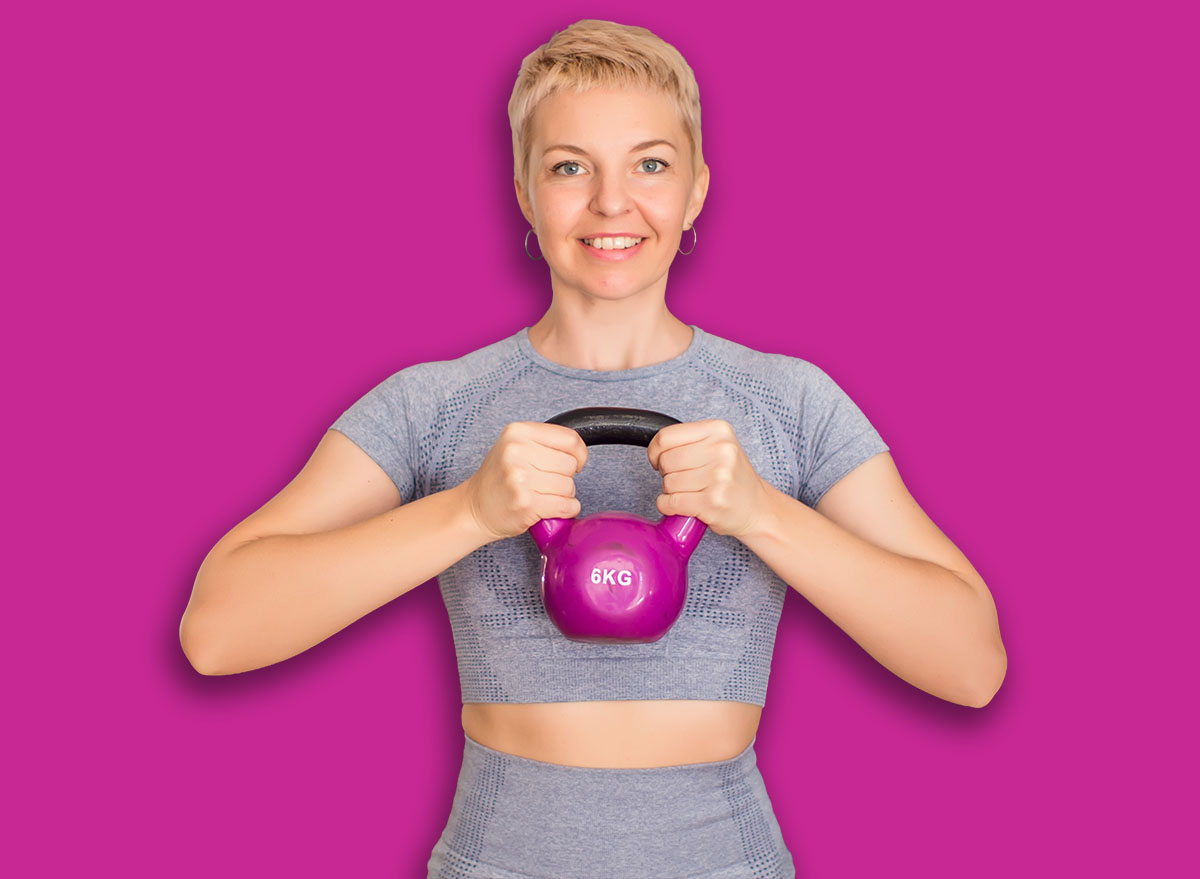
Kettlebell high pulls train explosive hip extension while challenging the upper body and core. The powerful hip drive recruits large muscle groups in the glutes and legs. As the kettlebell travels upward, the core stabilizes the torso to control the movement. This type of full-body effort increases energy output and strengthens multiple muscle groups at once. Consistent practice builds strength and supports fat loss efforts.
Muscles Trained: Glutes, hamstrings, shoulders, and core.
How to Do It:
- Stand with your feet shoulder-width apart, holding a kettlebell in both hands.
- Hinge your hips back and allow the kettlebell to swing between your legs.
- Drive your hips forward powerfully.
- Pull the kettlebell upward toward chest height.
- Lower the kettlebell with control and repeat.
Recommended Sets and Reps: Perform 3 sets of 10 to 12 reps. Rest for 60 seconds between each set.
Best Variations: Single-arm high pull, kettlebell swing-to-high pull, alternating high pull.
Form Tip: Generate the movement from your hips rather than pulling with your arms.
Dumbbell Squat to Press
The dumbbell squat-to-press combines two compound movements into a powerful exercise. The squat activates the legs and glutes while the press challenges the shoulders and core. This full-body effort increases muscle recruitment and calorie expenditure. The core remains active throughout the entire movement to stabilize the spine. Over time, this exercise strengthens the entire body while supporting fat-burning workouts.
Muscles Trained: Quads, glutes, shoulders, and core.
How to Do It:
- Hold a dumbbell in each hand at shoulder height.
- Stand with your feet shoulder-width apart.
- Lower into a squat while keeping your chest upright.
- Drive upward through your heels.
- Press the dumbbells overhead as you stand.
Recommended Sets and Reps: Perform 3 sets of 8 to 10 reps. Rest for 60 seconds between each set.
Best Variations: Single-dumbbell thruster, kettlebell thruster, alternating press thruster.
Form Tip: Brace your core before pressing the weights overhead.
Step-Ups
Step-ups strengthen the lower body while increasing heart rate and overall workload. Each step challenges the glutes and quads while the core stabilizes the body during the movement. This combination improves lower-body strength and contributes to higher calorie expenditure. The movement also mimics everyday activities such as climbing stairs. Over time, step-ups build strength and endurance while supporting fat-burning workouts.
Muscles Trained: Quads, glutes, hamstrings, and core.
How to Do It:
- Stand in front of a sturdy bench or step.
- Place one foot firmly on top of the platform.
- Drive through that foot to lift your body upward.
- Briefly bring the opposite foot onto the platform.
- Step back down with control and repeat.
Recommended Sets and Reps: Perform 3 sets of 10 reps per leg. Rest for 60 seconds between each set.
Best Variations: Weighted step-ups, alternating step-ups, knee-drive step-ups.
Form Tip: Push through your front heel to activate the glutes.
Kettlebell Swing
Kettlebell swings train explosive hip movement while engaging the entire posterior chain. The glutes and hamstrings drive the motion while the core stabilizes the spine. This repeated full-body effort elevates heart rate and increases calorie burn. Swings also strengthen the muscles that support posture and athletic movement. With consistent training, they become one of the most efficient exercises for building strength and energy output.
Muscles Trained: Glutes, hamstrings, core, and lower back stabilizers.
How to Do It:
- Stand with your feet slightly wider than shoulder width.
- Hold a kettlebell with both hands in front of your hips.
- Hinge your hips back and swing the kettlebell between your legs.
- Drive your hips forward to propel the kettlebell to chest height.
- Allow the kettlebell to swing back down and repeat.
Recommended Sets and Reps: Perform 3 sets of 12 to 15 reps. Rest for 60 seconds between each set.
Best Variations: Single-arm swing, alternating swing, heavy power swing.
Form Tip: Snap your hips forward and keep your core braced during each swing.
Daily Habits That Help Flatten Belly Pooch After 55

Shrinking a belly pooch becomes much easier when exercise is paired with supportive daily habits. Training stimulates muscles and increases energy output, yet long-term fat loss also depends on lifestyle factors. When strength training, nutrition, and recovery align, the body becomes far more efficient at maintaining a healthy body composition.
- Create a small calorie deficit: Fat loss occurs when the body consistently burns more calories than it consumes.
- Prioritize protein intake: Protein supports muscle maintenance and helps keep you satisfied between meals.
- Train large muscle groups regularly: Exercises that involve the legs, hips, and upper body increase calorie expenditure.
- Stay consistent with movement: Daily walks and regular workouts help maintain energy output throughout the week.
- Prioritize sleep and recovery: Adequate sleep supports hormonal balance and overall metabolic health.
Combine these habits with the exercises above, and you’ll create a routine that supports a stronger body and a tighter midsection.
References
- Brobakken, Mathias Forsberg et al. “Abdominal aerobic endurance exercise reveals spot reduction exists: A randomized controlled trial.” Physiological reports vol. 11,22 (2023): e15853. doi:10.14814/phy2.15853
- Saeidifard, Farzane et al. “Differences of energy expenditure while sitting versus standing: A systematic review and meta-analysis.” European journal of preventive cardiology vol. 25,5 (2018): 522-538. doi:10.1177/2047487317752186