5 Standing Exercises That Flatten Stubborn Midsection Faster Than Crunches After 60


Flattening the midsection after 60 often comes down to playing the long game. It’s a simple equation at its core. Calories in versus calories out, supported by daily habits, consistency, and a level of dedication that stacks over time. Layer in a well-structured workout program, and you create an environment where fat loss becomes much more achievable. Building lean muscle plays a key role here, too, as it increases metabolic demand and supports long-term results.
It’s easy to default to crunches or isolated ab exercises when the goal is trimming the waistline. Those movements strengthen the abdominal muscles, yet they don’t always generate the energy output needed to influence body composition meaningfully. The body responds better when larger muscle groups are involved, and the heart rate climbs.
When I work with clients whose goals revolve around fat loss and midsection tightening, these movements almost always show up in their programs. They’re efficient, effective, and easy to scale. More importantly, they challenge the entire body while keeping the core engaged throughout the effort.
The five exercises below combine full-body strength with continuous movement. They recruit major muscle groups, increase calorie burn, and train the core in ways that carry over into everyday life. Perform them regularly, and you’ll build strength while supporting the kind of training that helps flatten a stubborn midsection.
Running
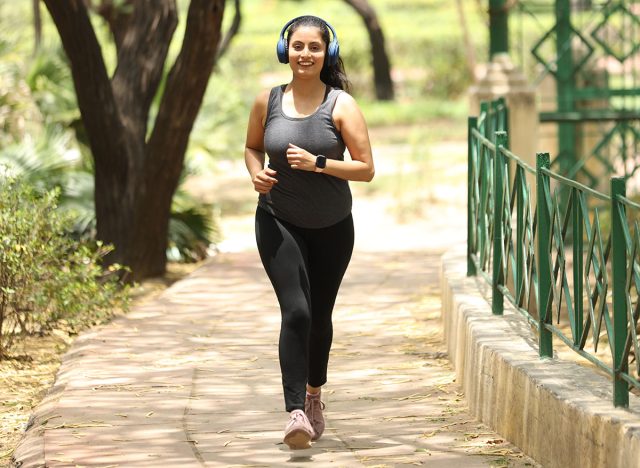
Running is about as tried-and-true as it gets, and it remains one of the most effective ways to increase energy output while engaging the entire body. Each stride requires coordination between the legs, core, and upper body, with the core stabilizing the torso as the legs generate force. That continuous movement raises your heart rate and keeps calorie burn steady. Over time, consistent running supports fat loss while improving endurance and overall coordination.
Muscles Trained: Quads, hamstrings, glutes, calves, and core.
How to Do It:
- Stand tall with your feet hip-width apart.
- Begin jogging at a comfortable pace.
- Keep your chest upright and your core engaged.
- Swing your arms naturally with your stride.
- Maintain a steady rhythm throughout the movement.
Recommended Sets and Reps: Perform 3 rounds of 60 seconds. Rest for 45 seconds between each round.
Best Variations: Brisk walking, interval running, and incline walking.
Form Tip: Keep your posture tall and avoid leaning too far forward.
Squat Jumps
Squat jumps bring strength and power together in one smooth movement. As you lower into the squat, your quads and glutes load up, then the jump calls on them to produce force quickly. Your core stays engaged throughout to keep your body stable from takeoff to landing. That combination ramps up muscle recruitment and elevates your heart rate fast. With consistent practice, squat jumps build strength while supporting fat-burning efforts.
Muscles Trained: Quads, glutes, calves, and core.
How to Do It:
- Stand with your feet shoulder-width apart.
- Lower your body into a squat position.
- Drive through your feet and jump upward.
- Land softly with your knees slightly bent.
- Reset your stance and repeat.
Recommended Sets and Reps: Perform 3 sets of 8 to 10 reps. Rest for 60 seconds between each set.
Best Variations: Low-impact squat jump, pause squat jump, box squat jump.
Form Tip: Land softly and absorb the impact through your hips and knees.
Jumping Jacks
Jumping jacks create continuous movement that challenges the entire body. The arms and legs move together, which forces the core to stabilize throughout the exercise. This coordination increases heart rate while encouraging steady energy output. Many people find this movement easy to perform while still feeling the effort build quickly. With consistent practice, jumping jacks support endurance and overall conditioning.
Muscles Trained: Shoulders, hips, calves, and core.
How to Do It:
- Stand with your feet together and your arms at your sides.
- Jump your feet outward while raising your arms overhead.
- Land softly with your knees slightly bent.
- Jump your feet back together while lowering your arms.
- Continue repeating in a steady rhythm.
Recommended Sets and Reps: Perform 3 sets of 30 seconds. Rest for 30 seconds between each set.
Best Variations: Step jacks, slow tempo jacks, power jacks.
Form Tip: Keep a steady pace and land softly during each repetition.
Alternating Lunges
Alternating lunges build leg strength while naturally improving balance and coordination in a way that feels fluid and controlled. As you step from one side to the other, your glutes and quads drive the movement while your core stays engaged to keep your torso steady and upright. That continuous flow creates a full-body effort that increases overall muscle involvement without feeling overly complex. The movement also closely mirrors everyday actions like walking and climbing stairs, which makes it both practical and effective. With consistent practice, lunges help develop strength while keeping your body moving and calorie burn steady.
Muscles Trained: Quads, glutes, hamstrings, and core.
How to Do It:
- Stand tall with your feet hip-width apart.
- Step one leg forward into a lunge.
- Lower your back knee toward the floor.
- Keep your chest upright and your core engaged.
- Push through your front foot to return to standing and switch legs.
Recommended Sets and Reps: Perform 3 sets of 10 reps per leg. Rest for 45 seconds between each set.
Best Variations: Reverse lunges, walking lunges, and stationary lunges.
Form Tip: Keep your front knee stacked over your ankle.
Dumbbell Push Press
The dumbbell push press combines a lower-body drive with upper-body strength. The legs generate force to help press the weights overhead, while the core stabilizes the torso. This coordinated effort increases total muscle recruitment and energy output, leading plenty of people to find this movement both challenging and efficient. With consistent practice, push presses help build strength while supporting fat-loss goals.
Muscles Trained: Shoulders, triceps, quads, and core.
How to Do It:
- Hold a dumbbell in each hand at shoulder height.
- Stand with your feet shoulder-width apart.
- Bend your knees slightly to dip downward.
- Drive through your legs to press the weights overhead.
- Lower the weights back to shoulder height.
Recommended Sets and Reps: Perform 3 sets of 8 to 10 reps. Rest for 60 seconds between each set.
Best Variations: Single-dumbbell push press, kettlebell push press, alternating press.
Form Tip: Use your legs to initiate the movement, then finish with your arms.
Daily Habits That Help Flatten the Midsection After 60

Flattening the midsection becomes much more achievable when exercise works alongside consistent daily habits. Strength training and dynamic movement increase energy output, while healthy routines support long-term fat loss. When these elements come together, the body begins to respond noticeably.
- Create a consistent calorie balance: Fat loss occurs when energy output exceeds intake over time.
- Train large muscle groups regularly: Full-body exercises increase calorie burn and support muscle maintenance.
- Stay active throughout the day: Walking and light activity help maintain steady energy output.
- Prioritize protein intake: Protein supports muscle retention while encouraging satiety.
- Stay consistent with your routine: Daily habits create lasting results when practiced over time.
Stick with these exercises and habits, and you’ll build strength while supporting a tighter, more capable midsection.
References:
- Kim, Ju Young. “Optimal Diet Strategies for Weight Loss and Weight Loss Maintenance.” Journal of obesity & metabolic syndrome vol. 30,1 (2021): 20-31. doi:10.7570/jomes20065
- Dobrosielski, Devon A et al. “Effect of exercise on abdominal fat loss in men and women with and without type 2 diabetes.” BMJ open vol. 3,11 e003897. 25 Nov. 2013, doi:10.1136/bmjopen-2013-003897