Over 60? If You Can Do These 6 Strength Drills, You’re in Good Shape
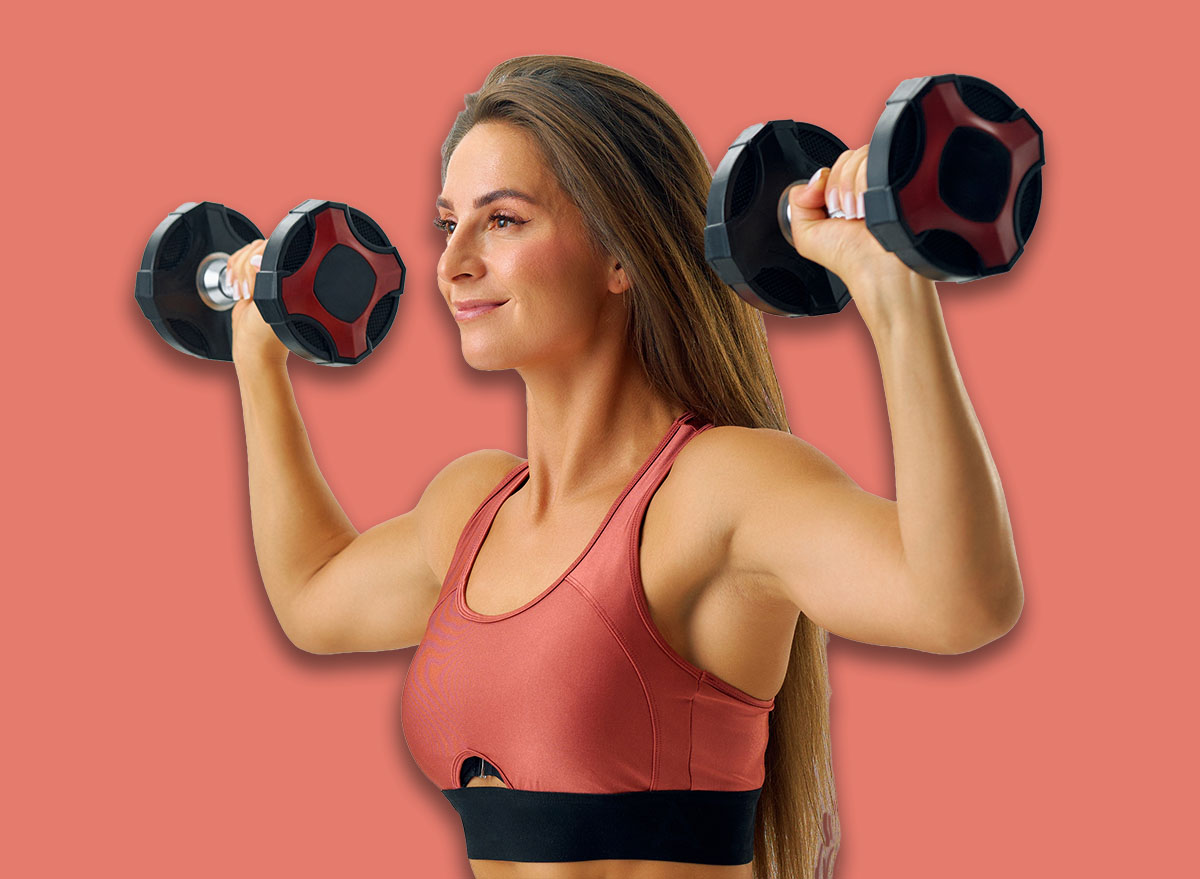

Personal trainers and workout enthusiasts are major fans of strength drills—and for good reason. Strength drills usually include resistance movements, bodyweight exercises, and several tools like bands, gliders, and free weights. They’re an excellent way to burn fat, build muscle, increase bone density, and boost metabolism. This training method also strengthens your joints, ultimately lowering your risk of injury. All of these factors are extremely important to focus on—especially as you age.
We spoke with an expert who shares several productive self-assessments for those over 60.
“When we think about being ‘in good shape’ after 60, it’s less about how much weight
someone can lift and more about how well they move through everyday life. The best strength drills for healthy aging assess the ability to move with strength, balance, coordination, mobility, and control. These are the skills that help maintain independence, confidence, and long-term quality of life,” Corry Matthews, Fitness, Nutrition, Hormone Health Expert, Former Professional Bodybuilder, and the co-founder of Strength & Grace Fitness, where she coaches women—especially throughout perimenopause and menopause on sustainable weight loss and hormone health, tells us.
Below are six strength drills to try—if you can do them, you are considered to be in good shape.
Sit-to-Stand
“This is one of the best indicators of lower-body strength and independence. It measures
leg strength, balance, and mobility—skills essential for everyday tasks like getting out of
a chair, car, or bed,” Matthews shares.
- Begin seated at the front of a sturdy chair, feet under your knees.
- Lean forward just a bit.
- Try to stand up without using your knees, hands, or additional support.
- Use control to slowly sit back down.
Single-Leg Balance Hold
“Balance naturally changes with age, and single-leg stability is important for walking,
climbing stairs, and preventing instability during daily movement,” Matthews tells us.
- Stand tall on a flat surface with your feet hip-width apart and arms at your sides.
- Shift your body weight onto your left foot.
- Lift your right foot off the ground.
- Activate your core while keeping your shoulders stacked over your ribs and your hips level.
- Hold the single-leg balance with your eyes closed, 10 to 30 seconds.
- Repeat on the other side.
Farmer’s Carry
“This drill measures grip strength, core stability, posture, and real-world functional strength. Carrying groceries, luggage, or household items requires this type of practical strength,” Matthews explains.
- Hold a dumbbell in each hand at your sides.
- Start walking forward, keeping your torso still and maintaining a tall posture.
Wall Pushups
“Upper-body strength supports daily activities like pushing doors, getting up from the
floor, lifting objects, and maintaining shoulder health,” Matthews says.
- Start standing tall, arms-length away from a wall.
- Place your hands shoulder-width apart on the surface.
- Engage your core and bend your elbows to lower your chest toward the wall.
- Press back up to the starting position, keeping the movement slow and controlled.
Step-Ups
“Step-ups assess lower-body strength, coordination, and cardiovascular endurance while reflecting real-life movement patterns like climbing stairs or curbs,” Matthews notes.
- Begin by standing tall, facing a 12 to 18-inch box or sturdy platform.
- Place your left foot firmly onto the surface, keeping your core engaged and chest tall.
- Press through your left heel to lift your body until your left leg is straight and you’re standing on the surface.
- Use control to lower back to the start position.
- Repeat on the other side.
RELATED: 4 Classic Bodyweight Moves That Build More Muscle Than Gym Workouts After 45
Standing Overhead Press
“Maintaining shoulder mobility and strength is essential for daily independence—from putting dishes away to reaching into cabinets or carrying items overhead,” Matthews notes.
- Stand tall, holding a dumbbell in each hand at shoulder level, palms facing inward.
- Press the weights overhead, fully extending your arms.
- Use control as you lower the weights to shoulder height.