4 Wall Exercises That Restore Hip Strength Faster Than Yoga After 60

Yoga can be a great part of a healthy routine after 60. It helps with mobility, balance, breathing, and body awareness. Hip strength, though, usually needs a little more direct work. Your hips, glutes, and the muscles around them have to push, hold, stabilize, and control your body through the positions you move through every day.
That’s where wall exercises work so well. The wall gives you support, feedback, and confidence while your hips and legs still handle the effort. You can build strength and control through holds, single-leg work, marching, and hip mobility, without needing machines, heavy weights, or a long workout.
I like wall work because it builds strength and control at the same time. The wall sit builds a strong base through your glutes and lower body. The single-leg wall sit challenges each hip to stabilize on its own. Wall-supported marching trains your hip flexors and balance, and wall hip circles build smooth control around the hip joint, which helps your legs move better during walking, on stairs, and in everyday movement.
Use this routine as a quick hip-strength reset. Move slowly, stay tall, and focus on creating tension through your hips and lower body. A few controlled rounds can help your hips feel stronger, steadier, and more ready for the day.
Wall Sit
Wall sits train your quads, glutes, hamstrings, and core while providing support for your back against the wall. Holding the position keeps your legs under tension, which helps build strength and endurance without needing repeated squats. Stronger wall sits carry over to standing longer, climbing stairs, getting up from chairs, and feeling more confident in your lower body. Start with a higher position, then slide lower as your strength improves.
Muscles Trained: Quadriceps, glutes, hamstrings, core.
How to Do It:
- Stand with your back against a wall.
- Walk your feet forward slightly.
- Slide down the wall until your knees bend comfortably.
- Brace your core and keep your back against the wall.
- Hold the position while breathing steadily.
- Stand back up with control.
Recommended Sets and Reps: Perform 3 sets of 20 to 30-second holds. Rest for 45 seconds between each set.
Best Variations: Higher wall sits, lower wall sits, wall sits with heel raises.
Form Tip: Keep your feet flat and your knees tracking over your toes.
Single-Leg Wall Sit
Single-leg wall sits train your quads, glutes, hips, and core while giving each leg its own strength challenge. The wall supports your back, but your working leg still has to hold tension and control the position. This exercise helps build the one-leg strength you use when stepping onto curbs, climbing stairs, or shifting weight during daily movement. Keep the range comfortable and use short holds at first.
Muscles Trained: Quadriceps, glutes, hamstrings, hip stabilizers, core.
How to Do It:
- Stand with your back against a wall.
- Walk your feet forward and slide into a comfortable wall sit.
- Brace your core and keep your chest lifted.
- Lift one foot slightly off the floor.
- Hold the position while your working leg stays steady.
- Place your foot down and switch sides.
Recommended Sets and Reps: Perform 3 sets of 10 to 20-second holds per leg. Rest for 45 seconds between each set.
Best Variations: Toe-tap single-leg wall sits, higher single-leg wall sits, shorter holds.
Form Tip: Keep your hips level and press through the whole foot of your working leg.
Wall-Supported Marching
Wall-supported marching trains your hip flexors, quads, glutes, calves, and core while helping your body practice single-leg control. Each knee lift asks the standing leg to stabilize while the lifted leg moves with purpose. This is a simple way to build strength for walking, stairs, stepping over objects, and moving with better rhythm. The wall gives you just enough support to focus on clean movement instead of balance taking over the whole exercise.
Muscles Trained: Hip flexors, quadriceps, glutes, calves, core.
How to Do It:
- Stand facing a wall with your hands lightly placed against it.
- Step your feet hip-width apart.
- Brace your core and stand tall.
- Lift one knee toward your waist.
- Lower your foot back to the floor with control.
- Alternate legs in a steady rhythm.
Recommended Sets and Reps: Perform 3 sets of 10 to 12 reps per leg. Rest for 30 seconds between each set.
Best Variations: Paused wall marches, slower wall marches, higher knee marches.
Form Tip: Stay tall and keep your hands light on the wall.
Wall Hip Circles
Wall hip circles train your hip flexors, glutes, outer hips, inner thighs, and core while improving control around the hip joint. Your standing leg has to stay steady while your moving leg circles through a smooth range. This exercise builds strength and coordination through the hips, which supports walking, balance, and smoother leg movement. Keep the circle small at first, and focus on control over speed.
Muscles Trained: Hip flexors, glutes, outer hips, inner thighs, core.
How to Do It:
- Stand facing a wall with your hands lightly placed against it.
- Shift your weight onto one foot.
- Brace your core and lift your opposite knee slightly.
- Circle your lifted knee outward with control.
- Return your foot to the floor after your reps.
- Switch sides and repeat.
Recommended Sets and Reps: Perform 3 sets of 6 to 8 circles per direction on each leg. Rest for 30 seconds between each set.
Best Variations: Smaller hip circles, paused hip circles, reverse-direction hip circles.
Form Tip: Keep your torso tall and let the movement come from your hip.
How to Build Leg Strength With Wall Exercises
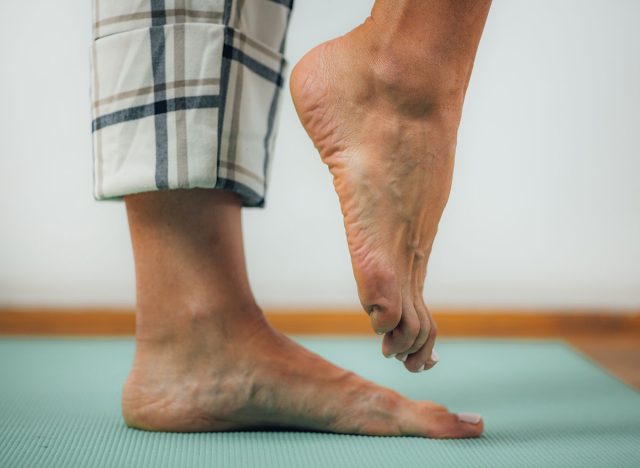
Wall exercises help you train strength with more control and confidence. The wall gives you support, but your legs, hips, and core still do the work. Keep your movements smooth, hold strong positions, and use each rep as a chance to build better lower-body control.
- Use holds to build strength: Wall sits, and single-leg wall sits keep your legs under tension. Longer holds can help build endurance through your quads, glutes, and hips.
- Train one leg at a time: Single-leg wall sits and wall-supported marching help each leg build strength on its own. Better one-leg control supports walking, stairs, and balance.
- Keep your hips active: Wall hip circles strengthen the muscles that help your legs move smoothly. Stronger hips provide better support to your lower body during daily movement.
- Stay tall through every rep: Good posture helps your core and hips work together. Keep your ribs stacked over your hips and your feet grounded.
- Progress gradually: Add a few seconds to your holds, increase reps, or make the movement slower once the routine feels smoother.
Yoga can support mobility and body awareness, and wall exercises can add the direct strength work your legs need. Put the two together, and you have a simple way to build a lower body that feels stronger, steadier, and ready for the movements you use every day.
References
- Steves CJ, Mehta MM, Jackson SH, Spector TD. Kicking Back Cognitive Ageing: Leg Power Predicts Cognitive Ageing after Ten Years in Older Female Twins. Gerontology. 2016;62(2):138-49. doi: 10.1159/000441029. Epub 2015 Nov 10. PMID: 26551663; PMCID: PMC4789972.
- Zabarmawi J, Miller CT, Owen PJ, Mundell NL, Meny A, Aldhafri S, Banjar R, Alzahrani H. Efficacy of an acute bout of isometric wall squat exercise on pain sensitivity and clinical pain intensity in adults with knee osteoarthritis: a randomised controlled trial in outpatient physiotherapy clinics in Saudi Arabia. BMJ Open. 2025 Dec 11;15(12):e103756. doi: 10.1136/bmjopen-2025-103756. PMID: 41381113; PMCID: PMC12699666.