5 Bodyweight Exercises That Shrink Waist Overhang Faster Than Crunches After 50
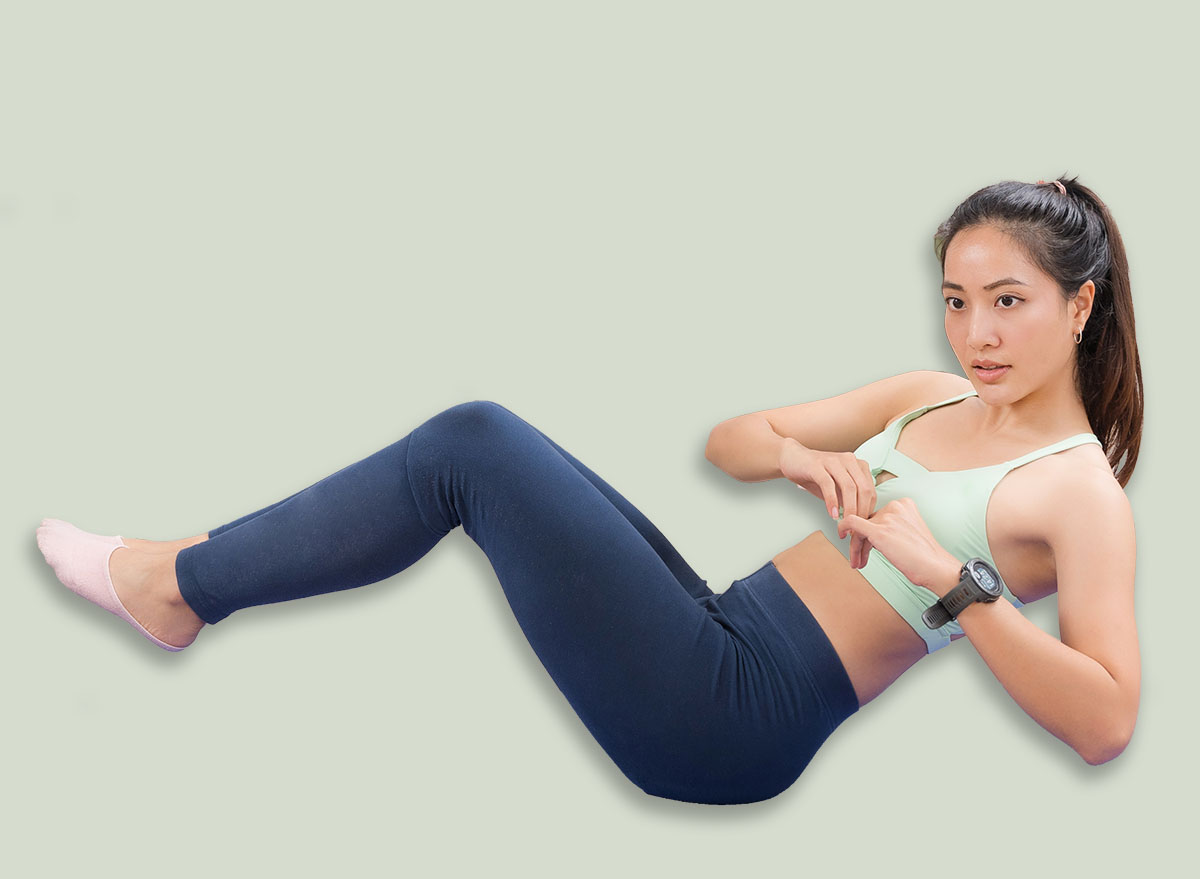
Waist overhang changes when your workouts create a stronger signal than a few quick crunches can. After 50, the best bodyweight routine should target your abs directly, engage your hips and legs, raise your heart rate, and keep your midsection active while the rest of your body moves. That combination helps build stronger muscle, better core control, and more total effort in a short session.
This is where bodyweight training can feel surprisingly powerful. No machines, no long setup, and no need to wait for a gym session to get meaningful work done. A small amount of floor space is enough to train your lower abs, obliques, hip flexors, legs, and glutes, and to work on conditioning in one routine.
When I coach core-focused bodyweight work after 50, I want the exercises to feel connected instead of random. The abs should brace during fast movement, control the legs during floor work, rotate with purpose, and support power from the lower body. That’s what makes this routine stronger than crunches alone: your waistline gets direct ab work, but your whole body helps drive the transformation.
Mountain Climbers
Mountain climbers train your abs, shoulders, hip flexors, glutes, and legs while adding a strong conditioning effect. Your core has to hold your plank position as your knees drive forward, which makes the movement more active than a standard crunch. This exercise helps reduce waist overhang by combining core tension with a higher-heart-rate push. Move at a pace you can control, and keep your hips steady as your legs move.
Muscles Trained: Abs, hip flexors, shoulders, glutes, quadriceps, core.
How to Do It:
- Start in a high plank with your hands under your shoulders.
- Brace your core and squeeze your glutes.
- Drive one knee toward your chest.
- Step that foot back to the starting position.
- Drive the opposite knee toward your chest.
- Continue alternating with steady control.
Recommended Sets and Reps: Perform 3 sets of 20 to 40 seconds. Rest for 30 to 45 seconds between each set.
Best Variations: Slow mountain climbers, incline mountain climbers, cross-body mountain climbers.
Form Tip: Keep your hips level and drive your knees without bouncing through your lower back.
Supine Knee Tucks
Supine knee tucks train your lower abs, hip flexors, and deep core muscles while keeping you on your back. Pulling your knees toward your chest teaches your midsection to control your pelvis as your legs move. That control is important for building a stronger-looking and stronger-feeling waist. Keep the reps smooth and avoid turning the movement into a swing.
Muscles Trained: Lower abs, hip flexors, deep core.
How to Do It:
- Lie on your back with your legs extended.
- Place your hands beside your hips or lightly under your glutes.
- Brace your core and lift your feet slightly off the floor.
- Pull your knees toward your chest.
- Pause briefly when your knees come in.
- Extend your legs back out with control.
Recommended Sets and Reps: Perform 3 sets of 10 to 15 reps. Rest for 30 to 45 seconds between each set.
Best Variations: Bent-knee tucks, alternating knee tucks, slower tempo knee tucks.
Form Tip: Keep your lower back supported and control the leg extension.
Russian Twists
Russian twists train your obliques, abs, hip flexors, and deep core. The side-to-side rotation gives your waist direct work while your torso stays lifted and controlled. This makes the exercise useful for training the muscles around the sides of your midsection, especially when paired with lower-ab and conditioning movements. Keep the rotation crisp and use your torso rather than only moving your arms.
Muscles Trained: Obliques, abs, hip flexors, deep core.
How to Do It:
- Sit on the floor with your knees bent and your feet planted.
- Lean back slightly while keeping your chest lifted.
- Bring your hands together in front of your body.
- Brace your core and rotate your torso to one side.
- Return through the center.
- Rotate to the other side and continue alternating.
Recommended Sets and Reps: Perform 3 sets of 10 to 15 reps per side. Rest for 30 to 45 seconds between each set.
Best Variations: Feet-down Russian twists, slower Russian twists, light-object Russian twists.
Form Tip: Rotate through your ribs and torso while keeping your hips steady.
Flutter Kicks
Flutter kicks train your lower abs, hip flexors, and deep core with constant tension. The small alternating kicks challenge your midsection to stay braced while your legs move quickly. This exercise is a strong fit for waist-overhang goals because it keeps the lower abs engaged for the entire set. Start with short sets and keep the movement small enough to control.
Muscles Trained: Lower abs, hip flexors, deep core, quadriceps.
How to Do It:
- Lie on your back with your legs extended.
- Place your hands beside your hips or lightly under your glutes.
- Brace your core and lift both feet a few inches off the floor.
- Raise one leg slightly as the other leg lowers.
- Alternate small kicks with steady control.
- Stop the set before your lower back loses position.
Recommended Sets and Reps: Perform 3 sets of 15 to 30 seconds. Rest for 30 to 45 seconds between each set.
Best Variations: Higher flutter kicks, bent-knee flutter kicks, shorter flutter-kick holds.
Form Tip: Keep your lower back supported and make the kicks small and controlled.
Jump Squats
Jump squats train your quads, glutes, hamstrings, calves, core, and conditioning. The explosive jump brings your lower body into the routine and gives the workout a bigger calorie-burning effect than crunches alone. Strong legs and glutes also help support body composition changes by engaging large muscles during the session. Land softly, reset your posture, and use a smaller jump if needed.
Muscles Trained: Quadriceps, glutes, hamstrings, calves, core.
How to Do It:
- Stand with your feet shoulder-width apart.
- Brace your core and keep your chest lifted.
- Bend your knees and lower into a squat.
- Press through your feet and jump upward.
- Land softly with your knees slightly bent.
- Reset your position and repeat.
Recommended Sets and Reps: Perform 3 sets of 6 to 10 reps. Rest for 45 to 60 seconds between each set.
Best Variations: Bodyweight squats, squat to calf raise, low-impact squat jumps, tempo squats.
Form Tip: Land quietly and keep your knees tracking with your toes.
How to Shrink Waist Overhang With Bodyweight Exercise After 50

Bodyweight exercises work best when they combine direct core training with full-body effort. Crunches only train one small piece of the picture. A better routine challenges your abs to brace, flex, rotate, and stabilize while your legs and shoulders add more total work.
- Mix core and conditioning: Mountain climbers and jump squats raise your heart rate while your core stays active. That adds more energy demand to the workout.
- Target the lower abs: Supine knee tucks and flutter kicks train your midsection while your legs move. Keep the range controlled so your abs do the work.
- Train your obliques: Russian twists add rotation and side-waist strength. Move slowly enough to feel your torso control each rep.
- Use a circuit format: Perform one set of each exercise, rest 60 to 90 seconds, and repeat for 2 to 4 rounds. This keeps the session moving and adds a stronger conditioning effect.
- Support the work daily: Walking, protein-focused meals, hydration, and consistent sleep help your training show up through better body composition.
A stronger waist after 50 comes from more than chasing ab burn. Train your core from multiple angles, bring your legs into the work, and keep the routine repeatable enough to build momentum week after week.
References
- Cox CE. Role of Physical Activity for Weight Loss and Weight Maintenance. Diabetes Spectr. 2017 Aug;30(3):157-160. doi: 10.2337/ds17-0013. PMID: 28848307; PMCID: PMC5556592.
- Yamaner E, Turğut T, Aksoy A, Demirkıran B, Uçar MA, Başoğlu B, Çamiçi F, Yanar MS, Bülbül A, Koç AF, Ceylan T, Ceylan L, Küçük H. Impact of an 8-week high-intensity bodyweight interval training on body composition and blood lipid metabolism in young women with overweight. Front Public Health. 2025 Oct 17;13:1578569. doi: 10.3389/fpubh.2025.1578569. PMID: 41179798; PMCID: PMC12577562.