5 Morning Exercises That Restore Muscle Mass Faster Than Gym Sessions After 60

Muscle is one of the best gifts you can give your body after 60. It helps you climb stairs with more confidence, get out of chairs with more power, carry groceries with less strain, and move through the day feeling more capable. A strong morning routine can turn the first few minutes of your day into a direct investment in strength, energy, and independence.
The right exercises give your muscles the signal they need to stay active and rebuild. Dumbbells, bands, and bodyweight movements can all create that signal when they train large muscle groups with enough control and effort. A short routine built around squats, hinges, presses, pulls, and carries can feel simple while still giving your whole body meaningful work.
For a morning muscle-building session, I’d keep the focus on strong positions and quality tension. Hold the weight with purpose, move through a range you can control, and make each set feel like practice for the daily movements you want to keep doing well. That approach helps the workout feel less like a chore and more like a strength check-in.
Use these five morning exercises as a foundation for restoring muscle mass after 60. Keep the reps clean, make the final few reps feel challenging, and build gradually as your strength improves.
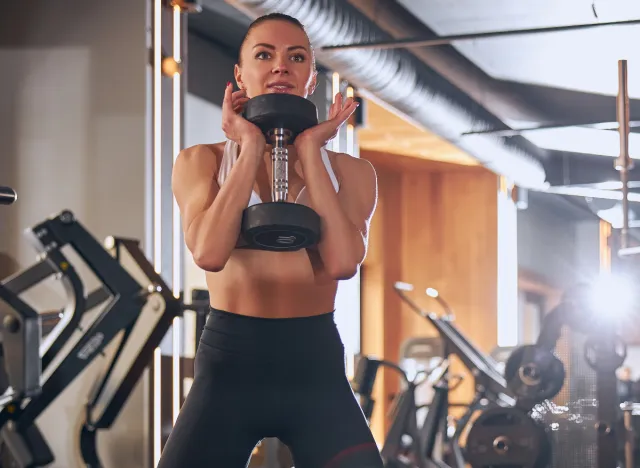
Goblet Squat
Goblet squats target your quads, glutes, hamstrings, core, and upper back in a single, powerful movement. Holding the weight at your chest helps you stay tall while your legs create most of the effort. This exercise is valuable for restoring muscle mass because it targets several large muscle groups at once and provides your body with a clear strength-building stimulus. Keep the reps smooth, control the lowering phase, and stand with power.
Muscles Trained: Quadriceps, glutes, hamstrings, core, upper back.
How to Do It:
- Stand with your feet shoulder-width apart.
- Hold a dumbbell vertically at your chest.
- Brace your core and keep your chest lifted.
- Bend your knees and sit your hips down into a squat.
- Lower until your thighs reach at least parallel, or as low as you can control.
- Press through your feet to stand tall.
Recommended Sets and Reps: Perform 3 sets of 8 to 12 reps. Rest for 60 seconds between each set.
Best Variations: Bodyweight squats, box squats, banded squats, heavier goblet squats.
Form Tip: Keep the dumbbell close to your chest and drive through your whole foot as you stand.
Dumbbell Romanian Deadlift
Dumbbell Romanian deadlifts train your glutes, hamstrings, lower back, core, and grip. The hinge pattern helps rebuild the backside of your body, which supports lifting, walking, standing tall, and climbing stairs. RDLs also create valuable muscle tension because your hamstrings and glutes control the weight on the way down, then produce force as you return to standing. Start light, own the range, and feel the back of your legs work.
Muscles Trained: Glutes, hamstrings, lower back, core, grip.
How to Do It:
- Stand with your feet hip-width apart and hold dumbbells in front of your thighs.
- Brace your core and soften your knees.
- Push your hips back as the dumbbells move down your legs.
- Lower until you feel a stretch through your hamstrings.
- Drive your hips forward to return to standing.
- Finish tall with your glutes engaged.
Recommended Sets and Reps: Perform 3 sets of 8 to 10 reps. Rest for 60 seconds between each set.
Best Variations: Kettlebell RDLs, banded good mornings, staggered-stance RDLs, bodyweight hinges.
Form Tip: Keep the weights close to your legs and let your hips lead the movement.
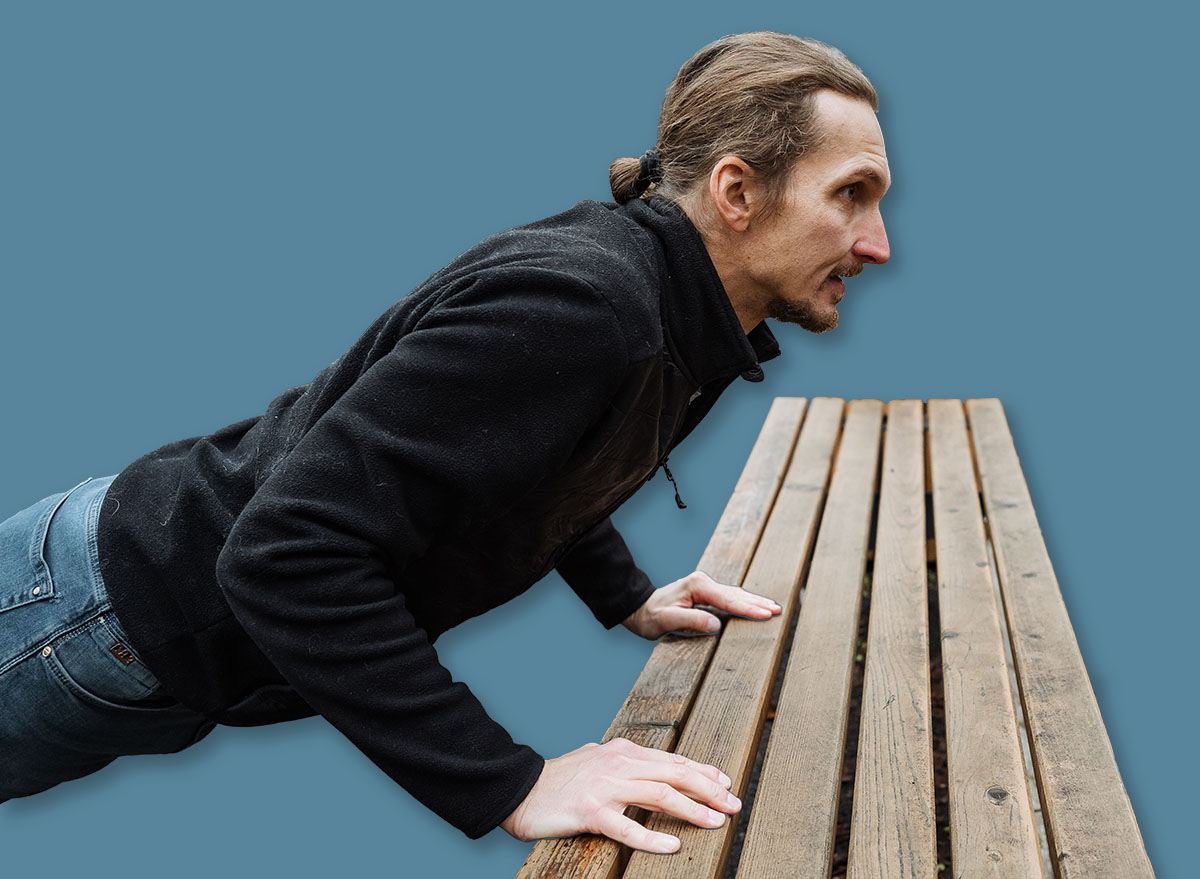
Incline Push-Up
Incline push-ups train your chest, shoulders, triceps, and core while keeping the movement adjustable. The elevated setup helps you build strong, repeatable reps, and those reps help restore muscle. Your upper body gets pressing work, your core holds your body in position, and your arms finish each rep with control. Use a wall, counter, bench, or sturdy table, depending on your current strength.
Muscles Trained: Chest, shoulders, triceps, core.
How to Do It:
- Place your hands on a counter, bench, or sturdy elevated surface.
- Step your feet back until your body forms a straight line.
- Brace your core and squeeze your glutes.
- Lower your chest toward the surface with control.
- Press through your hands to return to the starting position.
- Repeat while keeping your body aligned.
Recommended Sets and Reps: Perform 3 sets of 8 to 12 reps. Rest for 45 to 60 seconds between each set.
Best Variations: Wall push-ups, counter push-ups, knee push-ups, full push-ups.
Form Tip: Keep your elbows angled slightly back and press through your whole hand.
Standing Band Row
Standing band rows train your upper back, lats, rear shoulders, biceps, and core. Pulling strength supports posture, shoulder health, and total-body strength after 60, and a band gives you smooth resistance without a big setup. The standing position also asks your core to hold posture while your back does the pulling. Pause briefly at the end of each rep to make the upper back work harder.
Muscles Trained: Upper back, lats, rear delts, biceps, core.
How to Do It:
- Anchor a resistance band at chest height.
- Stand tall and hold one end of the band in each hand.
- Step back until the band has light tension.
- Brace your core and keep your chest lifted.
- Pull your elbows back toward your ribs.
- Return your hands forward with control.
Recommended Sets and Reps: Perform 3 sets of 10 to 15 reps. Rest for 45 seconds between each set.
Best Variations: Single-arm band rows, seated band rows, paused band rows, dumbbell rows.
Form Tip: Pull through your elbows and squeeze your upper back without shrugging.
Suitcase Carry
Suitcase carries train your grip, core, obliques, shoulders, upper back, glutes, and legs. They look simple, but your whole body has to stay organized while you walk with weight on one side. Carries are especially helpful after 60 because they train muscle, posture, balance, and bracing simultaneously. Use a dumbbell, kettlebell, loaded bag, or anything sturdy you can hold safely.
Muscles Trained: Core, obliques, grip, shoulders, upper back, glutes.
How to Do It:
- Stand tall with a dumbbell or kettlebell beside one foot.
- Hinge down and pick up the weight with one hand.
- Brace your core and stand tall.
- Walk forward with slow, controlled steps.
- Keep your shoulders level and avoid leaning toward the weight.
- Set the weight down safely and switch sides.
Recommended Sets and Reps: Perform 3 carries of 20 to 40 seconds per side. Rest for 45 seconds between each side.
Best Variations: Farmer carries, lighter suitcase carries, marching suitcase holds, offset carries.
Form Tip: Walk tall and keep your ribs stacked over your hips.
How to Restore Muscle Mass After 60
Restoring muscle mass works best when your routine provides consistent resistance, sufficient effort, and enough recovery time. These exercises train large muscle groups with patterns you use every day. When the final few reps feel challenging, and your form stays clean, your muscles get a strong reason to adapt.
- Train the big patterns: Squats, hinges, presses, pulls, and carries cover most of what your body needs. These movements use more muscle than small isolation exercises.
- Make the final reps count: The last two or three reps should feel challenging while your form stays clean. That effort helps drive strength and muscle gains.
- Use what you have at home: Dumbbells, bands, backpacks, water jugs, and bodyweight variations can all work. The key is choosing enough resistance to make the set meaningful.
- Repeat the routine consistently: Perform this workout 2 to 4 mornings per week. Keep at least one day between harder strength sessions when your muscles feel sore or tired.
- Support training with protein and recovery: Muscles need building material. Protein-rich meals, steady hydration, and enough sleep help your body respond to the work.
A good morning strength routine gives your body a strong start and a clear reason to keep building. Move well, challenge the final reps, and progress the exercises as your strength improves.
References
- Strasser B, Volaklis K, Fuchs D, Burtscher M. Role of Dietary Protein and Muscular Fitness on Longevity and Aging. Aging Dis. 2018 Feb 1;9(1):119-132. doi: 10.14336/AD.2017.0202. PMID: 29392087; PMCID: PMC5772850.
- Ikezoe T. Age-Related Change in Muscle Characteristics and Resistance Training for Older Adults. Phys Ther Res. 2020 Dec 4;23(2):99-105. doi: 10.1298/ptr.R0009. PMID: 33489646; PMCID: PMC7814211.