The 10-Minute Standing Routine That Builds Total-Body Strength Faster Than CrossFit After 50

Total-body strength is the thing most people over 50 want back but are unsure how to rebuild safely. I’ve been a personal trainer for almost 40 years and have spent the last 20 training the next generation of fitness professionals at TRAINFITNESS, the UK’s leading provider of personal training courses, and I see this concern constantly. The good news is that you don’t need a gym, a barbell, or a single piece of equipment. Ten minutes a day, on your feet, in your own living room, can deliver more than most people imagine. These five moves can rebuild the strength you’ve lost without a single trip to the gym.
Why Strength Fades After 50

There are a few challenges that come up time and again. The first is muscle loss that has been slowly happening for years without any warning. Most people don’t notice until they struggle to get out of a low chair or carry shopping up to the front door.
The second is joint sensitivity. The knees, hips and lower back don’t tolerate what they used to, so people get scared off the moment something twinges.
The third is intimidation. A gym full of younger people slinging weights around is not a welcoming sight when you haven’t trained in twenty years.
And the fourth, which I see most often, is that movement patterns have got sloppy. Years of avoiding the bits that feel hard means people have got very good at compensating, which then causes the joint pain that puts them off training in the first place. All of this is fixable, but it has to be approached in the right order.
Why Standing Beats CrossFit
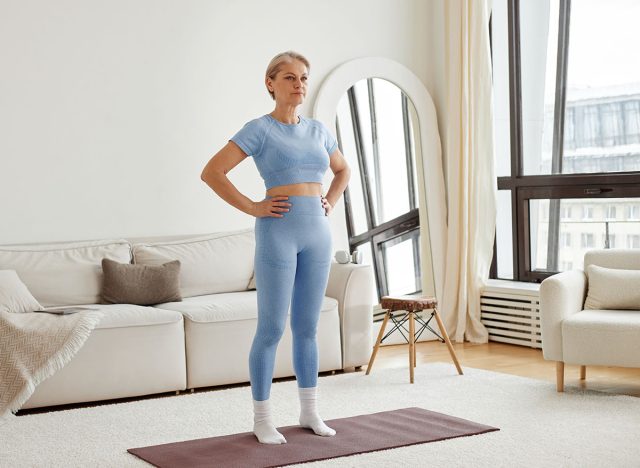
CrossFit can build strength in older adults, I have no quarrel with that. But the risk-to-reward sum changes after 50. Olympic lifts, box jumps and high-intensity barbell work demand near-perfect technique, fresh joints, and a body that’s been training for a while. Most people picking it up after 50 are working from a deficit on all three counts.
A standing bodyweight routine trains the muscles that matter most in daily life, the legs, the glutes, the back and the postural muscles, without subjecting the joints to landing forces or overhead loading. It can be done every day if you want to, which means the total weekly volume often beats two or three CrossFit sessions a week once you factor in the days lost to soreness. And because there’s no kit and no driving to a class, it actually happens, which is the single biggest factor in any training program working.
Bodyweight Squat
The legs are where strength loss hits hardest after 50, and the squat trains the pattern of getting out of a chair, which is the marker most physios use to predict whether someone will stay independent.
Muscles Trained: Quadriceps, glutes, hamstrings, midsection
How to Do It:
- Stand with feet roughly hip-width apart, toes pointing slightly outwards
- Place a sturdy chair behind you as a safety net
- Push the hips back as if you’re about to sit down, bending the knees and lowering until your bottom lightly touches the chair
- Keep the chest up and the weight through the middle of the foot
- Push back up to standing through the heels
Avoid These Mistakes:
- Don’t let your knees collapse inwards
- Keep your heels flat on the floor throughout
- Don’t round your lower back at the bottom of the movement
Recommended Sets and Reps: Aim for 12 to 15 repetitions inside 2 minutes, resting as needed.
Form Tip: Drive back up through your heels, not your toes.
Reverse Lunge
This one delivers a lot of balance work on top of the strength. After 50, one-legged strength is what keeps you on your feet when you stumble.
Muscles Trained: Glutes, quads, hamstrings
How to Do It:
- Stand tall with feet hip-width apart, hand resting on the back of a chair if you need it
- Step one foot back roughly two foot lengths
- Lower the back knee towards the floor until the front thigh is roughly parallel to the floor
- Push through the front heel to return to standing
- Alternate legs
Avoid These Mistakes:
- Don’t step back too short, which forces the front knee out over the toes
- Keep your torso upright rather than letting it fall forwards
- Don’t slam the back knee into the floor
Recommended Sets and Reps: Aim for 6 to 8 repetitions per side.
Form Tip: Use the chair for light balance support, not to hold yourself up.
Wall Push-Up
The upper body tends to be the most neglected area in older adults, and this is the gentlest way back in. It also works the deep stabilizers of the trunk.
Muscles Trained: Chest, shoulders, triceps
How to Do It:
- Stand facing a wall, two to three feet away, with palms on the wall at shoulder height and shoulder-width apart
- Keep the body in a straight line from heels to head
- Bend the elbows and lower the chest towards the wall
- Push back to the start position
- Work slowly
Avoid These Mistakes:
- Don’t let your hips sag
- Keep your neck neutral rather than lifting your head to look up, which jams the neck
- Don’t set your hands too high, which loads the shoulders awkwardly
Recommended Sets and Reps: Aim for 10 to 15 repetitions.
Form Tip: Hold a straight line from heels to head the whole way through.
Doorway Row
The pulling muscles undo the slump from years of sitting and are the antidote to the rounded shoulders most people over 50 carry around.
Muscles Trained: Upper back, biceps, rear shoulders
How to Do It:
- Stand facing a sturdy door frame, feet either side of the threshold
- Hold the frame at roughly chest height with both hands
- Lean back, keeping the body straight, until your arms are extended and you feel your weight in your hands
- Pull your chest towards the frame, leading with the elbows back and down, squeezing the shoulder blades together
- Lower under control
Avoid These Mistakes:
- Don’t shrug your shoulders up towards your ears
- Don’t let your hips sag forward
- Test the door frame first, so you’re not using a flimsy door that creaks under load
Recommended Sets and Reps: Aim for 10 to 12 repetitions.
Form Tip: Lead with the elbows and squeeze your shoulder blades together at the top.
Calf Raise With Knee Lift
Strong calves are what keep you walking confidently, and the knee lift trains the muscles that pull the foot up to clear a curb or a step. You’ll also get a lot of balance and ankle stability work here.
Muscles Trained: Calves, the front of the hip on the lifting leg
How to Do It:
- Stand tall behind a chair, hand resting on it for balance
- Rise up onto the balls of both feet
- Lower under control
- On the next repetition, as you rise, lift one knee up to roughly hip height
- Lower the foot, then rise again and lift the other knee
- Continue alternating, working at a comfortable pace
Avoid These Mistakes:
- Don’t bounce through the calf raise; control it instead
- Stay tall rather than hunching forwards as the knee lifts up
- Don’t grip the chair so hard you’re holding yourself up rather than balancing
Recommended Sets and Reps: Continue alternating for 2 minutes.
Form Tip: Rest your hand lightly on the chair; it’s there for balance, not support.
How to Modify Each Move

Knee issues: Reduce the depth of the squat and lunge and use a higher chair for the squat. If lunges are off the table, swap them for a step-up onto a low step of about 4 to 6 inches, holding a wall or banister for balance. Avoid going below 90 degrees at the knee until things settle.
Hip issues: Shorten the lunge step and slow the tempo. The squat is usually well tolerated as long as you keep the depth above the point where the pelvis tucks under, which can pinch the hip.
Back issues: For the squat, focus on keeping a long neutral spine and reduce the depth. Swap the doorway row for a wall row, where you stand much closer to the wall, which loads the back less. Avoid the push-up if it makes you arch through the lower back.
To make it easier: Do fewer repetitions, take longer rests, use the chair more, or do wall squats with the back against a wall, sliding down to a 45-degree angle and holding for 15 seconds.
To make it harder: Slow each repetition down. A 3-second descent and a 1-second push back up doubles the work without adding any weight. You can also progress the push-up by walking the feet further back from the wall, then onto a kitchen counter, then a sturdy chair, then the floor.
How Often to Do This Routine
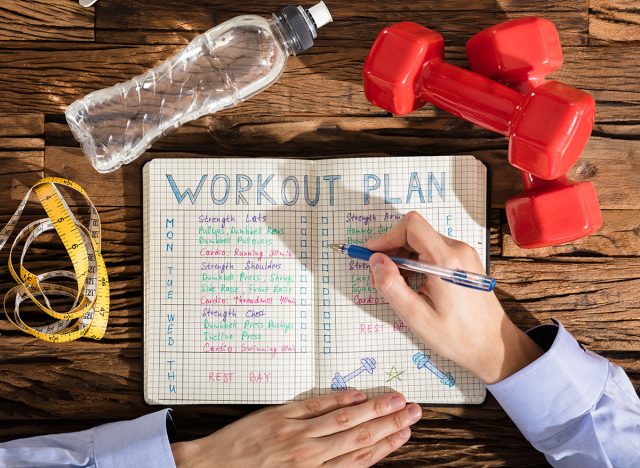
Five days a week is the realistic minimum to see change quickly. Daily is fine and won’t overload most people because the loading is low. Take two days off if you feel beaten up, but the soreness that comes from this kind of routine settles within a week or two as the body adapts.
What Results to Expect
Results come quickly. You’ll feel stronger getting out of chairs by the end of the first fortnight. By 4 to 6 weeks, carrying shopping, climbing stairs and getting up off the floor all feel meaningfully easier. By 12 weeks, family members tend to comment that you look stronger and stand taller.
The improvement in balance, which is harder to notice consciously, is often the bit that matters most. People who do this routine consistently tend not to have the falls that bring everything else to a halt, and that on its own is worth the ten minutes a day.