This 12-Minute Bodyweight Circuit Builds More Muscle Than 50 Minutes of Weights After 55
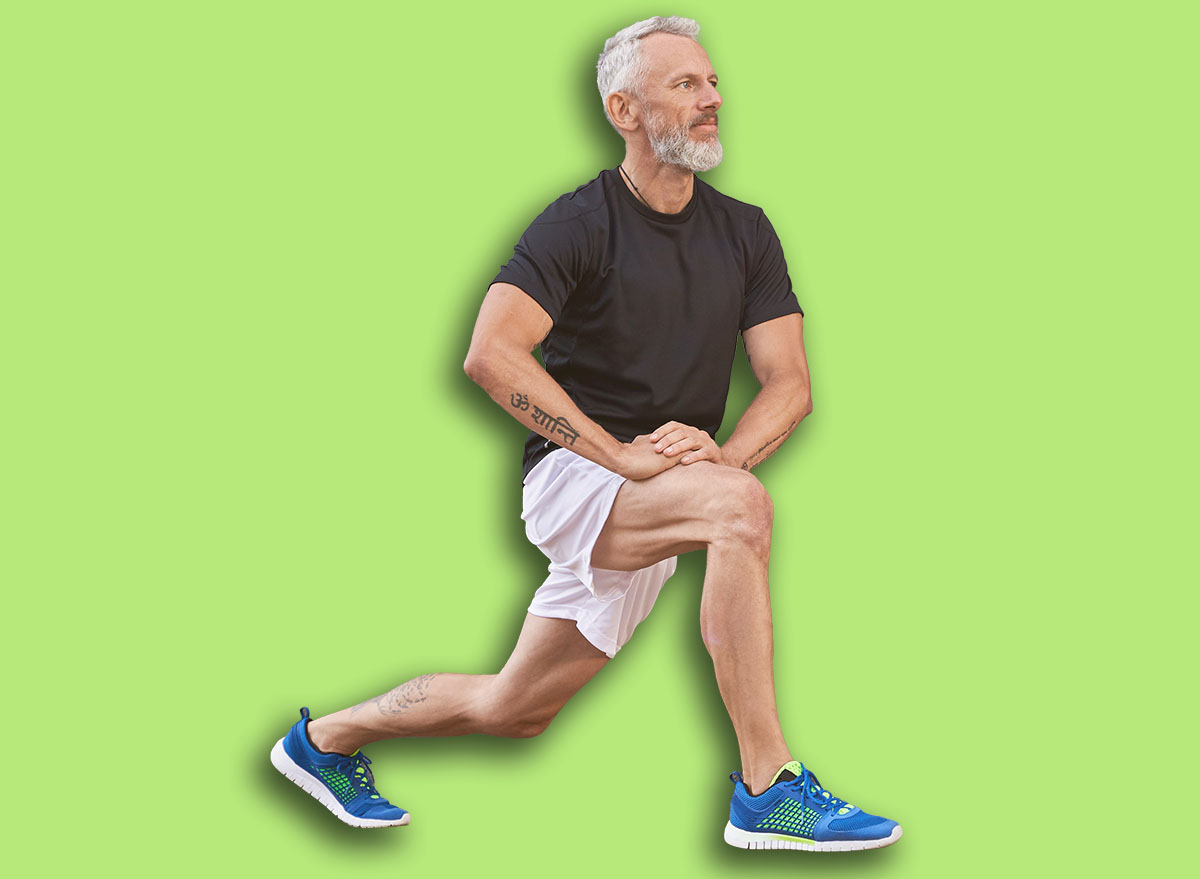

Building and preserving muscle becomes more important than ever as you age. A strong, fit body makes performing daily tasks and hobbies easier—carrying groceries, climbing stairs, getting in and out of chairs, and playing with your grandchildren. To help maximize your workout time, we have a 12-minute bodyweight circuit that builds more muscle than 50 minutes of weight training after 55.
Let’s be honest: Between family commitments and social plans, heading to the gym often gets pushed to the back-burner. That’s where bodyweight training comes in clutch. A brief circuit like this is easy to do at the start or end of the day. And the best part? No equipment is needed.
Below, Karen Ann Canham, CEO and founder of Karen Ann Wellness, breaks down a 12-minute bodyweight routine to sculpt lean muscle.
The Benefits of a Short Bodyweight Circuit
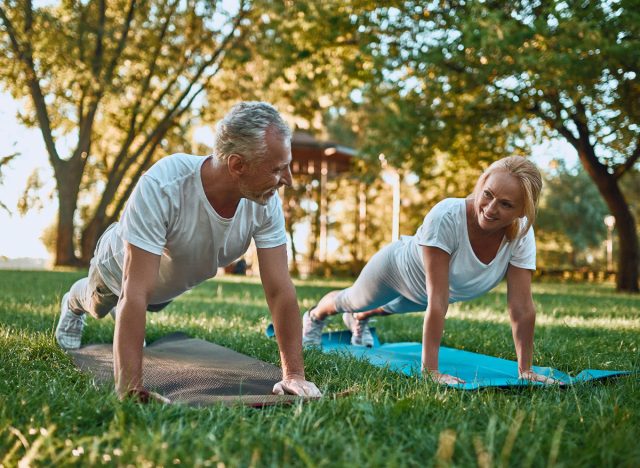
“Short bodyweight circuits can outperform long weight sessions because they activate multiple muscle groups continuously without placing excess strain on joints,” Canham tells us. “The steady elevated heart rate increases blood flow to the muscles which improves strength and endurance at the same time. This style of training recruits both fast twitch and slow twitch fibers which naturally decline with age.”
Bodyweight circuits also put your balance and stability to the test, which traditional weight training typically overlooks.
“The movements feel more accessible which increases consistency and long term adherence,” Canham points out. “When the body is moving in natural patterns it responds faster. The result is greater functional strength in less time.”
Which Muscle Groups Respond Best?

Large muscle groups like the core, chest, legs, and glutes usually respond best to this form of training, as they support daily movement.
“These muscles are naturally slower to activate with age so dynamic bodyweight work helps reawaken them safely,” Canham tells us. “The lower body in particular benefits because squatting, hinging, and stepping strengthen the muscles needed for mobility and fall prevention. Core muscles also respond quickly because bodyweight work demands stability rather than isolation. The upper body improves with controlled pushing and pulling patterns that protect the shoulders.”
These muscles love workouts that feel repetitive and natural. Bodyweight training embodies exactly how you’re supposed to move.
When it comes to circuit training, it keeps the body moving through various patterns with brief rest periods. This ramps up your heart rate while building endurance and strength.
“Shifting between muscle groups trains the whole system rather than isolating one area at a time,” Canham says. “Circuits mimic real life movement so functional strength increases quickly.”
The 12-Minute Bodyweight Circuit To Build Muscle

Repeat the below sequence twice for a 12-minute circuit.
“Each move supports everyday function while building strength in a safe, joint-friendly way,” Canham says.
Squats
The squat is a classic yet stellar lower-body movement that recruits your abs, glutes, hamstrings, quads, and calves. If you’re looking to sculpt toned, lean legs while boosting muscle in your lower body, weave squats into your routine.
The exercise requires you to lower until your thighs become parallel to the floor, then pressing back up to standing. Use control, and don’t rush the movement.
- Begin by standing tall with your feet shoulder-width apart.
- Extend your arms in front of you or place your hands on your hips.
- Bend at the knees and hips to lower into a squat.
- Descend until your thighs are parallel to the floor.
- Press through your heels to return to standing.
- Perform squats for 1 minute.
Pushups
“Move into one minute of modified or full pushups to build upper-body strength and protect shoulder mobility,” Canham instructs.
- Start in a high plank with your hands under your shoulders and your body straight from head to heels.
- Activate your core.
- Bend your elbows to lower your chest toward the floor. Maintain a long, straight body as you lower.
- Press back up, straightening your arms.
- Perform pushups for 1 minute.
- To modify the exercise, lower to your knees or begin by doing wall pushups.
- For the latter, you’ll stand tall, arms-length away from a wall.
- Place your hands shoulder-width apart on the surface.
- Bend your elbows to lower your chest toward the wall.
- Press back up.
Step-Backs
“Add one minute of alternating step-backs to improve stability and heart health,” Canham says.
This exercise builds strength in the core, legs, and glutes while boosting coordination and balance. You’ll alternate legs, stepping back into a split stance.
- Begin by standing tall with your feet hip-width apart, core braced, and shoulders relaxed.
- Take a big step back with your right foot to assume a split stance, lowering your hips just a bit so your knees are bent to about 90 degrees.
- Press through your front heel to rise back up to the start position.
- Then, step back with your left foot and slightly lower.
- Press through the front heel to return to standing.
- Continue to alternate, performing the exercise for 1 minute.
Plank Hold
You’ll wrap up this bodyweight circuit with a one-minute plank hold to boost core strength and establish total-body control. Planks are a classic test of overall fitness—especially as you age.
- Start by placing your hands under your shoulders.
- Press into the pads of your fingers and hug your inner arm toward your armpit.
- Walk your feet out to hip-width.
- Engage your abs, squeeze your buttocks, and pull upward through your quads.
- Hold the position for 1 minute.
- Alternately, perform a plank hold by lowering to your forearms and holding the position from there.