5 Daily Exercises That Flatten Apron Belly Faster Than Crunches After 50

Apron belly after 50 rarely responds to endless crunches. Hormonal shifts, reduced muscle mass, and slower recovery change how the body stores and burns energy, especially around the lower abdomen. I’ve coached adults over 50 for years, and the pattern shows up again and again: the people who focus on full-body tension and smart daily movement see their midsections tighten far faster than the ones chasing ab burn on the floor. The goal isn’t more reps. The goal is more muscle engagement, better posture, and stronger glutes driving daily calorie output.
Crunches mainly flex the spine. They don’t challenge the deep core, they don’t build meaningful lower-body muscle, and they don’t elevate metabolic demand enough to influence stubborn fat. Standing movements, loaded carries, and controlled hinges recruit more total muscle tissue, which increases daily energy use and improves abdominal tone. When you combine that with consistent tension through the midsection, the lower belly begins to flatten because the entire system works harder.
The five exercises below attack apron belly indirectly but effectively. Each one builds muscle, reinforces posture, and strengthens the deep core without grinding your spine. Perform them daily with intent and controlled tempo. Stay consistent, and your waistline will respond.
Dumbbell Romanian Deadlift
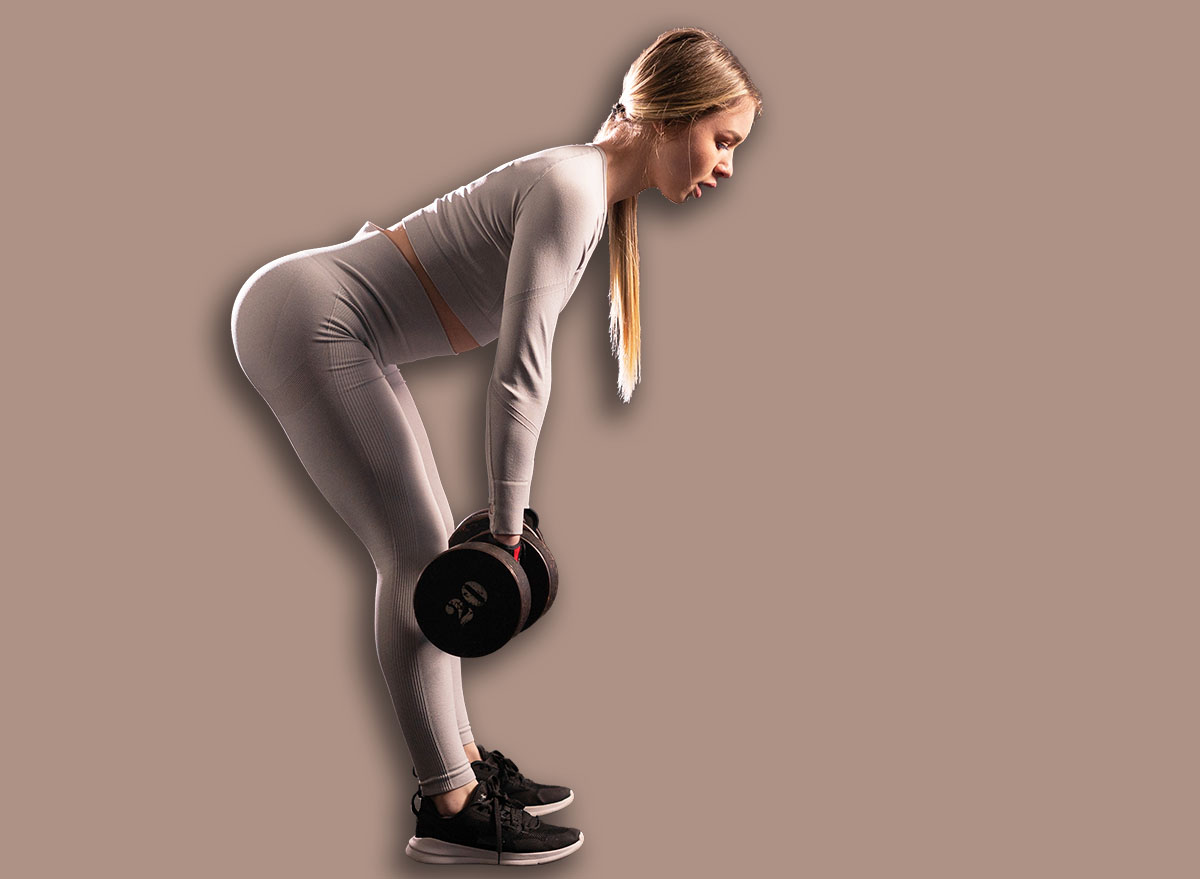
Lower belly projection often links to weak glutes and a relaxed lower abdomen. When the hips fail to extend properly, the pelvis tilts forward and pushes the belly outward. I’ve seen this posture pattern in countless clients over 50, and rebuilding the hinge almost always improves how the lower abdomen looks from the side. The Romanian deadlift strengthens the entire backside while forcing the core to stabilize under load. That tension tightens the midsection in a way crunches never will.
Drive the hips back and feel the hamstrings lengthen. Keep the dumbbells close to your legs and maintain a proud chest. When you stand tall, squeeze the glutes hard and brace the midsection. That brace trains the deep abdominal wall to support you throughout the day.
How to Do It
- Stand tall holding dumbbells in front of thighs
- Slightly soften knees
- Push hips back while lowering weights
- Keep spine neutral and chest tall
- Drive through heels to stand
- Squeeze glutes at the top.
Standing Alternating Reverse Lunge
Apron belly responds faster when large muscle groups drive the work. Reverse lunges activate glutes, quads, and core simultaneously while keeping stress off the knees. Stepping backward shifts more demand into the front hip, which helps rebuild glute strength that often declines after 50. Every controlled rep reinforces balance and midsection stability.
Lower slowly and keep your torso upright. Drive through the front heel to return to standing. Actively brace your core before each step back. That bracing builds functional abdominal strength that improves lower belly firmness.
How to Do It
- Stand holding dumbbells at your sides
- Step one leg back
- Lower into a controlled lunge
- Keep front knee aligned over mid-foot
- Push through front heel to return
- Alternate sides.
Dumbbell Suitcase Carry
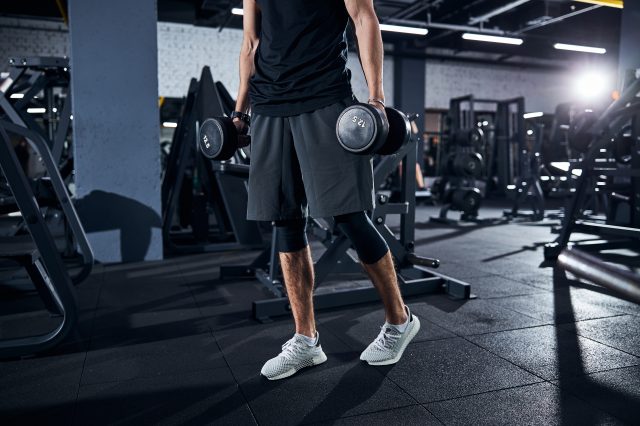
Carries tighten the waist better than floor crunches because they force the deep core to resist side bending. The suitcase carry challenges the obliques and transverse abdominis while you remain upright and moving. I use this constantly with clients who want visible waist tightening without aggravating their backs. It builds strength and posture at the same time.
Hold one dumbbell at your side and walk slowly with control. Keep shoulders level and avoid leaning. Imagine someone trying to tip you sideways and resist that pull. That anti-tilt tension directly strengthens the muscles that flatten the lower abdomen.
How to Do It
- Hold one dumbbell at your side
- Stand tall with shoulders level
- Walk slowly for 20–40 steps
- Keep core braced
- Switch hands and repeat.
Standing Dumbbell Front Squat
Standing squats recruit more total muscle mass than crunches ever could. Holding dumbbells at shoulder height increases core activation and challenges posture. After 50, preserving leg strength plays a massive role in maintaining metabolic output. The more muscle you recruit, the more energy your body burns during and after training.
Lower with control and keep elbows lifted. Push knees outward slightly as you descend. Drive upward with power and squeeze your glutes at the top. Maintain abdominal tension throughout every rep.
How to Do It
- Hold dumbbells at shoulder height
- Set feet shoulder-width apart
- Lower into a squat with control
- Keep chest tall and elbows lifted
- Drive through heels to stand
- Squeeze glutes at the top.
Standing Cross-Body Knee Drive
This final movement integrates balance, hip flexion, and core rotation control. Many adults over 50 lose rotational stability, which weakens the deep abdominal wall. Controlled cross-body knee drives rebuild coordination while tightening the midsection. I’ve used this drill for years to help clients reconnect their lower and upper body.
Stand tall and drive one knee upward across your body. Add a slight opposite-arm reach to increase engagement. Move slowly and maintain balance. Controlled repetition reinforces deep core activation and improves lower belly tension.
How to Do It
- Stand tall with feet hip-width apart
- Drive one knee upward across body
- Add slight opposite-arm reach
- Lower with control
- Alternate sides.