5 Morning Exercises That Trim Belly Pooch Faster Than Pilates After 60
Pilates can be a great way to train your core, but some mornings call for something simpler. You may want a routine you can do before coffee, before errands, or before the day gets loud enough to talk you out of exercising.
Belly pooch after 60 usually improves with steady habits, not with a single perfect workout. Core training helps by building control in your midsection and making it easier to move with better posture. Pair that with walking, strength work, and consistent nutrition, and the small daily sessions start to add up.
This routine keeps the exercises easy to use. You won’t need a reformer, a long class, or a complicated flow. You’ll train your abs from your back, hands and knees, and standing, which gives your core enough variety without making the workout feel like a production.
Use these five morning exercises three to five days per week. Move slowly, breathe through each rep, and aim for control before speed.
Dead Bug
The dead bug is one of the most useful core exercises after 60 because it teaches your abs to brace while your arms and legs move. That’s the job your core has during everyday life. It helps keep your lower back steady while your body shifts around it.
Keep this one slow. If you rush it, you’ll miss most of the benefit. A good dead bug should feel controlled, almost like you’re trying to make the movement quiet.
Muscles Trained: Abs, deep core, hip flexors.
How to Do It
- Lie on your back with your knees bent and your feet lifted.
- Reach both arms toward the ceiling.
- Brace your core and gently press your lower back toward the floor.
- Lower one arm behind you as you extend the opposite leg.
- Return to the starting position.
- Repeat on the other side and continue alternating.
Recommended Sets and Reps: Perform 2 to 3 sets of 6 to 8 reps per side.
Best Variations: Bent-knee dead bugs, heel-tap dead bugs, single-leg dead bugs.
Form Tip: Shorten the range if your lower back starts to arch.
Heel Taps
Heel taps are simple, but they work well when you do them with patience. Your abs have to control your pelvis as each foot lowers toward the floor. That makes the exercise a strong choice for rebuilding core strength without getting into a long plank or twisting drill.
This one also fits a morning routine because it doesn’t take much space or energy to get started. Lie down, brace, and let the reps build.
Muscles Trained: Abs, deep core, hip flexors.
How to Do It
- Lie on your back with your knees bent.
- Lift your feet so your knees stack over your hips.
- Brace your core and keep your lower back steady.
- Lower one heel toward the floor.
- Lightly tap the floor and bring the leg back up.
- Switch sides and continue alternating.
Recommended Sets and Reps: Perform 2 to 3 sets of 8 to 10 reps per side.
Best Variations: Single-leg heel taps, slower heel taps, smaller-range heel taps.
Form Tip: Move from your hips while your lower back stays still.
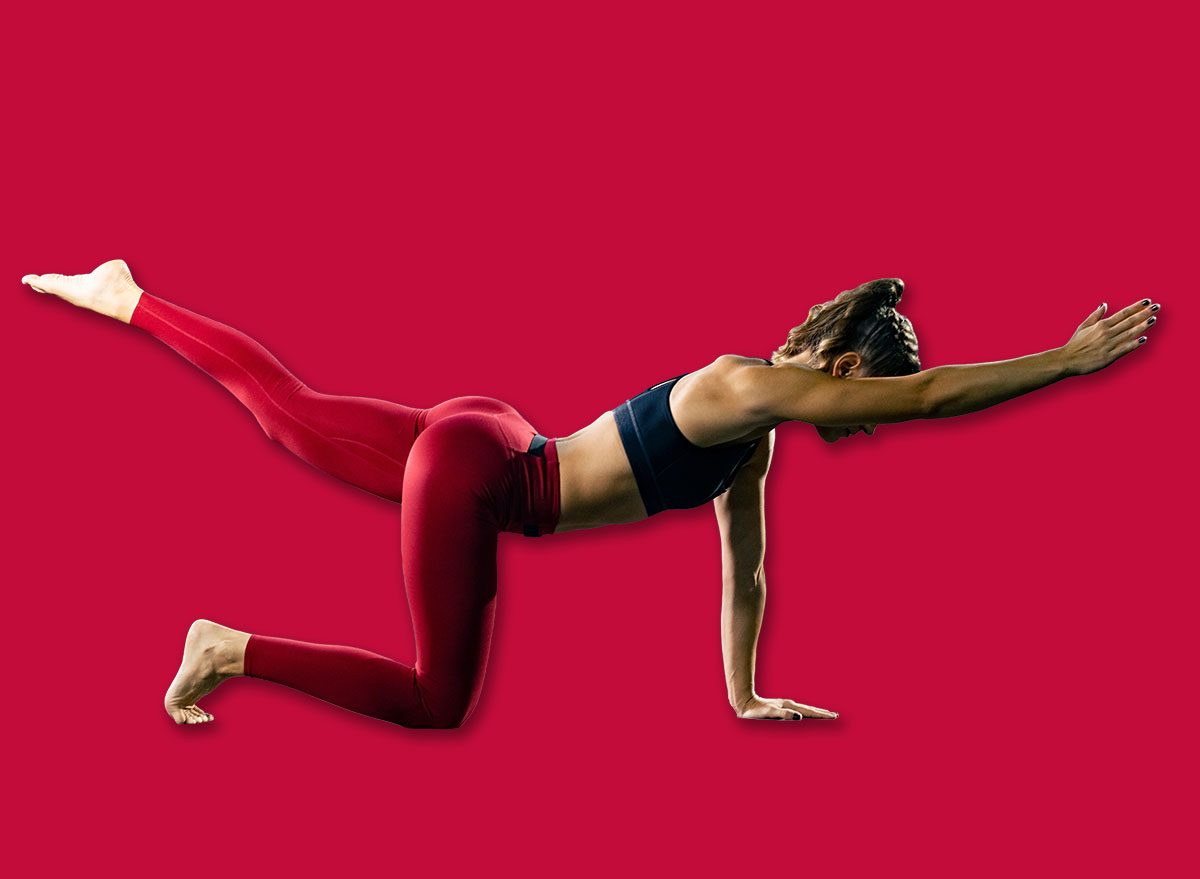
Bird Dog
Bird dogs train your core without making you lie on your back the whole time. You’re on your hands and knees, reaching one arm and the opposite leg while your midsection keeps you from shifting side to side. It’s simple, but it can expose sloppy control fast.
The goal isn’t to reach as far as possible. Reach only as far as you can while staying steady. That’s where the core work happens.
Muscles Trained: Abs, deep core, glutes, lower back, shoulders.
How to Do It
- Start on your hands and knees.
- Place your hands under your shoulders and your knees under your hips.
- Brace your core.
- Reach one arm forward and the opposite leg back.
- Pause for one second.
- Return to the starting position and switch sides.
Recommended Sets and Reps: Perform 2 to 3 sets of 6 to 8 reps per side.
Best Variations: Leg-only bird dogs, arm-only bird dogs, slower bird dogs.
Form Tip: Keep your hips level and avoid rocking as you switch sides.
Standing Cross-Body Knee Drive
Standing cross-body knee drives bring your core work upright. That’s useful because your abs need to help you control movement while you stand, walk, turn, and reach. This exercise adds a little rhythm to the routine without turning it into a high-impact workout.
Move with control at first. Once the pattern feels smooth, pick up the pace slightly and let your breathing come up.
Muscles Trained: Abs, obliques, hip flexors, glutes.
How to Do It
- Stand tall with your feet about hip-width apart.
- Place your hands behind your head or hold them in front of your chest.
- Brace your core.
- Drive your right knee up toward your left side.
- Lower your foot with control.
- Repeat on the other side and continue alternating.
Recommended Sets and Reps: Perform 2 to 3 sets of 20 to 30 seconds.
Best Variations: Slower knee drives, standing marches, seated cross-body knee lifts.
Form Tip: Lift your knee with your abs engaged, rather than yanking your torso down.
Incline Plank Hold
The incline plank gives you the core benefit of a plank with less pressure than the floor version. Place your hands on a counter, bench, or sturdy bed frame to train your abs while staying in a more manageable position.
This is a great finisher because it teaches your midsection to hold tension. Keep it short and strong. A clean 20-second hold beats a long shaky one.
Muscles Trained: Abs, deep core, shoulders, chest, glutes.
How to Do It
- Place your hands on a sturdy counter, bench, or bed frame.
- Step your feet back until your body forms a straight line.
- Brace your core and lightly squeeze your glutes.
- Keep your shoulders stacked over your hands.
- Hold the position while breathing steadily.
- Step forward to come out of the hold.
Recommended Sets and Reps: Perform 2 to 3 holds of 15 to 30 seconds.
Best Variations: Wall plank, countertop plank, incline plank with shoulder taps.
Form Tip: Keep your ribs pulled down so your lower back doesn’t sag.
How to Make This Morning Routine Work After 60
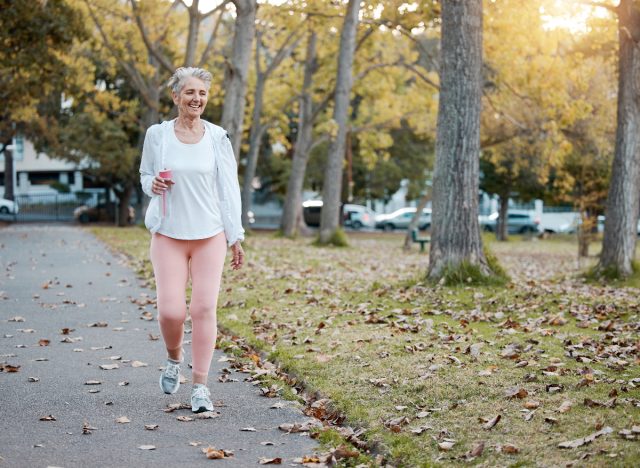
The goal isn’t to turn your morning into a full workout class. Keep the routine short enough that you’ll actually repeat it. Two clean rounds done consistently will beat one oversized session you only do once.
A few tips make it easier to stay on track:
- Start before the day gets busy: Morning exercise works best when it happens before errands, appointments, and distractions take over.
- Pair it with walking: Core work helps, but daily movement plays a big role in trimming belly pooch. Even a short walk after breakfast can support the bigger goal.
- Keep the routine familiar: Don’t change exercises every few days. Repeating the same moves helps you improve and makes the workout feel easier to start.
- Use a timer: Set short work periods, move through the circuit, and finish before you overthink it.
- Support it with simple nutrition habits: Protein at breakfast, enough water, and fewer mindless snacks can make this routine work much better.
Trimming belly pooch after 60 takes consistency, and consistency gets easier when the routine feels doable. These five exercises give your core enough work to matter without making your morning feel crowded before it even starts.
References
- Schumacher, Leah M et al. “Consistent Morning Exercise May Be Beneficial for Individuals With Obesity.” Exercise and sport sciences reviews vol. 48,4 (2020): 201-208. doi:10.1249/JES.0000000000000226
- Schumacher, Leah M et al. “Consistent exercise timing as a strategy to increase physical activity: A feasibility study.” Translational journal of the American College of Sports Medicine vol. 8,2 (2023): e000227. doi:10.1249/tjx.0000000000000227