5 Morning Exercises That Improve Balance Faster Than Yoga After 60
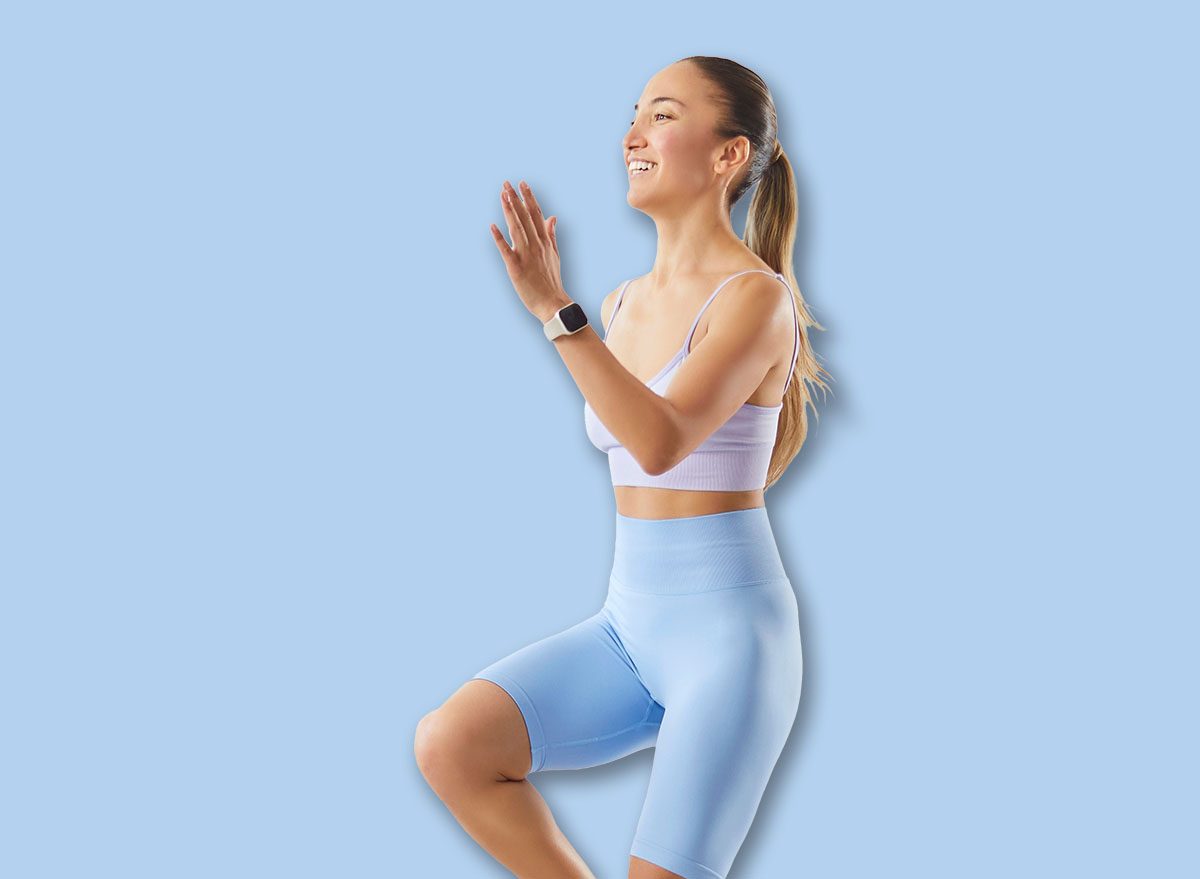

One of the most coveted physical abilities to maintain as you age is your balance. Since everyone starts to lose muscle mass with age, ensuring you have good stability can help prevent falls and injuries. It will also help preserve your mobility, confidence, and independence to perform daily tasks, including climbing steps, walking, and running errands. Balance workouts activate your abdominal muscles and core while preserving solid posture.
The bottom line is if you feel stable and balanced on your feet, you’ll be more confident living an active life—regardless of your age. If you’re ready to get started, check out these five morning exercises that can improve balance faster than yoga after 60.
“Yoga can be an excellent tool for flexibility, body awareness, and balance. However, these exercises focus more on functional balance—the type of balance needed for everyday activities such as walking, climbing stairs, getting out of a chair, carrying groceries, or recovering from a stumble,” explains Heike Yates, a 65-year-old Midlife Fitness Expert, ACE Certified Personal Trainer, Pilates Coach, Author, and Host of the Pursue Your Spark Podcast. Yates has been in the fitness industry for more than 40 years, helping adults stay mobile, strong, active, and confident as they age.
Many yoga poses are held statically, while the exercises Yates rounded up challenge dynamic and static balance. They also recruit other key elements like coordination, strength, weight shifting, and reaction time—all of which are essential for decreasing fall risk and preserving independence.
“A short morning balance routine helps wake up the nervous system and improve communication between the eyes, inner ear, brain, and muscles. Many older adults feel stiff or less steady when they first get up, and a few minutes of balance work can help improve confidence and stability throughout the day,” Yates shares.
Below are five morning exercises to add to your daily routine.
Sit-to-Stand
“This exercise strengthens the legs, core, and hips while improving coordination. Getting up and down from a chair is one of the most important functional movements for maintaining independence,” Yates tells us.
- Begin seated at the front of a sturdy chair, feet under your knees.
- Lean forward just a bit.
- Try to stand up without using your knees, hands, or additional support.
- Use control to slowly sit back down.
Single-Leg Stand
“Standing on one leg improves stability, body awareness, and confidence. Since walking, climbing stairs, and dressing often require balancing on one leg, this exercise directly supports everyday activities,” Yates explains.
- Stand tall on a flat surface with your feet hip-width apart and arms at your sides.
- Shift your body weight onto your left foot.
- Lift your right foot off the ground.
- Activate your core while keeping your shoulders stacked over your ribs and your hips level.
- The time begins once your leg comes off the floor and stops when your foot touches the ground.
- Repeat on the other side.
Heel-to-Toe Walk
“Walking heel-to-toe challenges balance while moving and helps improve gait, coordination, and stability,” Yates points out.
- Stand tall.
- Begin walking straight, placing one foot right in front of the other, heel to toe.
Standing March
“Marching in place strengthens the hips and core while training weight shifting, which is essential for safe and confident walking,” Yates explains.
- Stand tall with your feet shoulder-width apart and your knees soft. Make sure your spine is long and your arms are crossed high in a “genie” position.
- Then, lift one knee up toward your chest.
- Lower it.
- Lift the other knee up toward your chest.
Clock Reach
“Standing on one leg while reaching the other foot in different directions challenges balance from multiple angles and improves the body’s ability to react to changes in movement,” Yates explains.
- Begin standing tall with your feet hip-width apart.
- Shift your body weight onto one leg, keeping the standing leg slightly bent.
- Picture yourself standing in the center of a clock face.
- Reach the lifted foot toward 12 o’clock (to the front), 3 o’clock (to the side), 6 o’clock (to the back), and then 9 o’clock (across the body).
- Return your foot to the center after each reach.
- Repeat on the other side.