5 Chair Exercises That Restore Lower Back Strength Faster Than Gym Machines After 60

Lower back strength is vital after 60 because it prevents spinal degeneration, improves core stability to help reduce the risk of falling, and helps maintain independence in daily tasks like going to the bathroom, putting away groceries, and standing. Many people assume they need a gym or complicated equipment to strengthen their back, but you can do it with chair-based exercises. A chair provides stability, reduces fall risk, and allows you to focus on activating the proper muscles. For many older adults, chair exercises are a safe starting point for building both strength and confidence. These five exercises can help you restore your lower back without ever stepping foot in a gym.
Seated Hip Hinge
The seated hip hinge, also known as a seated good morning, is my single best chair exercise for restoring lower back strength. It helps the body learn how to properly engage the lower back and glutes while maintaining a neutral spine. It challenges the erector spinae and glutes to control the torso against gravity, building the postural control necessary for everyday functional tasks like lifting objects and standing up.
One of my older clients struggled to stand from a chair unless she used both of her arms. After a few months of seated hip hinge training, combined with other strengthening exercises, she told me standing has become easier and doesn’t feel as stiff.
Muscles Trained: Erector spinae, glutes, hamstrings
How to Do It:
- Sit toward the front edge of a sturdy chair (not one on wheels).
- Place your feet shoulder-width apart.
- Keep your chest tall and shoulders relaxed.
- Slowly lean your torso forward by pushing your hips backward, keeping your back straight, not rounded.
- Lean until you feel the muscles in your lower back and hips engage.
- Return to upright by squeezing your glutes and bringing your torso back up.
Avoid These Mistakes:
- Don’t round your lower back or overwork the spine. Hinge from the hips instead.
Recommended Sets and Reps: 2 to 3 sets of 10 to 15 repetitions
Form Tip: Keep your chest up and push your hips back. Imagine balancing a glass of water on your lower back that you don’t want to spill. The movement comes from the hips, not the spine.
Seated March
This exercise builds the hip and core strength that supports your lower back during walking and standing. You can notice a difference in your walking and reduced fatigue when standing for longer periods, and you may feel more balanced as well.
Muscles Trained: Hip flexors, core, lower back stabilizers
How to Do It:
- Sit tall with both feet flat on the floor.
- Lift one knee toward your chest.
- Lower your foot slowly back to the floor.
- Alternate sides.
Avoid These Mistakes:
- Don’t rock backward. Sit tall throughout the whole exercise and stay mindful of each movement.
Recommended Sets and Reps: 2 to 3 sets of 10 to 15 repetitions per leg
Form Tip: Don’t lean back. Be mindful of your movement from start to finish.
Seated Pelvic Tilts
Pelvic tilts teach your deep core and lower back muscles to work together through a gentle, controlled range of motion.
Muscles Trained: Deep core, lower abdominals, lower back
How to Do It:
- Sit upright on a chair with your feet flat on the floor and shoulder-width apart.
- Place your hands on your hips to feel the movement.
- Draw your belly button in toward your spine and tuck your tailbone under you.
- Move through a comfortable range.
Avoid These Mistakes:
- Don’t make the movement too large. Keep it small and controlled.
Recommended Sets and Reps: 2 to 3 sets of 10 to 15 repetitions
Form Tip: Think “tuck and untuck” with the pelvis, and move slowly.
Seated Back Extensions
This movement strengthens the muscles that hold you upright. It can help reduce slouching and improve your sitting tolerance.
Muscles Trained: Erector spinae, core
How to Do It:
- Sit tall and cross your arms over your chest.
- Extend your upper body backward.
- Return to an upright position.
Avoid These Mistakes:
- Don’t go too fast or lean too far back. Move through a small range of motion.
Recommended Sets and Reps: 2 to 3 sets of 8 to 12 repetitions
Form Tip: Engage your core and don’t stress your neck.
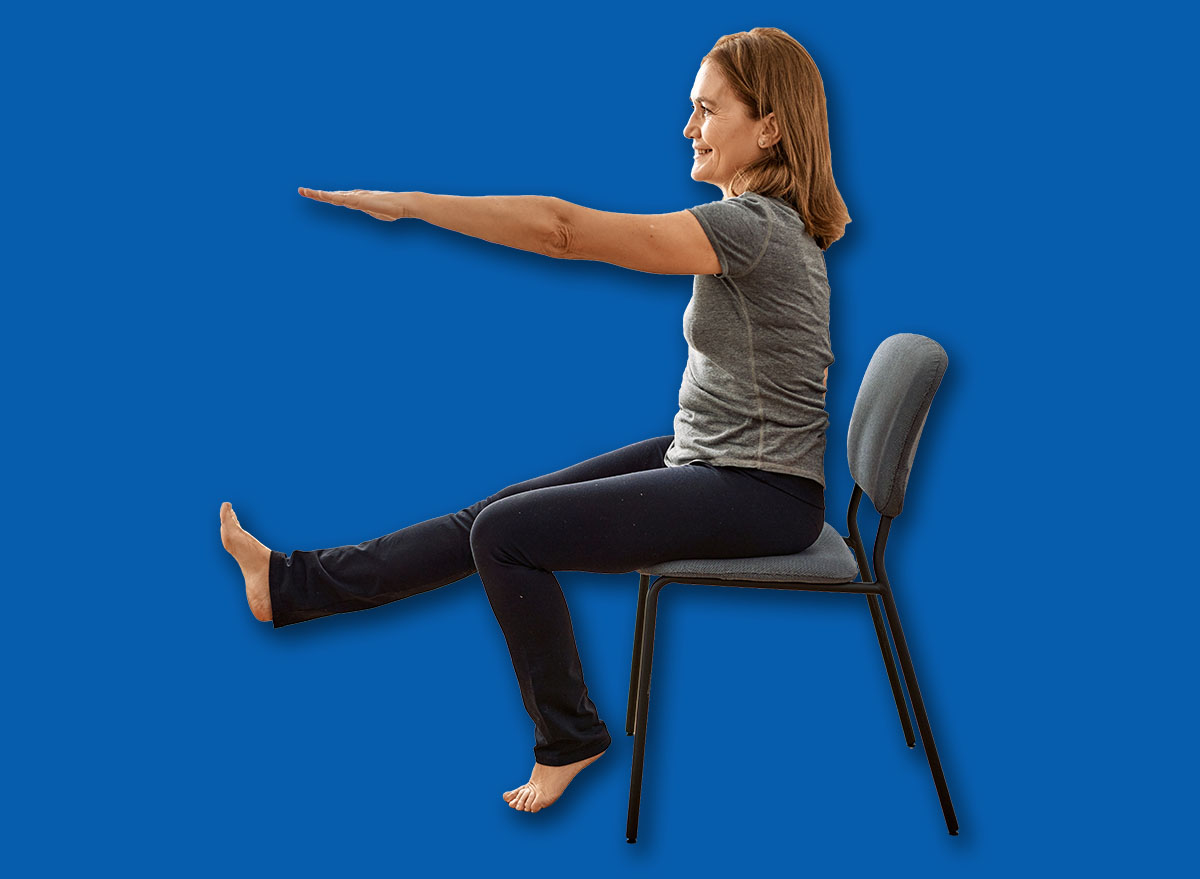
Seated Arm and Leg Reach
This exercise challenges your core to stabilize your spine while your limbs move, which can help improve balance.
Muscles Trained: Core, lower back stabilizers, glutes, shoulders
How to Do It:
- Sit straight and extend your right arm forward while extending your left leg at the same time.
- Hold for about 3 seconds.
- Switch sides.
Avoid These Mistakes:
- Don’t lose your upright posture. Avoid leaning or compensating to one side.
Recommended Sets and Reps: 2 sets of 8 to 10 repetitions
Form Tip: Stay straight and maintain control throughout the movement.
How Fast You’ll See Results

For someone over 60, you can expect to see improvements in functional strength, balance, and energy in 2 to 4 weeks if you perform these exercises on a consistent basis. Consistency means 2 to 3 times a week, allowing for a two-day (48-hour) recovery time between sessions.
More noticeable improvements are typically seen in weeks 6 through 12. One important reminder: consistency beats out intensity!
Habits That Speed Up Recovery

Beyond the exercises, I’d suggest prioritizing protein intake, as protein is needed to help rebuild and strengthen muscles.
Secondly, focus on improving sleep quality (7 to 8+ hours) and staying active throughout the day. Try not to stay in one position for long periods of time.
Safety Tips Before You Start

A few things to keep in mind before you begin:
- Stop your workout if you feel any sharp or shooting pain, or if pain becomes worse.
- Be mindful of each movement. Move slowly and controlled.
- Use a sturdy chair with no wheels.
- Progress your repetitions gradually.