4 Daily Exercises That Reverse Age-Related Strength Loss Faster Than Gym Machines After 60

I’ve spent 40 years working in fitness, and one of the most common concerns I hear from people over 60 is how quickly muscle strength seems to disappear. I’m a personal trainer and fitness educator at TRAINFITNESS, and what I tell every client in this situation is the same thing: bodyweight exercises can be incredibly effective at rebuilding that strength, and you don’t need a gym membership or expensive equipment to see real results. These four exercises can help you rebuild functional strength without leaving your living room.
Why Strength Drops So Fast After 60

After 60, we lose muscle mass at an accelerated rate. This process is called sarcopenia, and it’s not just about size — it’s about how quickly our muscles can generate force. Power output declines at roughly twice the rate of strength itself. This is why getting up from a chair becomes harder, or why we can’t react as fast when we stumble.
Several things drive this decline. Hormone levels drop, particularly testosterone and growth hormone, both of which play a role in maintaining muscle. The nervous system becomes less efficient at recruiting muscle fibres, so even if the muscle is there, we can’t always access its full potential. Inflammation increases with age, interfering with muscle repair and growth. And many people simply become less active, which accelerates everything.
Why Bodyweight Beats Machines

Machines lock you into a fixed path of movement, which removes the need for stabiliser muscles to fire. That might feel easier, but it doesn’t prepare your body for real-world movement. When you stand up from a chair, walk up stairs, or reach for something on a shelf, your body needs to coordinate multiple muscle groups and maintain balance. Bodyweight exercises train exactly that.
They also force you to move through a full range of motion in a way that feels natural, recruiting more muscle fibres across your entire body for better functional strength and improved coordination.
There’s another advantage worth mentioning: bodyweight exercises are self-limiting. You can’t use more resistance than your body can handle, which reduces injury risk. If you can’t control the movement, you won’t be able to complete it. That built-in feedback naturally protects you from doing too much too soon.
Sit-to-Stand
The sit-to-stand is the single most effective bodyweight exercise for rebuilding functional strength after 60. It’s exactly what it sounds like: standing up from a chair and sitting back down under control. This movement trains the muscles you use every single day, particularly your quads, glutes, and core.
Muscles Trained: Quadriceps, glutes, core
How to Do It:
- Sit in a sturdy chair with your feet flat on the floor, hip-width apart
- Lean forward slightly from the hips, not by rounding your back
- Push through your heels and stand up without using your hands for assistance
- Pause briefly at the top
- Lower yourself back down slowly and with control
Recommended Sets and Reps: 3 sets of 8–12 reps. If 8 reps feels too easy, slow down the lowering phase to 3–4 seconds per rep. If you can’t complete 8 reps without using your hands, start with a higher chair or use a light touch on the armrests for balance only, not to push yourself up.
Avoid These Mistakes:
- Don’t rock forward and use momentum to stand — your muscles should be doing the work, not momentum
- Don’t let your knees cave inward as you stand — keep them tracking in line with your toes
- Don’t plop down into the chair on the way back — control the descent, because that’s where a lot of the strength-building happens.
Wall Press-Up
This is a standing press-up performed against a wall. It builds upper body strength, particularly in your chest, shoulders, and triceps, and it’s much more accessible than a floor press-up.
Muscles Trained: Chest, shoulders, triceps
How to Do It:
- Stand facing a wall, about an arm’s length away
- Place your hands flat on the wall at shoulder height and shoulder-width apart
- Keep your body straight from head to heels and engage your core
- Lower your chest toward the wall by bending your elbows
- Push back to the starting position
Recommended Sets and Reps: 3 sets of 10–15 reps. If this feels too easy, step further away from the wall to increase the angle.
Avoid These Mistakes:
- Don’t let your hips sag or your lower back arch — keep your core tight the entire time
- Don’t flare your elbows out to the sides — keep them at roughly a 45-degree angle to your body
- Don’t shortcut the range of motion — your nose should almost touch the wall at the bottom of the movement.
Glute Bridge
This exercise strengthens your glutes, hamstrings, and lower back. Strong glutes are essential for walking, climbing stairs, and maintaining good posture.
Muscles Trained: Glutes, hamstrings, lower back
How to Do It:
- Lie on your back with your knees bent and feet flat on the floor, hip-width apart
- Position your heels close enough that you can almost touch them with your fingertips
- Press through your heels and lift your hips toward the ceiling until your body forms a straight line from your knees to your shoulders
- Squeeze your glutes at the top and hold for a second
- Lower back down with control
Recommended Sets and Reps: 3 sets of 12–15 reps. If this feels easy, hold the top position for 3–5 seconds on each rep.
Avoid These Mistakes:
- Don’t arch your lower back at the top — tuck your pelvis slightly and squeeze your glutes hard
- Don’t push through your toes — keep the weight in your heels throughout
- Don’t let your knees fall inward or outward — keep them aligned with your hips and ankles.
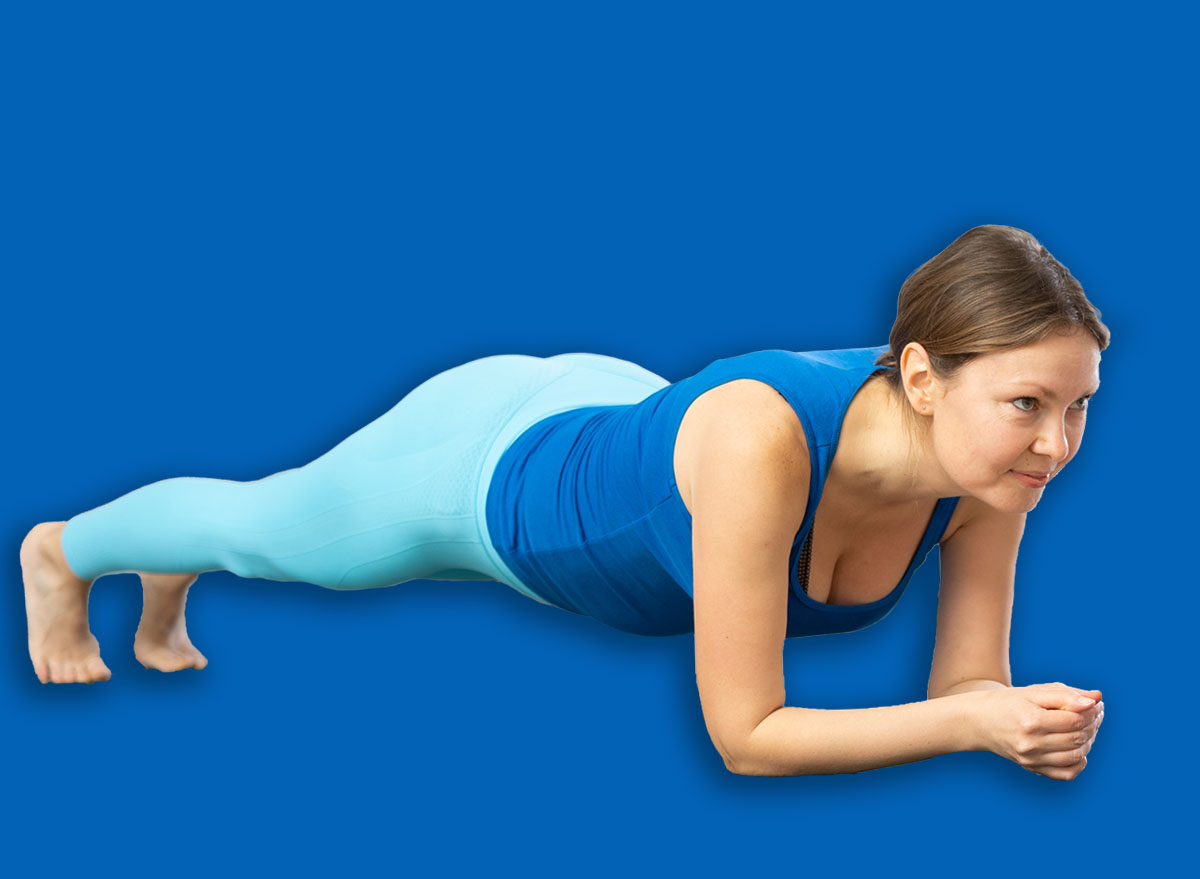
Modified Plank
This builds core strength and stability, which supports almost every movement you do. A strong core protects your lower back and improves your balance.
Muscles Trained: Core, shoulders, lower back
How to Do It:
- Start on your hands and knees
- Walk your hands forward slightly so your shoulders are directly over your wrists
- Keep your back flat and your core engaged
- Hold this position, making sure your hips don’t sag and your lower back doesn’t arch
Recommended Sets and Reps: 3 sets of 15–30 seconds. As you get stronger, extend the hold time or progress to a full plank on your toes.
Avoid These Mistakes:
- Don’t let your hips drop — keep your core tight and think about pulling your belly button toward your spine
- Don’t hold your breath — breathe normally throughout the hold
- Don’t let your shoulders creep up toward your ears — keep them pulled down and back.
When You’ll Start Feeling Results

The first changes happen in the nervous system, not the muscles themselves. Within the first 1–2 weeks, the exercises will feel easier and more controlled. That’s not because you’ve built muscle yet — it’s because your nervous system is getting better at recruiting the muscle fibers you already have.
By weeks 3–4, everyday tasks start feeling less challenging. Getting out of a chair won’t require as much effort. Carrying shopping bags or getting up from the floor will feel more manageable.
At the 6–8 week mark, you’ll see actual muscle growth and measurable strength gains. You’ll be able to do more reps, hold positions longer, or progress to harder variations. Other people might start commenting that you’re moving better or standing taller.
By 12 weeks, the improvements become undeniable. You’ll have built a solid base of functional strength, your posture will be better, and movements that felt difficult at the start will feel routine. The key is consistency — these timelines assume you’re doing the routine most days of the week.
Recovery and Nutrition Tips That Accelerate Results

The exercises are only part of the picture. A few habits outside the routine make a significant difference.
Protein is the single most important nutritional factor. After 60, our bodies become less efficient at using protein to build and repair muscle, so we need more of it, not less. Aim for 1.2–1.6 grams per kilogram of body weight per day, spread across meals. A 70kg person should be eating 84–112 grams daily. Include protein at every meal, not just dinner.
Sleep matters more than most people realize. This is when your body repairs muscle tissue and consolidates the strength gains from your training. Poor sleep reduces muscle protein synthesis and increases inflammation. Aim for 7–8 hours per night.
Consistency beats intensity. Doing this routine five days a week at moderate effort will give you better results than three days a week at maximum effort. Two rest days per week is ideal.
Hydration is often overlooked. Dehydration reduces muscle function and slows recovery. A simple rule: check your urine color. It should be pale yellow, not dark.
Daily movement matters too. Walking, stretching, or light activity on rest days keeps your body mobile and supports recovery. Sitting for long periods between sessions undermines the strength you’re building — stand up and move around regularly throughout the day.