4 Daily Leg Exercises That Restore Balance Faster Than Lunges After 60
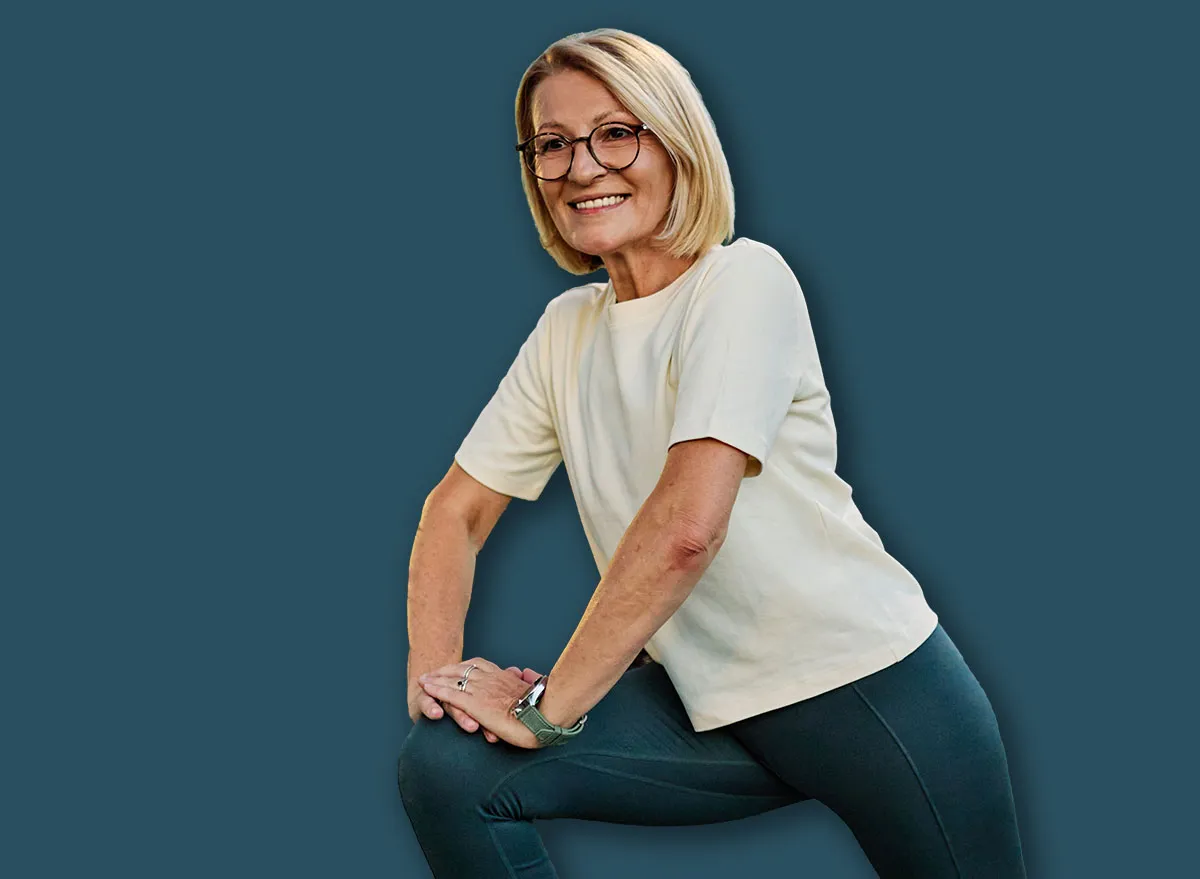

Balance and leg strength are two of the things I focus on most in my work with older adults. I’ve been a personal trainer for over 35 years, and I’ve spent the last 20 training the next generation of fitness professionals with TRAINFITNESS, the UK’s leading provider of personal training courses. What I see again and again is that people over 60 start avoiding movements that challenge their balance without even realizing they’re doing it. The stairs get a little more cautious. Uneven ground gets a little more nerve-wracking. And gradually, confidence erodes.
The good news is that four straightforward exercises, done consistently, can turn that around completely.
The Real Challenge After 60

The biggest challenge isn’t physical. It’s the gradual, almost invisible way decline sneaks up on people. Our balance relies on three systems working together: the inner ear, our vision, and proprioception (the body’s ability to sense where it is in space). After 60, all three start to lose their sharpness at the same time. The brain gets slightly conflicting information and starts to hesitate before committing to a movement. You’ll notice it first when you turn quickly or step off a curb without thinking.
At the same time, we lose leg strength faster than most people expect. Muscle mass drops by around 1% per year from our mid-40s onwards, but power (the ability to generate force quickly) falls at roughly double that rate. So it’s not just that our legs are weaker. It’s that they’re slower to react when we start to wobble.
The real problem is that most people adapt around these changes rather than addressing them. They hold the banister more. They avoid uneven surfaces. They stop doing the very things that would keep these systems sharp. The less we challenge our balance, the faster it deteriorates.
Why Skip Lunges
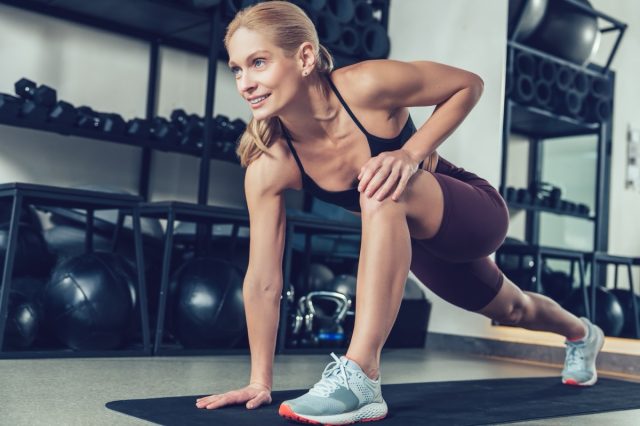
Lunges put a lot of shear force through the knee joint. For younger adults with good hip mobility and strong supporting muscles, that’s manageable. For people over 60, especially those with any degree of knee discomfort or reduced hip mobility (which is most people at that age), it becomes a different story. The movement is also quite demanding to perform well. Poor form in a lunge doesn’t just reduce the benefit; it creates a real injury risk.
The four exercises I use instead work the same muscle groups (glutes, quads, hamstrings, calves) but in ways that are kinder to the joints and more closely associated to the kinds of movement challenges older adults actually face. They involve controlled weight shifts, single-leg loading at manageable levels, and the kind of slow, deliberate muscle activation that rebuilds the neuromuscular connection between your brain and your legs. That connection is exactly what balance depends on.
Sit-to-Stand
This is essentially a squat using a chair as a guide, and it’s one of the most functional exercises we can do. Getting up from a chair is something most of us do dozens of times a day, and it requires quad strength, glute activation, and hip mobility. Practicing it as an exercise trains all of those things at once, in a movement your body already recognizes.
Muscles Trained: Quads, glutes, hip flexors
How to Do It:
- Sit near the front edge of a sturdy chair with your feet hip-width apart and flat on the floor
- Lean your chest forward slightly to shift your weight over your feet
- Press through your heels and stand up slowly and with control
- Pause for a second at the top, then lower yourself back down just as slowly
Avoid These Mistakes:
- Don’t use momentum to drop quickly back into the seat. The lowering phase is where a lot of the strength work happens, so slow it right down.
Recommended Sets and Reps: 3 sets of 10-12 repetitions
Form Tip: Control the descent. The slower you lower, the more strength you build.
Step-Ups
Step-ups train each leg independently, which is important because most of us have a stronger side that compensates in bilateral exercises like squats. They also mimic stair climbing directly, which is one of the movements people over 60 frequently become more cautious about. Using a single step (a bottom stair works perfectly) keeps the range of motion manageable while still loading the glutes and quads effectively.
Muscles Trained: Glutes, quads
How to Do It:
- Stand facing a step with your feet hip-width apart
- Place your right foot fully on the step
- Press through your right heel to lift your body up, bringing your left foot to the step
- Step back down with the left foot first, then the right
- Keep your torso upright throughout and avoid pushing off with the back foot
Avoid These Mistakes:
- Don’t push off with the lower leg. Drive through the working leg instead, and keep the trailing foot doing as little as possible. If you find yourself relying on it, slow the movement down.
Recommended Sets and Reps: 3 sets of 10 repetitions on each leg
Form Tip: The trailing foot should be doing as little as possible. Let the working leg do the work.
Single-Leg Stand
This one looks deceptively simple. Standing on one leg for 30 seconds doesn’t sound like much until you try it, and then it becomes very clear how much work the stabilizing muscles around the ankle, knee, and hip have to do. For older adults, this exercise directly trains the balance systems that start to decline after 60. It’s not about strength in the traditional sense. It’s about your brain and muscles learning to communicate quickly and accurately again.
Muscles Trained: Stabilizing muscles of the ankle, knee, and hip
How to Do It:
- Stand near a wall or sturdy surface you can touch for support when necessary
- Shift your weight onto your right foot and lift your left foot just off the floor
- Hold for up to 30 seconds, keeping your standing knee soft (not locked)
- Focus your gaze on a fixed point ahead to help with stability
- Repeat on the other side
Avoid These Mistakes:
- Don’t grip the support surface the whole time. Use it only as a safety net, and touch it only if you start to lose balance. The wobble you feel when you’re not holding on is the exercise working.
Recommended Sets and Reps: 3 holds on each leg
Form Tip: Fix your gaze on a point ahead of you. A steady focal point makes a steady stance.
Heel-to-Toe Walk
This is one of the exercises used in clinical settings to assess fall risk, and it’s just as useful as a training tool. Walking heel-to-toe in a straight line forces your brain to process balance information dynamically (while you’re moving), which is much closer to what real-world balance demands. It trains the same systems as the single-leg stand but adds the element of forward movement and weight transfer.
Muscles Trained: Stabilizing muscles of the legs, ankles, and hips
How to Do It:
- Stand beside a wall for reference if needed
- Place your right foot directly in front of your left so the heel of your right foot touches the toes of your left
- Take slow, deliberate steps, placing each heel directly in front of the toes of the back foot
- Keep your arms out to the sides slightly if it helps
- Walk 10-15 steps forward, then turn carefully and repeat
Avoid These Mistakes:
- Don’t rush. People tend to speed up to get it over with, which defeats the purpose entirely. The slower and more controlled the steps, the more the stabilizing muscles have to work.
Recommended Sets and Reps: 2-3 lengths
Form Tip: Slow down. Deliberate steps force the stabilizing muscles to do their job.
Fitting It Into Your Day

The good news is that none of these exercises require equipment, and the whole routine takes around 15-20 minutes. I’d recommend doing it five days a week, ideally at the same time each day, because consistency matters far more than any individual session. Morning works well for most people as it sets a good tone for the day and gets it out of the way before life intervenes.
A simple structure would be to do the sit-to-stand and step-ups first (the strength-based exercises), then finish with the single-leg stand and heel-to-toe walk (the balance-focused exercises). Take short rest periods of around 60 seconds between sets. On the days you don’t do the full routine, even just practising the single-leg stand while you’re waiting for the kettle to boil makes a difference.
If any exercise feels too challenging at first, that’s fine. Use a chair or wall for support and build from there. Progress at your own pace. The goal in the first two weeks is just building the habit and getting familiar with the movements.
What to Expect in 4 to 6 Weeks
The first thing most people notice, usually within the first two weeks, isn’t strength. It’s confidence. They feel a little less hesitant stepping off a kerb or turning quickly. That’s the nervous system adapting, getting better at processing balance information and responding to it faster.
By weeks three and four, the strength changes start to show up in everyday life. Getting up from a low chair feels less effortful. Going down stairs feels more controlled. Carrying shopping on uneven ground feels less precarious. These aren’t dramatic transformations, but they are real, functional improvements that matter a great deal day to day.
By the six-week mark, if the routine has been done consistently, most people report feeling genuinely more sure-footed. The single-leg stand typically goes from wobbly and short to steady and controlled. The tandem walk becomes noticeably smoother. And that accumulation of small improvements adds up to something that people around you will start to notice too.
Realistic expectations matter here. This isn’t a program that will make a 65-year-old move like a 30-year-old. What it will do is recover a meaningful amount of the function that’s been lost to inactivity and gradually reduced movement. For most people, that’s enough to feel genuinely different about moving through the world.