5 Morning Exercises That Flatten Belly Overhang Better Than Gym Classes After 55
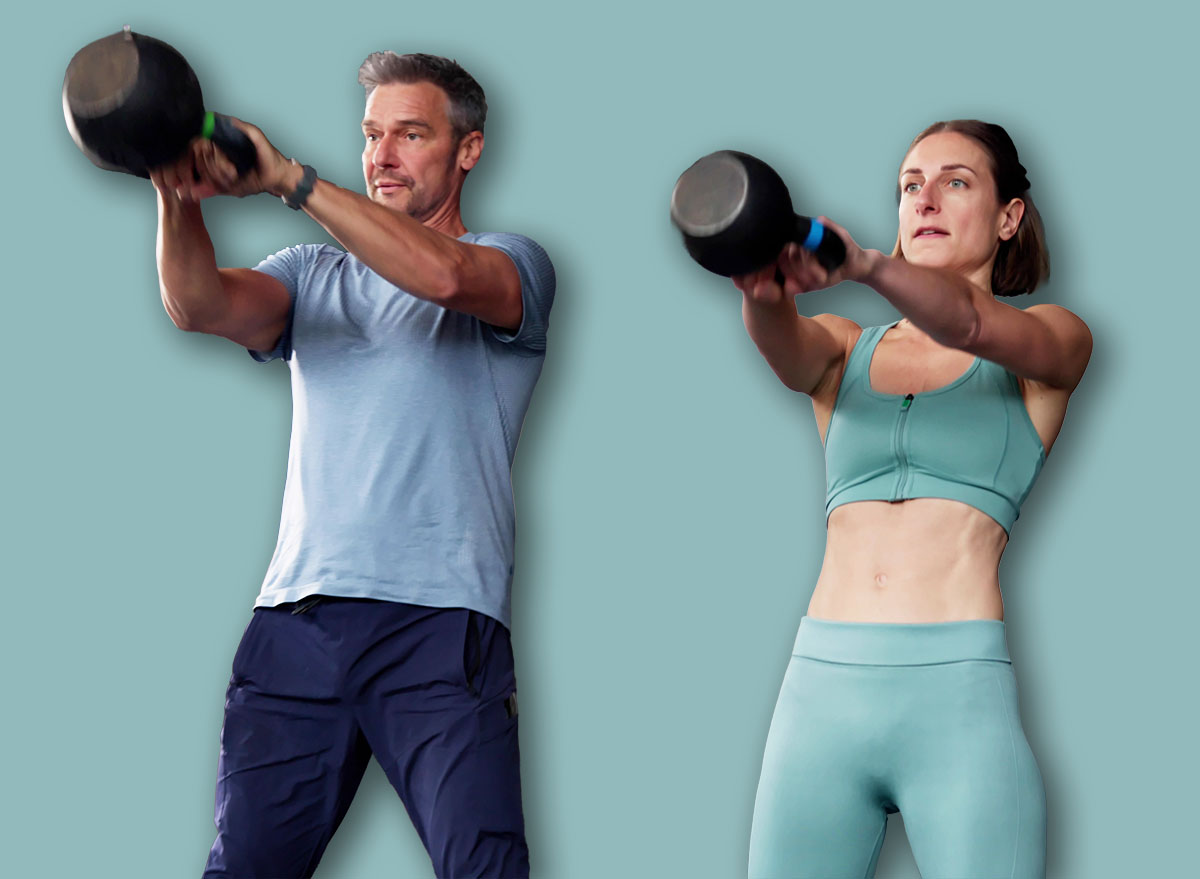

While group workouts can improve fitness after 55, they often lack the specific strength stimulus needed to preserve muscle mass and boost your metabolism in midlife and beyond. Studies suggest that maintaining muscle in your 50s becomes crucial for metabolic health, recovery becomes non-negotiable, and the exercises you choose matter far more than how much time you spend in the gym.
Research also shows that resistance-based exercise is one of the most effective strategies for reducing visceral fat and building core definition in older adults. While targeting fat loss around your waistline alone isn’t possible, adding more muscle mass to your frame means increased energy expenditure while at rest, which contributes to gradual fat reduction over time, including around your abdomen.
We chatted with James Bickerstaff, CPT, a certified personal trainer at OriGym, who shares his top five morning exercises designed specifically for older adults to banish belly overhang better than any gym class. The following moves combine strength, stability, and intensity, and when done consistently two to three days per week can create the hormonal and muscular environment necessary to tighten your lower abs and shrink your waistline.
And when you’re finished, be sure to check out these 5 Daily Exercises That Restore Muscle Faster Than Gym After 55, According to a Trainer.
Dumbbell Deadlifts
Deadlifts reign supreme as one of the most effective compound movements for tightening your lower core and building muscle in your glutes, hamstrings, and back. Strengthening these large posterior-chain muscles can torch calories and improve posture, both of which have an impact on your midsection.
How to do it:
- Stand tall while holding a pair of dumbbells in front of your thighs.
- Position your feet hip-width apart and keep a slight bend in your knees.
- Engage your core and hinge at your hips.
- Lower the weights down your legs while keeping your back flat.
- Stop when you feel a stretch in your hamstrings.
- Drive through your heels to stand back up.
- Squeeze your glutes at the top of the movement.
- Perform three sets of 8 to 10 reps, resting for 60 seconds between sets.
Incline Push-Ups
Incline push-ups are an essential compound movement for strengthening your chest, shoulders, and deep core muscles. Engaging your anterior core muscles during pressing movements like incline push-ups can help pull the abdominal wall inward while improving posture.
How to do it:
- Place your hands on a bench, countertop, or sturdy raised surface.
- Step your feet back so your body forms a straight line.
- Flex your core as if you’re about to get punched in the stomach.
- Lower your chest toward the surface under control.
- Keep elbows angled slightly back.
- Pause for one to two seconds near the bottom.
- Press back up with steady control.
- Maintain a neutral spine throughout the exercise.
- Aim for three sets of 10 to 12 reps. Rest for 45 to 60 seconds between sets.
RELATED: If You Can Complete These 3 Pushup Variations at 60, You’re Stronger Than Most People Your Age
Box Steps
Box steps improve lower-body strength, stability, and calorie burn while challenging your balance, which is crucial to maintain after 55 for fall prevention. Step-ups also increase heart rate and strengthen your glutes and thighs.
How to do it:
- Stand in front of a sturdy box or step.
- Place one foot on top of the box.
- Brace your core and keep your chest upright.
- Drive through your lead foot to stand up tall.
- Avoid pushing off with your trailing leg.
- Step back down with control.
- Alternate legs with each repetition.
- Maintain steady breathing and posture.
- Complete three sets of 8 to 10 reps per leg, resting for 60 seconds between sets.
Mountain Climbers
Mountain climbers are perfect for strengthening your core while boosting your cardiovascular health. The abdominal muscles strengthened during this exercise must stabilize the spine with each knee drive, helping to boost muscular endurance and caloric burn.
How to do it:
- Start in a high plank position with your hands below your shoulders.
- Extend your legs so your body forms a straight line.
- Engage your core and squeeze your glutes.
- Lift your right foot and drive the knee toward your chest.
- Return it to the starting position.
- Alternate legs in a controlled rhythm.
- Keep your hips level and avoid dipping at the hips.
- Breathe steadily through your nose.
- Perform three sets of 20 to 30 seconds. Rest for 45 seconds between sets.
Kettlebell Swings
Similar to mountain climbers, kettlebell swings combine strength and cardiovascular demand in a single compound movement. The explosive hip drive in the movement strengthens your posterior chain while elevating your heart rate, which over time can lead to more muscle tone and fat loss.
How to do it:
- Stand with your feet slightly wider than hip-width apart.
- Hold a kettlebell with both hands in front of you.
- Hinge at your hips and swing the kettlebell back between your legs.
- Keep your back flat and your core flexed.
- Drive your hips forward with force.
- Allow the kettlebell to rise to chest height.
- Lower the weigh back between your legs with control.
- Let your hips (not the arms!) generate the momentum.
- Aim for three sets of 12 to 15 reps, resting for 60 seconds between sets.
- Source: https://pmc.ncbi.nlm.nih.gov/articles/PMC12484634/
- Source: https://pmc.ncbi.nlm.nih.gov/articles/PMC8804680/
- Source: https://pmc.ncbi.nlm.nih.gov/articles/PMC12688407/
- Source: https://pubmed.ncbi.nlm.nih.gov/34536199/
- Source: https://pmc.ncbi.nlm.nih.gov/articles/PMC11091347/
- Source: https://pmc.ncbi.nlm.nih.gov/articles/PMC296885/
- Source: https://pmc.ncbi.nlm.nih.gov/articles/PMC12560331/
- Source: https://pmc.ncbi.nlm.nih.gov/articles/PMC7345922/