5 Exercises Men Over 50 Should Do Every Morning to Rebuild Lost Muscle

Rebuilding lost muscle after 50 comes down to a simple formula that works when you respect it. You need enough protein to support repair, smart resistance training that challenges your muscles, and consistency that turns effort into progress. Skip any one of those pieces, and the results stall. Nail all three and your body responds faster than most men expect.
Morning training makes that formula easier to follow. A short, full-body routine early in the day builds momentum, supports better daily movement, and keeps strength work from getting pushed aside later. Rather than feeling pressured to go to the gym every day, you can achieve the same effects by utilizing compound movements, moderate reps, and just enough intensity to wake up your muscles and nervous system. When you repeat that process several times a week, lean muscle has a reason to stick around.
Lean muscle plays a huge role in how your body functions as you age. It supports joint health, helps maintain stable blood sugar, improves balance, and increases daily calorie burn. Training in the right rep range helps you build and maintain muscle without wearing down your joints. The exercises below target your entire body, flow well together, and help you feel stronger by the time the coffee’s done brewing.
Alternating Lunges
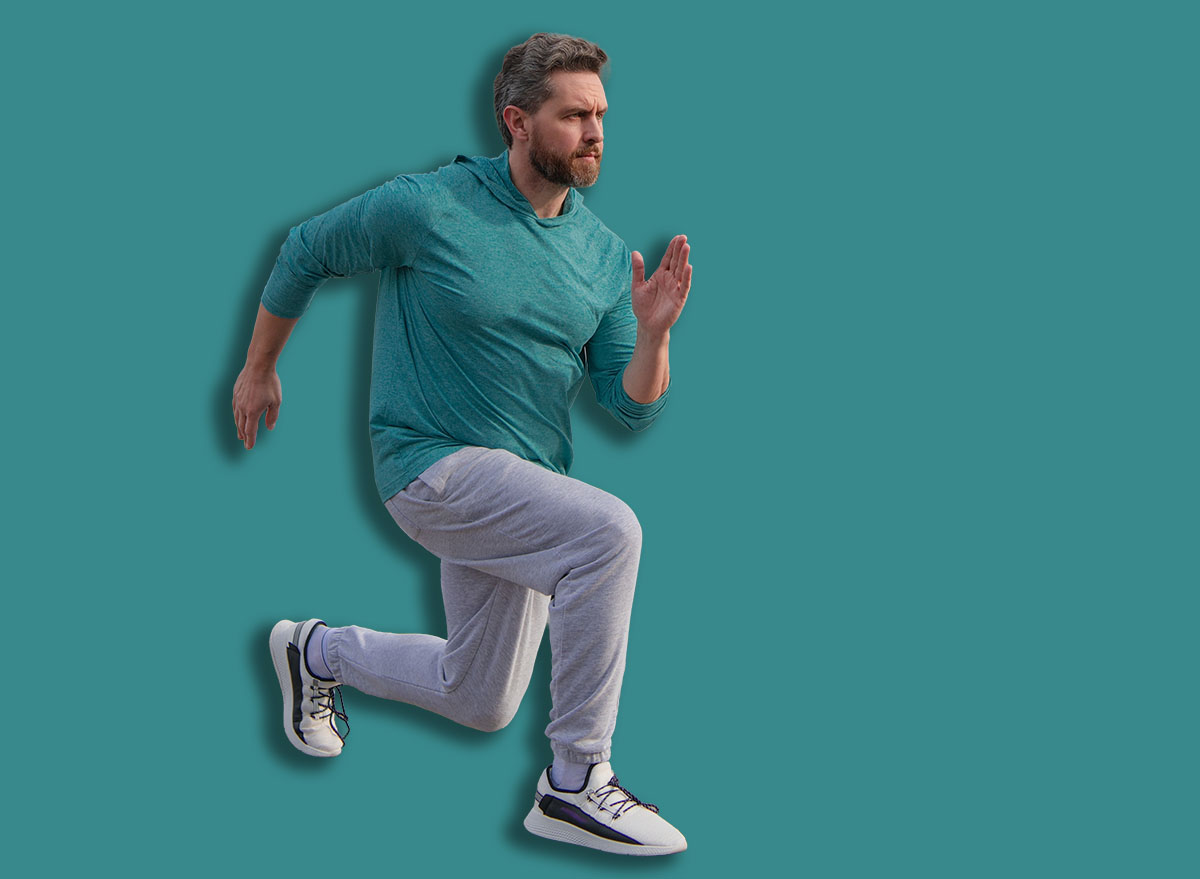
Alternating lunges rebuild single-leg strength, which matters more with every decade. They challenge balance, coordination, and hip stability while loading your legs through a deep range of motion. That combination helps restore muscle in your quads and glutes while protecting your knees. Lunges also expose side-to-side differences that squats can hide, making them valuable for long-term joint health.
Muscles Trained: Quadriceps, glutes, hamstrings, calves.
How to Do It:
- Stand tall with your feet hip-width apart.
- Step forward with your right foot and lower your body until both knees bend.
- Keep your front foot flat and your chest upright.
- Push through your right heel to return to standing.
- Step forward with your left foot and repeat.
Recommended Sets and Reps: Perform 3 sets of 8 to 10 reps per leg. Rest for 45 to 60 seconds between each set.
Best Variations: Reverse lunges, walking lunges, goblet lunges.
Form Tip: Drive through your front heel and keep your back knee tracking straight down.
Push-ups
Push-ups build upper-body strength without stressing your shoulders when performed correctly. They train your chest, arms, and core together, which makes them far more effective than isolated movements. Push-ups also reinforce full-body tension, teaching your body to move as one unit. That skill carries over to everything from lifting groceries to protecting your shoulders during workouts.
Muscles Trained: Chest, shoulders, triceps, core.
How to Do It:
- Place your hands slightly wider than shoulder-width apart on the floor.
- Extend your legs behind you and brace your core.
- Lower your chest toward the floor while keeping your body straight.
- Press the floor away and return to the top position.
- Reset your breath before the next rep.
Recommended Sets and Reps: Perform 3 sets of 6 to 12 reps. Rest for 45 to 60 seconds between each set.
Best Variations: Incline push-ups, tempo push-ups, and narrow grip push-ups.
Form Tip: Squeeze your glutes and keep your ribs pulled down throughout the set.
Squats
Squats remain one of the most effective ways to rebuild lower-body muscle. They load your legs and hips while reinforcing strong posture and joint control. Squats also support bone density and improve mobility when performed through a comfortable depth. For men over 50, they help preserve independence and everyday strength.
Muscles Trained: Quadriceps, glutes, hamstrings, calves.
How to Do It:
- Stand with your feet shoulder-width apart.
- Sit your hips back and bend your knees together.
- Lower until your thighs reach a comfortable depth.
- Keep your chest tall and your weight balanced over mid-foot.
- Drive through your heels to stand back up.
Recommended Sets and Reps: Perform 3 sets of 8 to 12 reps. Rest for 60 seconds between each set.
Best Variations: Box squats, barbell squats, front squats, goblet squats, tempo squats.
Form Tip: Think about spreading the floor with your feet as you stand up.
Band Rows
Band rows strengthen your upper back and improve posture, which often slips with age. They counter the forward shoulder position caused by sitting and phone use. Strong back muscles also support shoulder health and pressing strength. Bands allow smooth resistance that’s easy on the joints while still challenging the muscles.
Muscles Trained: Upper back, lats, rear delts, biceps.
How to Do It:
- Anchor a resistance band at chest height.
- Grab the handles and step back to create tension.
- Pull the band toward your ribs while squeezing your shoulder blades.
- Pause briefly at the top of the row.
- Slowly return to the start position.
Recommended Sets and Reps: Perform 3 sets of 10 to 15 reps. Rest for 45 seconds between each set.
Best Variations: Single arm band rows, seated band rows, tempo band rows.
Form Tip: Lead the movement with your elbows and avoid shrugging your shoulders.
Plank with Shoulder Taps
This exercise trains your core while challenging shoulder stability and coordination. It trains your body to resist rotation, which helps protect your spine during daily movement. Plank variations also build endurance in the muscles that support posture. That support matters when you want strength that lasts beyond the workout.
Muscles Trained: Core, shoulders, glutes, upper back.
How to Do It:
- Start in a strong plank position with your hands under your shoulders.
- Brace your core and squeeze your glutes.
- Lift your right hand and tap your left shoulder.
- Place your hand back down with control.
- Alternate sides while keeping your hips steady.
Recommended Sets and Reps: Perform 3 sets of 10 to 16 total taps. Rest for 45 seconds between each set.
Best Variations: Knee plank shoulder taps, elevated plank taps, slow tempo taps.
Form Tip: Widen your feet slightly to improve balance and reduce hip sway.
Best Daily Tips for Building Muscle After 50

Rebuilding muscle after 50 works best when training fits into your life instead of competing with it. Morning routines shine here because they reinforce habits, support recovery, and encourage consistency. Pair these exercises with smart nutrition and simple recovery habits, and your progress adds up fast.
- Protein intake: Aim for protein at every meal to support muscle repair and growth.
- Train in the right rep range: Most muscle building happens between 6 and 12 reps with good form and control.
- Stay consistent: Three to four full-body sessions per week outperform sporadic, high-intensity workouts.
- Prioritize sleep: Recovery happens when you sleep, not when you train.
- Progress gradually: Add reps, slow the tempo, or increase resistance over time to keep muscles adapting.
References
- McGlory C, Devries MC, Phillips SM. Skeletal muscle and resistance exercise training; the role of protein synthesis in recovery and remodeling. J Appl Physiol (1985). 2017 Mar 1;122(3):541-548. doi: 10.1152/japplphysiol.00613.2016. Epub 2016 Oct 14. PMID: 27742803; PMCID: PMC5401959.
- Bagheri R, Karimi Z, Camera DM, Scott D, Bashirzad MZ, Sadeghi R, Kargarfard M, Dutheil F. Association between changes in lean mass, muscle strength, endurance, and power following resistance or concurrent training with differing high protein diets in resistance-trained young males. Front Nutr. 2024 Aug 14;11:1439037. doi: 10.3389/fnut.2024.1439037. PMID: 39206316; PMCID: PMC11349518.