5 Morning Exercises That Restore Muscle Mass Faster Than Gym Sessions After 60
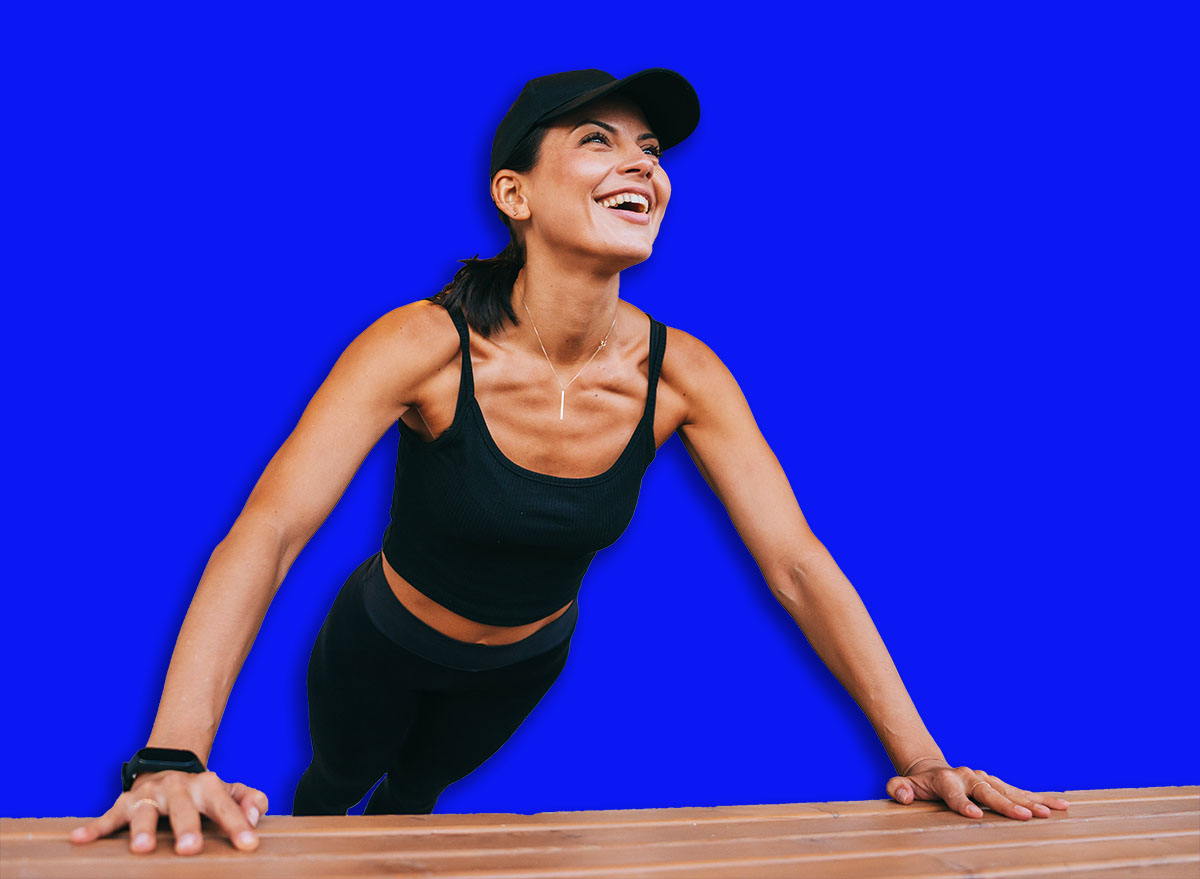

Kickstarting your morning with a healthy dose of movement sets you up for all-day success. After you hit 60, the best morning exercises for restoring and maintaining muscle are simple moves that focus on functional strength—not just machine-based training or stretching, says Justin Kraft, NASM-CPT, Performance Enhancement Specialist, Corrective Exercise Specialist, and the founder of Aspire2MoreFitness.com, where he helps individuals build strength, mobility, and muscle through smart and sustainable training. To help you get started, we’ve rounded up five exercises that can help rebuild muscle quicker than gym sessions.
Sarcopenia—the natural loss of muscle—occurs earlier than you might think, in your 30s, with roughly 3% to 8% of muscle lost each decade. The process only accelerates after 60.
“The drivers are anabolic resistance, which just means your muscles respond less efficiently to the protein you eat, plus hormonal shifts in testosterone for men and estrogen for women, plus less spontaneous daily activity, plus a quiet loss of the fast-twitch muscle fibers that decline the fastest. And the hidden danger underneath all of that is power loss, which drops even faster than mass and is the single biggest predictor of falls and hospitalizations and loss of independence,” says Jacob Siwicki, founder and head coach of Siwicki Fitness, NCSF and AFAA certified, former top 1% globally ranked Equinox group fitness instructor (2019), Dartmouth economics graduate and former Dartmouth football player, fitness expert on FOX 5 DC, ranked #1 personal trainer in D.C. in 2021.
The good news? Strength training can address all of this at any age. Here are five morning moves to prioritize, according to the experts.
Sit-to-Stands
“I recommend these as my number one because they build strength in the quads, glutes, and core through a movement people need every day,” says Kraft. “Being able to stand up from a chair with control is one of the clearest signs of functional lower-body strength. It sounds easy to do but as we age, doing this is vital to maintaining functional movement.”
- Begin seated at the front of a sturdy chair, feet under your knees.
- Lean forward just a bit.
- Try to stand up without using your knees, hands, or additional support.
- Use control to slowly sit back down.
Step-Ups
“Step-ups help rebuild lower-body strength while also training balance, coordination, and single-leg control,” Kraft says. “After 60, that combination matters because people are often dealing with both muscle loss and reduced stability.”
- Begin by standing tall, facing a low step, holding a lightweight dumbbell in each hand.
- Place your left foot firmly onto the surface, keeping your core engaged and chest tall.
- Press through your left heel to lift your body until your left leg is straight and you’re standing on the surface.
- Use control to lower back to the start position.
- Repeat on the other side.
Incline Pushups
“One of my favorite ways to train upper-body pushing strength safely. It works the chest, shoulders, arms, and core without requiring someone to get down on the floor, and it’s easy to scale based on ability,” Kraft tells us.
- Use a stable surface like a wall, countertop, plyometric box, or workout bench, and place your hands on it, shoulder-width apart.
- Walk your legs back so you’re at a straight incline from your head to your heels.
- Keep your legs together and rise onto the balls of your feet. Engage your core and keep your gaze forward.
- Bend your elbows to lower your body until your chest lines up with your elbows.
- Return back to straight arms.
Farmer’s Carry
“Farmer carries are one of the most practical strength exercises I use. They challenge grip, posture, core stability, and full-body tension in a way that translates directly to real life, like carrying groceries, laundry, or bags,” Kraft explains. “So many folks I meet past 60 really start losing grip strength and posture while walking quickly. This keeps those muscles firing and you mobile.”
- Hold a dumbbell in each hand at your sides.
- Start walking forward, keeping your torso still and maintaining a tall posture.
Glute Bridges
“The glutes are the largest muscle in the body and the first to weaken after 60,” Siwicki tells us.
- Lie flat on your back with bent knees and feet hip-width apart on the floor, arms at your sides with palms pressing into the ground.
- Press through your heels to lift your hips until your body forms a straight line from head to heels.
- Squeeze your buttocks, holding at the top for 2 seconds.
- Lower your hips back to the start position.