4 Chair Exercises That Restore Shoulder Mobility After 65, According to a Trainer
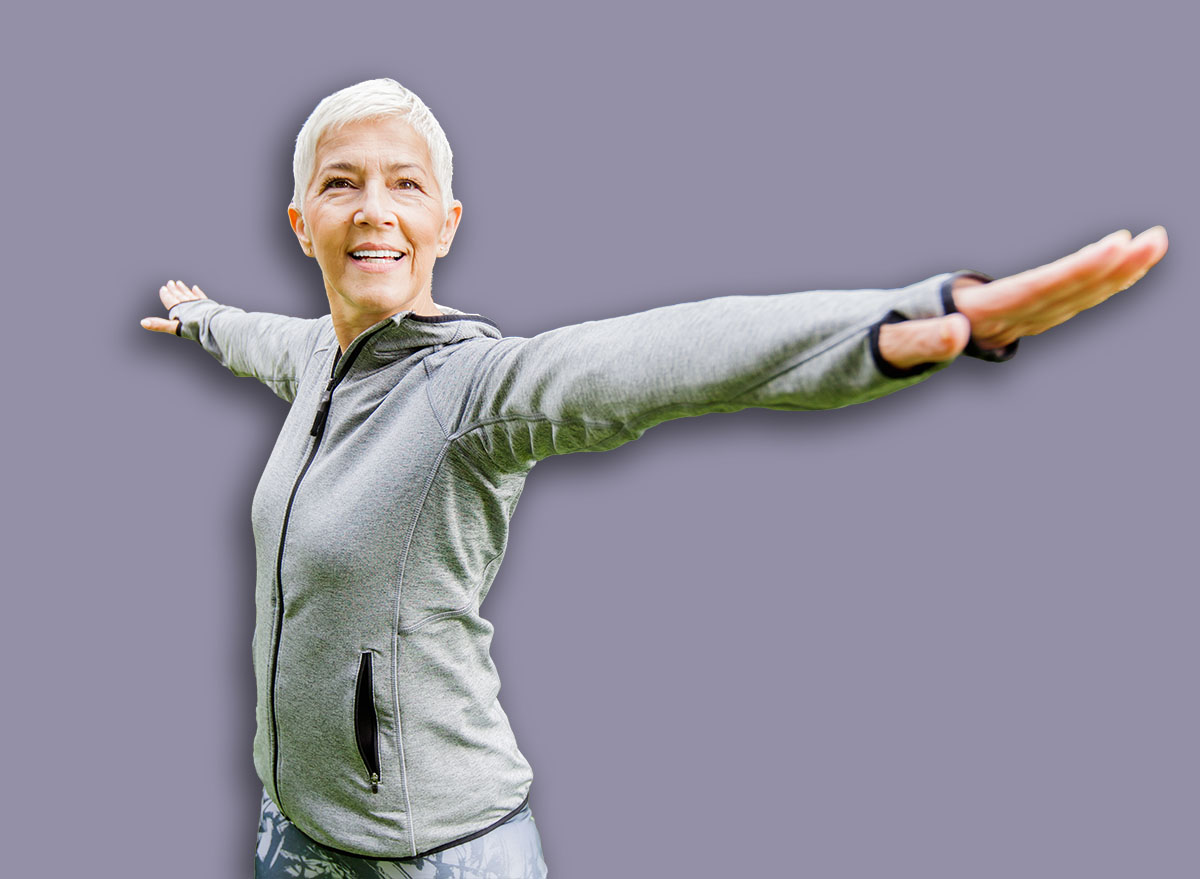

Shoulder stiffness after 65 rarely comes from “aging” alone. It usually builds slowly from years of limited overhead movement, rounded posture, and guarded arm use after minor aches. I’ve worked with hundreds of adults in this age range, and almost every tight shoulder improves once we restore controlled movement and grow muscle instead of forcing stretches.
The problem isn’t a lack of effort. Most people either stop moving their shoulders altogether or jump straight into aggressive stretching that irritates the joint. True mobility comes from restoring circulation, improving scapular control, and rebuilding confidence in safe ranges of motion.
Chair-based exercises work exceptionally well because they reduce balance demands and allow full focus on smooth, pain-free movement. These four drills gently rebuild range, coordination, and strength, without forcing the joint or aggravating sensitive tissue.
Seated Shoulder Rolls With Scapular Control
Many people think shoulder mobility starts at the arm, but it actually begins at the shoulder blade. When the scapula stops gliding smoothly, the joint stiffens quickly. This movement restores that natural glide.
From a seated position, slow shoulder rolls encourage circulation while retraining controlled motion. I often use this as the first reset with new clients because it immediately reduces tension without triggering discomfort. The key lies in slow, deliberate circles rather than rushed rotations.
Over time, improved scapular motion reduces that “stuck” feeling when reaching overhead or behind the back.
How to Do It
- Sit tall with feet planted
- Roll shoulders forward slowly
- Reverse direction after several reps
- Keep movements smooth and controlled.
Seated Assisted Overhead Reach
Overhead motion tends to disappear first after 65. This exercise restores that range safely by using both arms together, which reduces strain and builds confidence.
Raising the arms slowly while seated minimizes balance concerns and allows focus on posture. I’ve seen clients regain surprising range simply by practicing controlled overhead lifts without forcing the end position. The goal isn’t height, it’s smoothness.
Consistent repetition improves joint lubrication and gradually expands available motion.
How to Do It
- Sit upright near the front of the chair
- Interlace fingers lightly
- Raise arms overhead slowly
- Lower with control.
Seated Cross-Body Arm Sweep
Internal rotation and cross-body movement often feel restricted with age. This exercise gently restores that pattern without aggressive stretching.
Sweeping one arm across the body activates the rear shoulder and upper back, which helps balance tight chest muscles. In my experience, this movement improves comfort during daily tasks like fastening a seatbelt or reaching across a table.
Keep the motion steady and avoid forcing the end range.
How to Do It
- Sit tall with one arm extended
- Sweep arm across chest
- Return slowly
- Alternate sides.
Seated Arm Circles (Small to Large)
Circular motion improves joint awareness and control through multiple planes. Starting small protects the joint, while gradually increasing the circle expands usable range.
I often coach clients to imagine “drawing circles in the air” with intention rather than speed. This builds coordination and strengthens the stabilizing muscles that protect the shoulder.
Performed consistently, arm circles reduce stiffness and improve confidence during overhead or reaching movements.
How to Do It
- Sit tall with arms extended at sides
- Make small forward circles
- Gradually increase size
- Reverse direction halfway.