4 Daily Balance Drills That Improve Stability Better Than Single-Leg Exercises After 55
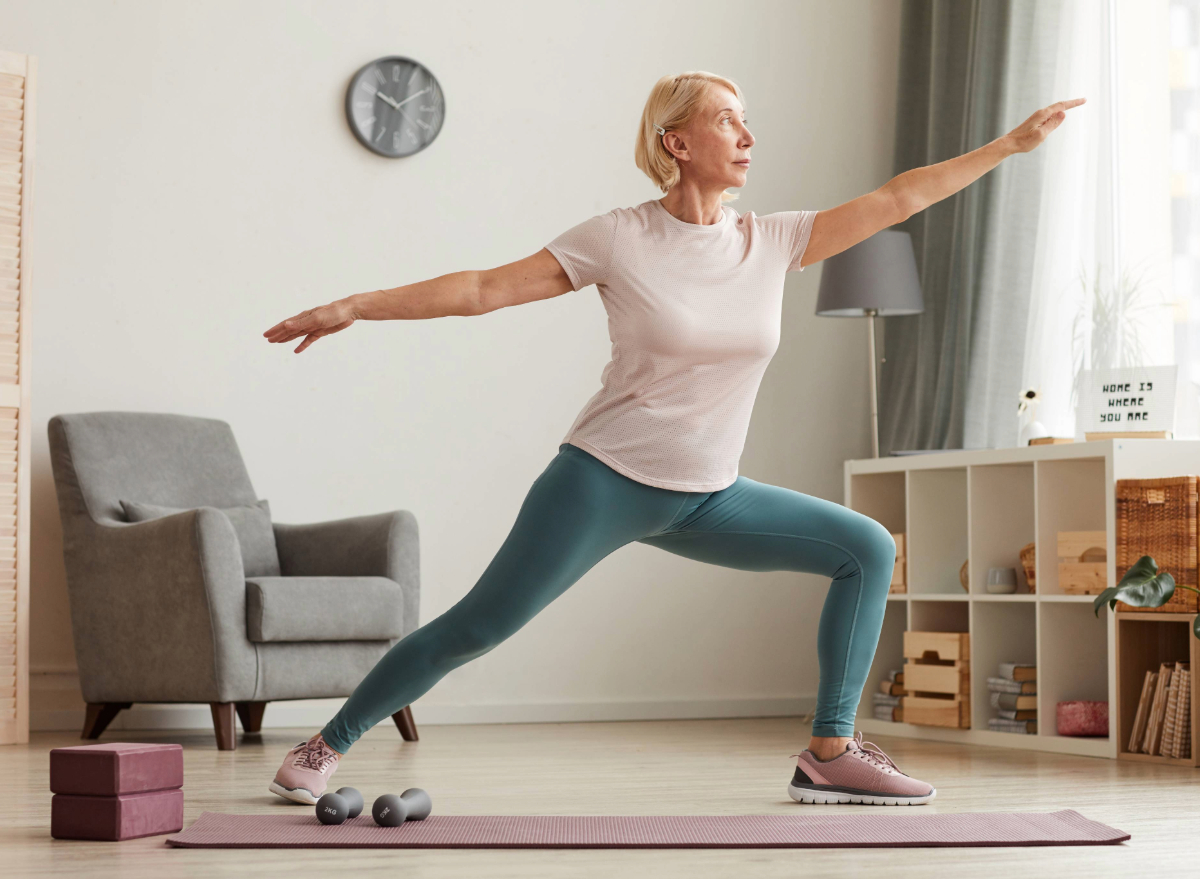

After the age of 55, it’s essential to be mindful of balance and stability. The reason? It’s a safeguard against falling and getting seriously injured. On top of that, it helps enhance strength, posture, mobility, and cognitive abilities. Long-term, balance and stability will help you live an independent lifestyle. We’re not suggesting skateboarding; just being able to keep up with daily tasks like reaching in the pantry to grab items you need, or carrying groceries up a few steps. You’ll also want to be steady when lifting your grandchildren and walking your pet. Get the long-term picture?
Balance and stability is everything when it comes to your overall well-being as you age, which is why we spoke to the experts. We learned everything you need to know from Davon Murray, Kinesiotherapist, Personal Trainer, and Director of Fitness Operations at Love. Life, including four daily balance drills that will boost your stability much better than single-leg exercises after 55.
Why This Matters After 55
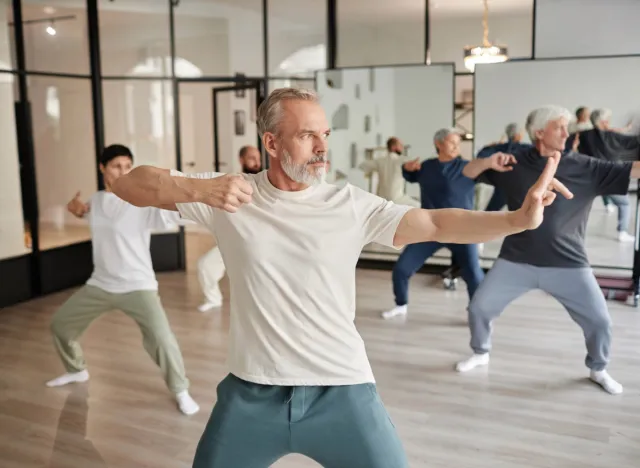
“Balance drills are especially important after age 55, as natural declines in muscle strength, joint mobility, and nervous system function increase the risk of falls,” Murray tells us. “These exercises improve communication between the brain, inner ear, and muscles, allowing the body to respond more quickly to balance challenges. Balance training enhances proprioception, the body’s awareness of position and movement in space. It also strengthens key stabilizing muscles in the hips, ankles, and core that supports posture and walking. Practiced consistently, balance drills help older adults move with greater confidence, stability, and independence in everyday life.”
Balance drills are more effective than simple single-leg exercises because they train balance in multiple directions and mimic how people move in daily life.
Here are four to include in your workout routine that will dramatically improve stability.
Slow Side-To-Side and Forward-Back Weight Shifts
- Stand tall with your feet hip-distance apart.
- Shift your body weight onto your right foot as you lift your left foot slightly off the ground.
- Hold this pose for a moment.
- Then, move your body weight to your left foot as you lift the right foot slightly off the floor.
- Hold for a few seconds before lowering.
Standing While Lightly Tapping
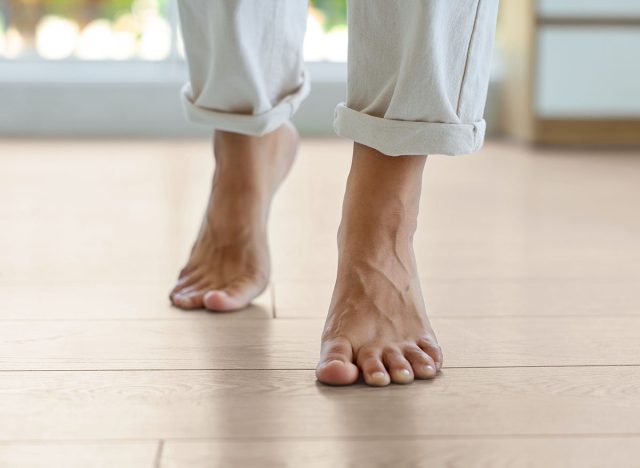
Next up, Murray recommends either standing while performing light taps, or being nudged to practice quick balance corrections.
- From a standing position, lift one leg up and bring that foot forward without holding onto anything for support.
- Tap your foot on the object in front of you.
- Return that foot to the standing position.
- Switch to the opposite leg and complete the same steps.
- Alternate legs, performing 10 reps on each side.
Controlled Torso Rotations
- Begin standing tall with your feet shoulder-distance apart and arms crossed in front of your chest or reaching out ahead of you.
- Slowly rotate your torso to the left, keeping your hips facing forward.
- Pause for a moment before returning to the center.
- Then, rotate your torso to the right.
- Continue to alternate in a smooth motion.
Stepping on and off a Moving or Vibrating Platform
- Begin standing tall, facing a vibrating platform with your feet hip-distance apart.
- Once the platform is stable or at a low intensity, step onto the center of the surface with one foot, followed by the other.
- Keep your balance for a moment.
- Step one foot down to the floor, followed by the other.